
Military Container House
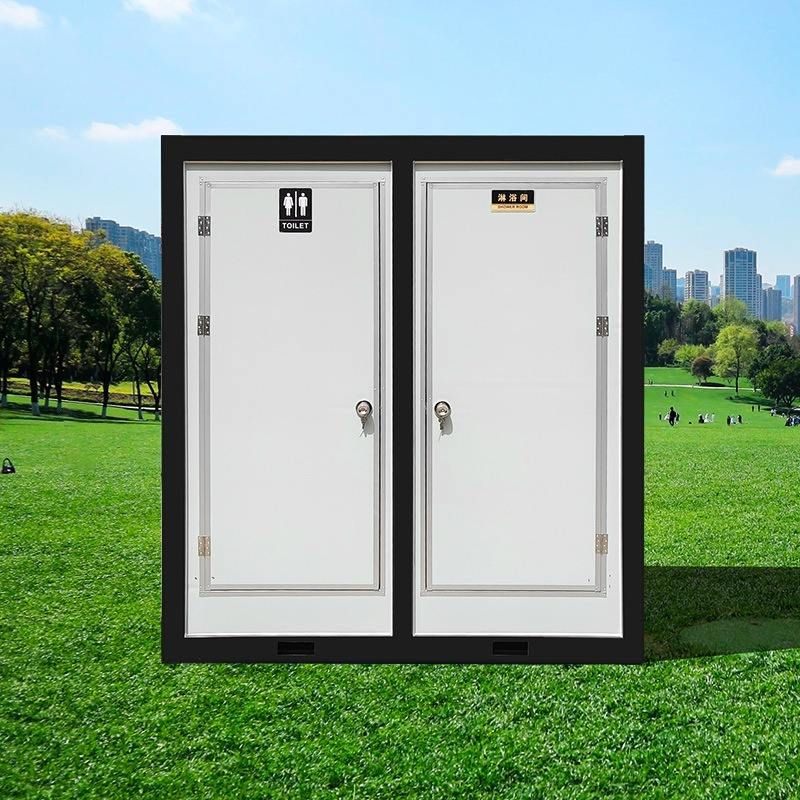
The container houses used by the military are mainly dismountable barracks, utilizing 'box-type steel structure integration' technology, composed of container modules and walkway modules.
I. Structural Features
Dismountable barracks are based on a steel-structured box-type modular system, achieving spatial division through the flexible combination of container modules and walkway modules. Their core advantage lies in the ability to freely拼接 both horizontally and vertically, enabling the rapid construction of multi-story buildings or housing units of different sizes through specialized connectors. For example, the barracks of a combined brigade from the 73rd Group Army of the PLA can form architectural forms that meet diverse needs through modular combinations, and all components support multiple disassemblies and reuses, significantly enhancing resource utilization.
II. Functional Advantages
- Rapid Deployment Capability: Four operators can complete the installation of a single container module in just 30 minutes, with overall construction efficiency far exceeding that of traditional buildings. The new foldable container houses of a certain brigade under the Shenyang Joint Logistics Support Center can even complete full-system deployment within one hour, meeting the tactical requirements of 'rapid construction and rapid withdrawal'.
- Environmental Adaptability: The modules are equipped with built-in heating and cooling supply systems, capable of maintaining a constant indoor temperature (such as warmth in winter and cooling in summer), adapting to extreme climatic conditions. Some models also feature concealment and camouflage functions, reducing the risk of exposure in the wild.
- Intelligent Integration: The new accommodation system integrates modules for catering, security, waste disposal, and more. For example, the catering module is equipped with a stir-frying robot and an automatic dishwasher, capable of providing hot meals for a thousand people per hour; the security system achieves around-the-clock early warning through facial recognition and infrared monitoring.
III. Application Scenarios
Dismountable barracks have been widely used in tasks such as regular troop rotations, cross-regional maneuvers, and long-term training exercises, extending to scenarios like temporary housing for non-commissioned officers' families and field hospitals. The 'mobile barracks' system of the Air Force further integrates functions such as command and communication, living quarters, and medical support through modular design, forming standardized support units and significantly shortening the troop入驻 (here '入驻' means 'stationing' or 'settling in', translated as 'stationing' for coherence) period.
IV. Strategic Significance
Such barracks, through standardized and modular design, have achieved the goal of 'a fixed barracks adapting to a mobile force', not only enhancing combat readiness support efficiency but also promoting the transformation of barracks construction towards comprehensive integration and precise efficiency, providing a typical example for modern logistical support.



