
Measured Temperature of Container Houses
The measured temperature of container houses varies significantly due to differences in environmental conditions, container structure, and insulation measures. This can be specifically categorized into different performances under two scenarios: high temperatures in summer and low temperatures in winter.
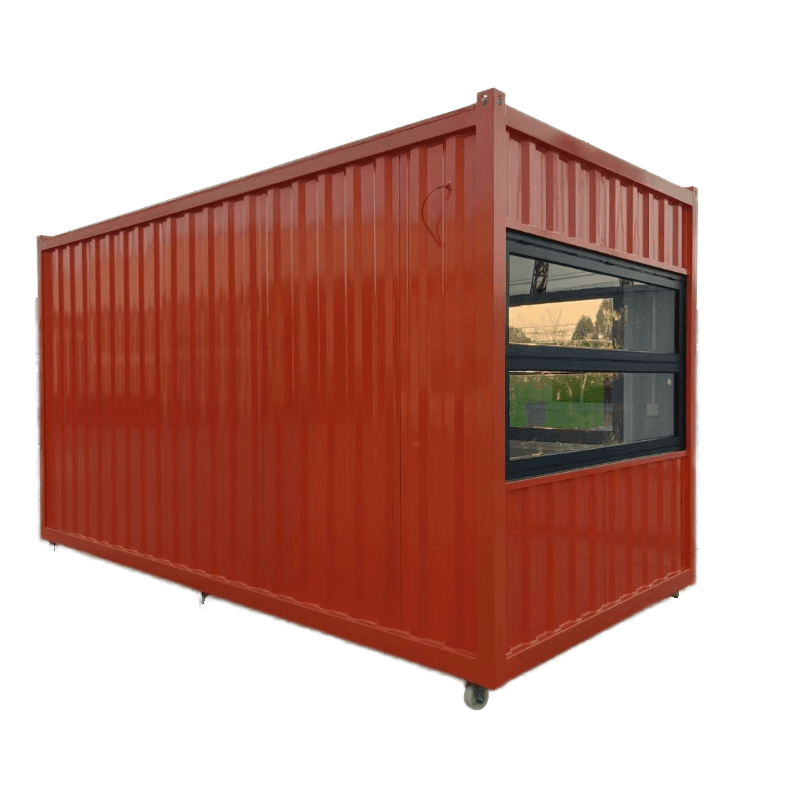
In high-temperature summer environments, ordinary containers have weak thermal insulation properties, and their internal temperatures are significantly higher than the outside when exposed to direct sunlight. When the external temperature reaches above 40℃, the maximum internal temperature can soar to 55-60℃, with a temperature difference of 10-20℃. If thermal insulation design is adopted, the temperature control effect is significantly improved: for example, an insulated container office building under extreme conditions with an ambient temperature of 50℃ only sees its internal temperature rise to 28.5℃, with an indoor-outdoor temperature difference of 21.5℃; in 40℃ heat, the indoor temperature is only 3.5℃ higher than the standard comfortable temperature (about 25℃), measured at 28.5℃. Additionally, increasing the thickness of the insulation layer or equipping with air conditioning can further optimize the experience: a container house with a 7.5 cm thick color-steel rock wool board exterior wall can quickly cool down after turning on the air conditioning for half an hour during the hottest periods, with no obvious stuffiness.
In low-temperature winter environments, the thermal insulation performance of container houses is closely related to the thickness of the wall panels. In the mild cold range of 0℃ to 5℃, the indoor temperature of a 50mm wall panel container can be maintained at 5℃ to 10℃; a 75mm wall panel container has a stable temperature of 10℃ to 13℃; and a 150mm wall panel container can reach an indoor temperature of above 15℃. When the temperature drops to the severe cold range of -5℃ to -10℃, the indoor temperature of a 50mm wall panel container can only be maintained at 0℃ to -2℃, essentially losing its livability; a 75mm wall panel container, when equipped with heating equipment, can reach a temperature of 18℃; a 150mm wall panel container maintains a temperature of above 12℃ without additional heating and can have its indoor temperature rise to 20℃ to 22℃ when heating equipment is turned on. In the extreme cold range of -20℃ to -30℃, a 50mm wall panel container is completely unlivable; a 75mm wall panel container relies on high-power floor heating to maintain an indoor temperature above 10℃; and a 150mm wall panel container, when equipped with a floor heating system and a fresh air dehumidification device, can maintain a stable indoor temperature of 18℃ to 20℃, meeting basic living needs.
In conclusion, the measured temperature of container houses is influenced by ambient temperature, wall panel thickness, and insulation measures, and appropriate structural design and supporting equipment should be selected according to the usage scenario.



