
Marathon Plastic Mobile Toilet
The marathon plastic mobile toilet is an environmentally friendly temporary public sanitation facility specifically designed for event scenarios, featuring diverse pricing, eco-friendly design, efficient treatment systems, water conservation management, scientific deployment, and waste resource utilization.
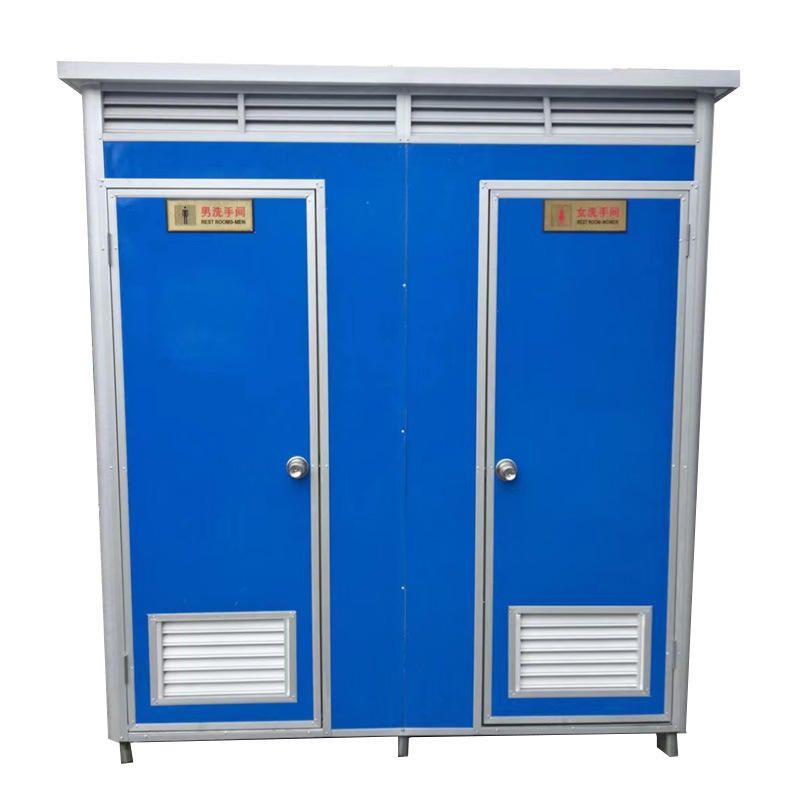
In terms of pricing, there are differences in the prices of marathon plastic mobile toilets from different manufacturers and types. For example, the outdoor event mobile toilets from Jinan Jiasheng Sanitation Equipment Co., Ltd. range in price from ¥100.0 to ¥200.0, depending on the functional configuration and design complexity.
Eco-friendly design is one of its core advantages. The toilet bodies are generally made of high-molecular composite materials or recycled plastics, which are lightweight and easy to transport and quickly set up. These materials are not only durable but can also be recycled and remanufactured into new raw materials after multiple event rotations, achieving a closed loop of 'resources - products - renewable resources' and significantly reducing resource consumption and environmental impact.
The treatment system technology paths are diverse, with mainstream solutions including microbial degradation, chemical solidification, and physical packaging. Microbial degradation accelerates the decomposition of excrement into water and carbon dioxide by inoculating specific bacterial strains, with minimal residue. Chemical solidification uses gel agents to solidify waste, reducing the risk of leakage. Physical packaging involves sealed encapsulation. The common goal of these technologies is to achieve in-situ reduction, harmlessness, or stabilization of waste, avoiding secondary pollution and alleviating the pressure on the sewage treatment systems of the destination cities.
In terms of water resource management, water-saving or waterless designs are the priority. For example, foam sealing technology is used instead of traditional water flushing, using only a minimal amount of water mixed with a foaming agent to form a sealing layer. Microbial degradation systems also require only a small amount of water to maintain the reaction environment. Some designs also consider filtering hand-washing wastewater for use in toilet sealing, creating a micro-circulation to further conserve water resources.
The deployment strategy emphasizes scientific planning, with a reasonable layout of toilet networks and differentiated density arrangements at the starting point, along-the-way supply points, and the finish line to guide crowd分流 (diversion) and avoid local overcrowding. For example, in the 2025 Beijing Marathon, the event organizers optimized the toilet facilities for runners, increasing the number of mobile toilet stalls at the starting area from 765 to 1,119, along the course from 121 to 169, and at the finish area from 151 to 161, with a total of 1,449 stalls, effectively improving service efficiency.
Regarding post-event waste treatment, pre-treated waste (such as degraded or solidified waste) has higher safety and cost-effectiveness in subsequent transportation and centralized disposal. Some of it can be converted into organic fertilizers and other resources, ensuring minimal environmental impact throughout the entire chain.



