
Luohe Container House
Luohe container houses feature modular design, rapid assembly, controllable costs, and a wide range of application scenarios. Their core advantages lie in structural stability, functional adaptability, and environmental and economic efficiency.
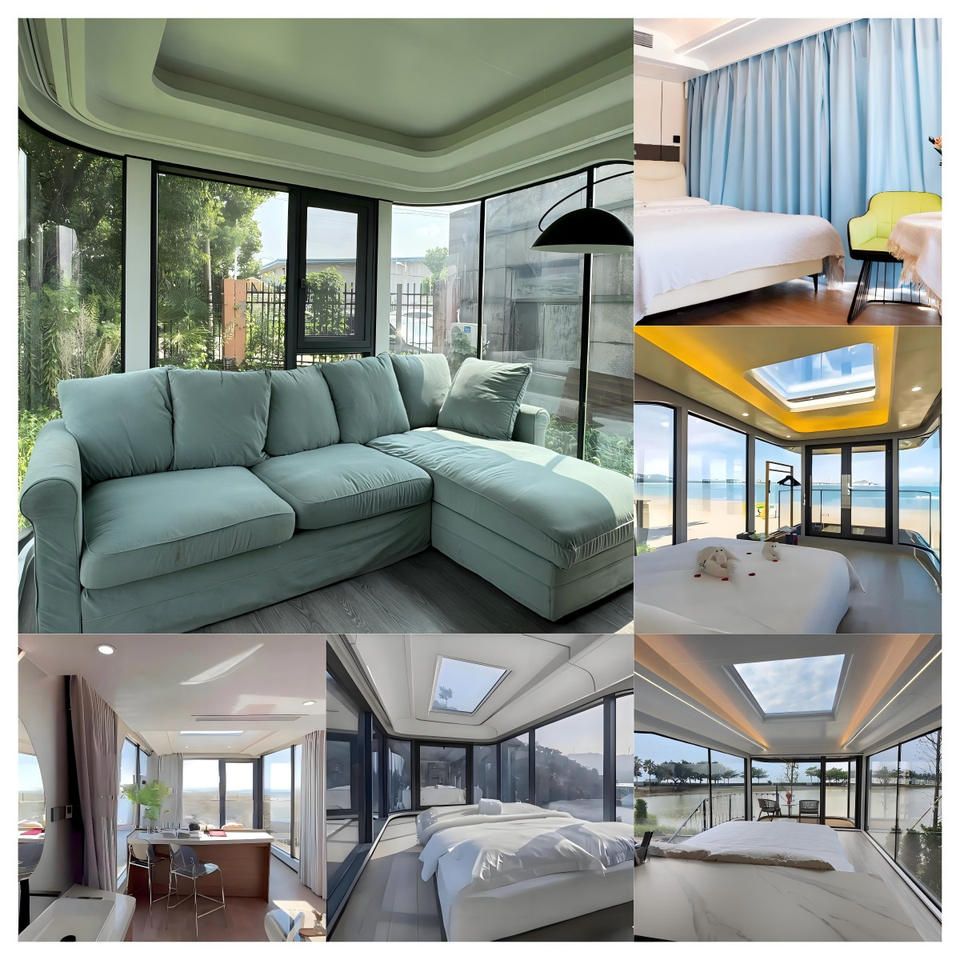
1. Structural Stability and Safety
Container houses in the Luohe region often use hot-dip galvanized cold-formed steel frames paired with fire-resistant rock wool sandwich wall panels, forming a high-strength load-bearing structure. For example, Yujiang packing container houses employ CNC cutting and bending processes to ensure millimeter-level precision in the perpendicularity of columns and beams, resulting in significantly higher seismic resistance compared to traditional temporary buildings. The walls are made of double-sided galvanized steel plates combined with eco-friendly rock wool, meeting flame-retardant standards while providing thermal insulation, protecting metal components from erosion caused by seasonal high humidity in the Central Plains region. Additionally, the modular design supports multi-level stacking, with specialized corner brackets securing adjacent units for even load distribution, making them suitable for construction project offices or temporary workspaces with strict safety requirements.
2. Functional Adaptability and Flexibility
Container houses can be customized with functional modules based on specific needs. For instance, packing container units can be used independently or combined into office areas, dormitories, or conference rooms; light steel frame houses allow flexible layout adjustments, suitable for cultural tourism homestays or scenic area support facilities; functional booths can be customized in size and internal layout to meet the needs of security, property management, or eco-friendly public restrooms. Pre-installed plumbing and electrical lines, along with concealed rain gutters and reinforced base frames, enable on-site assembly with just bolt positioning and corner connections, requiring only 2-3 people and reducing installation time by over 70% compared to traditional construction.
3. Environmental and Economic Efficiency and Recyclability
Container houses use recyclable materials such as hot-dip galvanized steel and rock wool sandwich panels, complying with green building standards. Their modular design allows for repeated disassembly and reassembly, with a turnover usage count exceeding 10 times, reducing single-use costs by 30%-50% compared to traditional color steel houses. For example, folding containers have low transportation costs, with 6-meter vehicles capable of carrying 6 units and 17.5-meter flatbed trucks carrying 20 units, while also allowing multi-level stacking during storage, significantly lowering logistics and warehousing expenses. Additionally, some manufacturers offer recycling services, such as Henghe Recycling in Zhaoling, Luohe, which provides on-site dismantling and recycling of old containers and temporary buildings, promoting resource reuse.



