
Dimensions of Mobile Toilets for Construction in Lincang
The common dimensions of mobile toilets for construction in Lincang vary depending on the type and functional requirements, generally falling into three categories: standard single units, basic single/double-occupancy units, and specially customized dimensions, with designs taking into account ergonomic requirements.
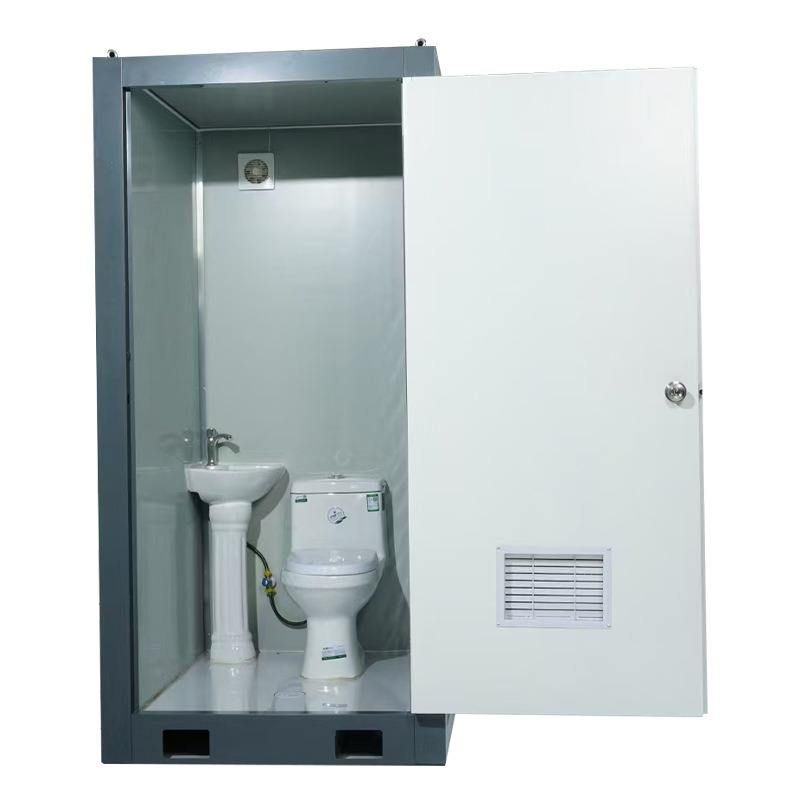
The size range of standard single-unit mobile toilets typically includes a length of 1.2-1.5 meters, a width of 1.0-1.2 meters, and a height of 2.2-2.5 meters. These dimensions are suitable for construction sites, temporary events, and other scenarios, with the design focusing on balancing space utilization and user comfort. For example, a length of 1.2 meters meets basic activity needs, while a width of 1.0 meters ensures that a single person can turn around without obstruction while using the toilet; a height of over 2.2 meters avoids a sense of spatial oppression and also reserves installation space for ventilation equipment.
The dimensions of basic single/double-occupancy mobile toilets are more specific: the common size for a single-occupancy unit is 1.2 meters (width) × 1.2 meters (length) × 2.2 meters (height), while the size for a double-occupancy unit is approximately 2.4 meters (width) × 1.2 meters (length) × 2.2 meters (height). This design allows for simultaneous use by two people by expanding the width horizontally, with the length and height remaining the same as those of a single unit. It is suitable for scenarios with a high density of people but limited space, such as temporary exhibitions or construction areas. It should be noted that the width of a double-occupancy unit must be strictly controlled within 2.4 meters to avoid occupying too much floor space.
Specially customized dimensions are adjusted flexibly according to specific needs, such as a single squat unit measuring 1.6 meters × 1.6 meters or a double squat unit measuring 3.2 meters × 1.6 meters. These dimensions are commonly found in high-end projects or special scenarios, such as barrier-free toilets that need to reserve turning space for wheelchairs or scenic spots that require larger-capacity public toilets. When customizing, it is essential to focus on ergonomic parameters, such as ensuring that the width of a toilet cubicle is no less than 0.9 meters to ensure user comfort; at the same time, transportation conditions must be considered to avoid difficulties in handling due to oversized dimensions.
The selection of mobile toilet dimensions should comprehensively consider the actual scenario, the number of users, and functional requirements. For example, construction sites can prioritize standard single units to reduce costs; temporary events should choose single or double-occupancy units based on the flow of people; and special scenarios require customization to achieve a balance between functionality and space. In addition, all dimension designs must comply with ergonomic requirements to ensure a good user experience.



