
Light Steel Building Mobile Toilet Design
The design of light steel building mobile toilets focuses on modularity, environmental friendliness, and adaptability, achieving efficient deployment and long-term stable operation through the integration of light steel frames and functions. The design features can be elaborated from the following aspects:
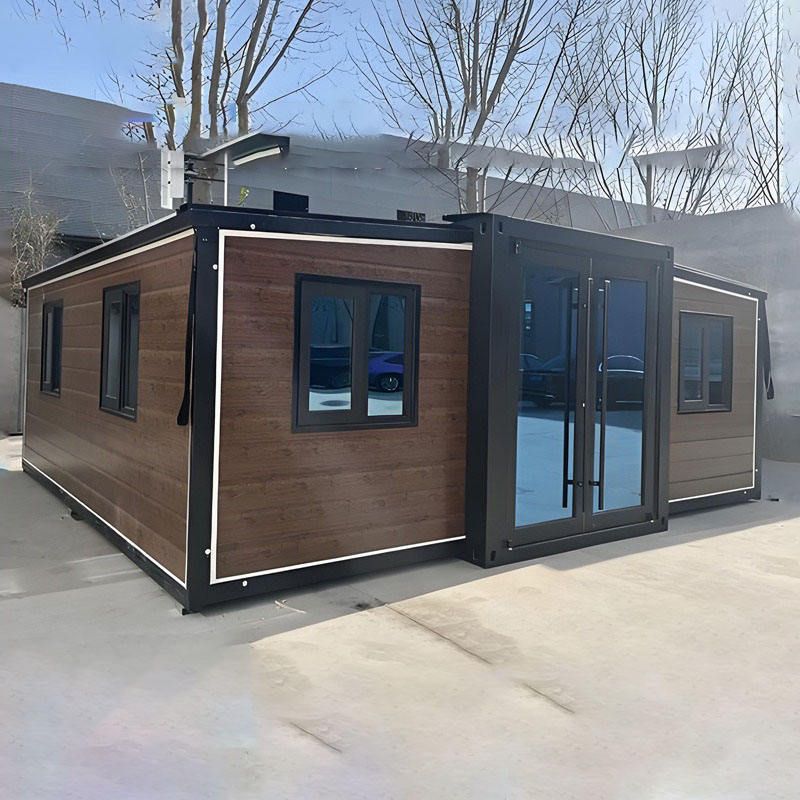
1. Structural and Material Design
The main frame is constructed using galvanized light steel keels, connected by bolts to form a stable structure with superior wind and earthquake resistance compared to traditional brick-and-mortar structures. The exterior is covered with high-density sandwich panels (rock wool or polyurethane material), providing insulation, fire resistance, and soundproofing. In extreme temperature tests, the sandwich panels did not become brittle at -20℃ and maintained an internal temperature 15-20℃ lower than the outside environment at 80℃, ensuring stability in extreme climates. Internally, it is equipped with anti-slip floors, stainless steel sanitary ware (squat or sit toilets), exhaust systems, and lighting fixtures. Some models integrate sewage collection tanks or microbial degradation units to meet different scenario requirements.
2. Operating Modes and Environmental Technologies
The design includes two modes: sewage storage and biochemical treatment:
- Sewage Storage Mode: Excreta is stored in sealed tanks and regularly transported by specialized vehicles for disposal, suitable for areas without municipal sewage systems.
- Biochemical Treatment Mode: Microorganisms are used to decompose organic matter, enabling on-site purification of sewage to meet the first-class urban sewage discharge standards, reducing environmental pollution.
The power supply system supports 220V mains power access, with some models equipped with solar panels for auxiliary power, reducing energy consumption. Actual usage data shows that when serving 500 people per day, the sewage tank can last 3-5 days without cleaning, significantly improving operational efficiency.
3. Scenario Adaptability and Customized Production
The design parameters clearly indicate an applicable temperature range of -20℃ to 80℃, covering the climatic conditions of most regions in China. Compact dimensions (e.g., 1.1×1.1×2.3 meters) allow transportation through standard freight channels and on-site assembly in just 2-4 hours, supporting rapid deployment. Users can adjust the size, color, and functional modules according to site conditions, such as adding barrier-free facilities, baby care rooms, or integrating advertising spaces and environmental monitoring sensors. Industrial production mode shortens the construction period from months to days, with a material recycling rate exceeding 85%, meeting green building standards.
4. Modular Expansion and Practical Cases
Modular design allows single units to be used independently or combined into large-scale sanitation stations to meet different scale requirements. For example, a super-large light steel public toilet features a double-roof design, measuring 8 meters in length and 3 meters in width, with exterior walls in red brick and gray brick patterns. It offers spacious interiors, with 4 squat and 4 stand toilets in the men's area and 4 squat toilets in the women's area, balancing practicality and aesthetics.



