
Environmental Impact Assessment of Mobile Toilets in Liaoning
Currently, no specific public announcements or approvals of environmental impact assessment (EIA) documents for mobile toilets in Liaoning have been retrieved, but key points of the EIA can be analyzed based on industry characteristics. The mobile toilet manufacturing industry is developing rapidly in Liaoning, and its environmental protection features and construction methods have a significant impact on the EIA. The following is an analysis from three aspects: technology, pollution control, and resource utilization:
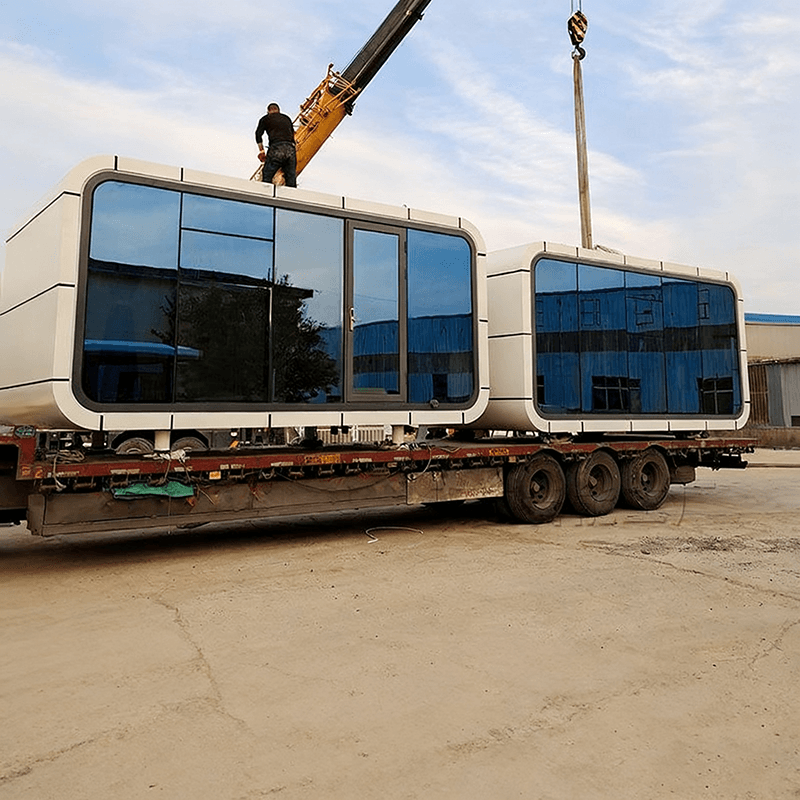
I. Environmental Protection in the Construction Process
Modern mobile toilets adopt prefabricated assembly technology, where components are prefabricated in the factory in advance and only require simple assembly on-site. This model significantly reduces noise and dust pollution during the construction phase. For example, the case of Heilongjiang Shenglonghua Environmental Protection Technology Development Co., Ltd. shows that its prefabricated construction method avoids the common mechanical roaring and dust diffusion problems in traditional construction operations. In addition, factory production can precisely control material usage, reducing the generation of construction waste on-site, which meets the core requirements of 'pollution control during the construction period' in the EIA.
II. Water Recycling and Waste Treatment Technologies
The environmental advantages of mobile toilets are mainly reflected in their water recycling systems and waste treatment designs. Their water recycling systems purify sewage to non-potable reuse standards through multiple treatment mechanisms, which can be used for toilet flushing or greening irrigation, achieving a daily water-saving rate of up to 70%. This technology not only reduces water consumption but also decreases the environmental impact of sewage discharge, making it an important consideration for 'water resource utilization efficiency' in the EIA. In terms of waste treatment, the separated design avoids the mixed fermentation process of traditional septic tanks, significantly reducing the emission of greenhouse gases such as methane, which meets the EIA standard of 'harmless waste treatment'.
III. Potential Focus Points in EIA Approval
Although the specific EIA documents for mobile toilets in Liaoning have not been made public, based on industry characteristics, the approval process may focus on the following aspects:
- Technical Feasibility: It is necessary to verify whether the treatment efficiency of the water recycling system is stable and can consistently meet reuse standards over the long term;
- Emission Monitoring: Enterprises are required to provide monitoring data on gas emissions such as methane to ensure that waste treatment meets environmental protection requirements;
- Operation and Maintenance: Evaluate whether the enterprise has the capability to regularly clean and maintain the equipment to avoid secondary pollution caused by poor management.
If you need to obtain EIA information for a specific project in Liaoning, it is recommended to check public announcements on the official website of the Liaoning Provincial Department of Ecology and Environment or the local government service website, or contact the ecological environment department in the project's location to verify the approval status.



