
Customization of Air-Conditioned Mobile Toilets in Liaoning
The customization of air-conditioned mobile toilets in Liaoning requires consideration of local technical characteristics and customization processes. Although there are no direct cases currently, it can be achieved through technical adaptation. It is recommended to contact manufacturers to confirm specific plans.
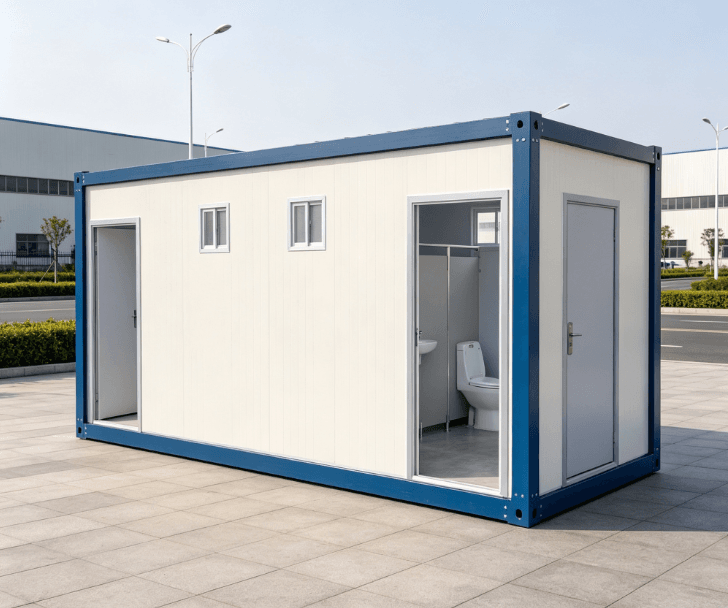
I. Core Technical Characteristics of Mobile Toilet Customization in Liaoning
In the cold winters of Liaoning, the customization of mobile toilets must focus on solving issues related to freeze protection, insulation, and corrosion resistance. The main frame is mostly made of steel, with hot-dip galvanizing or spray coating applied to the surface to enhance corrosion resistance. The wall materials are typically sandwich panels or fiberglass. The thickness and density of the insulation layer in sandwich panels directly affect the winter user experience and need to be adjusted according to the local minimum temperature. The water piping system must be wrapped with insulation materials (such as rubber-plastic sponge) and equipped with electric tracing heating devices in extremely cold environments to prevent pipe freezing and cracking. Additionally, some products integrate solar power supply systems to provide energy for lighting, ventilation, and other equipment, suitable for sites without municipal power supply. The sewage collection system is implemented through septic tanks or sewage storage tanks, with capacities designed based on the volume of foot traffic and requiring regular cleaning.
II. Technical Adaptability of Air Conditioning Systems
Although reference information does not explicitly mention air conditioning configurations, it is theoretically achievable through technical modifications. Air conditioning selection should consider the space volume of the mobile toilet (usually ranging from a few square meters to over ten square meters), choosing small split-type air conditioners or industrial cold air blowers with power ranges between 1-3 horsepower. The power supply plan needs to assess site conditions; if municipal power supply is stable, it can be directly connected; if not, the area of solar panels needs to be expanded or diesel generators added. The installation position should avoid affecting the overall structural stability of the toilet, typically fixing the outdoor unit on the outside of the frame and hanging the indoor unit on the ceiling or side wall.
III. Customization Process and Precautions
The customization process is divided into five stages: demand confirmation, plan design, production and processing, transportation and installation, and after-sales support.
- Demand Confirmation: It is necessary to clarify the application scenario (such as scenic spots or construction sites), foot traffic (average daily usage), power/water supply/sewage conditions (whether there are municipal connections), budget, and special requirements (such as air conditioning or disabled facilities).
- Plan Design: The manufacturer provides 3D renderings based on the demands, indicating materials, dimensions, and equipment layout. It is essential to focus on reviewing the thickness of the insulation layer and the matching of air conditioning power.
- Production and Processing: The main frame is prefabricated in the factory, while wall and piping components are assembled on-site. It is necessary to supervise the steel treatment process and the density of insulation material filling.
- Transportation and Installation: In Liaoning, freeze-resistant transportation vehicles should be selected. During installation, ensure the foundation is level and the air conditioning outdoor unit is firmly fixed.
- After-sales Support: Require the manufacturer to provide at least a one-year warranty and clarify the winter freeze protection maintenance cycle (such as quarterly inspections of electric tracing heating devices).
IV. Recommended Actions
Since the customization of air-conditioned mobile toilets involves the coordination of multiple systems, it is recommended to contact local mobile toilet manufacturers in Liaoning (such as those in Shenyang or Dalian), providing specific usage scenarios and parameters for them to assess technical feasibility and issue plans. If the site lacks municipal sewage conditions, priority can be given to an integrated design of "solar power + sewage collection + air conditioning" to balance functionality and cost.



