
Left-Right Move House Container
Left-right move house containers mainly achieve flexible movement and rapid deployment through modular design, standardized interfaces, and professional transportation tools. Their core principles and operating methods can be analyzed from the following perspectives:
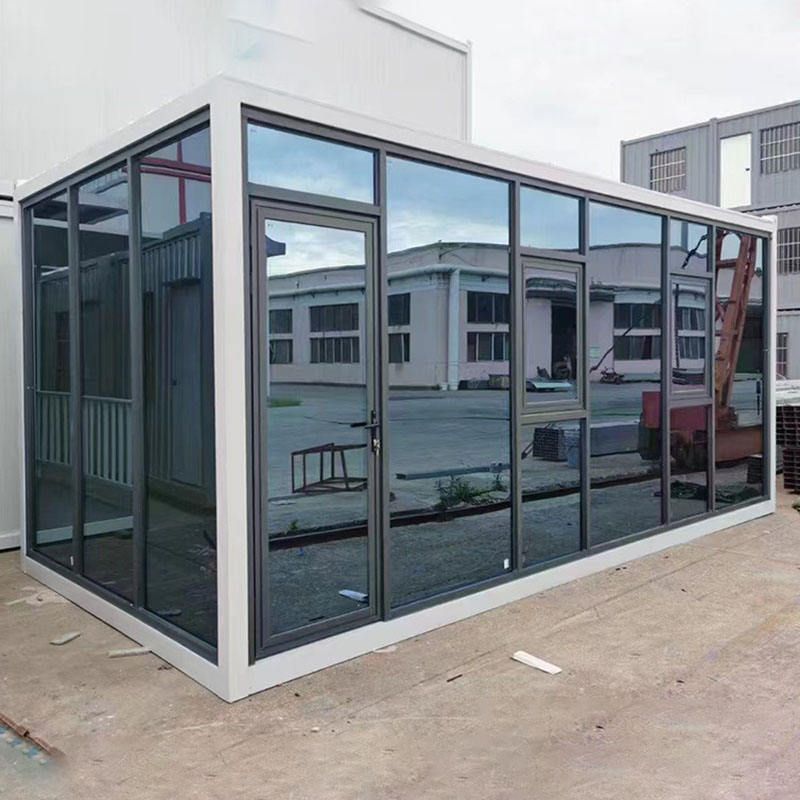
1. Modular Structure and Standardized Design
House containers use standard containers (such as 20-foot and 40-foot ones) as carriers and achieve the independence and combination of functional units through modular design. For example, container-type office houses adopt standard container frames and form independent office units after reinforcement and modification, supporting single-container use or multi-container splicing; expandable office houses add lateral or end expansion cabins on the basis of containers, and the usable area can increase by 30%-50% after expansion. This design gives containers a "building-block" combination ability, allowing them to adapt to different scenario requirements by adjusting the number and arrangement of modules (such as left-right splicing and up-down stacking). At the same time, standardized interfaces ensure rapid connection and separation between modules.
2. Lightweight Materials and Foldable Technology
To reduce moving costs, some containers use lightweight materials (such as color-coated steel sheets and aluminum frames) or foldable structures. For example, foldable office houses compress their volume during transportation and can be quickly expanded using hydraulic or mechanical devices after arrival at the site, with the expansion time of a single set controlled within 30 minutes; packing-box units are composed of unit modules and support flat transportation, saving long-distance transportation costs. These technologies enable containers to significantly reduce space occupation and logistics costs during movement while maintaining structural strength.
3. Professional Transportation and Lifting Equipment
The movement of containers relies on professional transportation tools and lifting equipment. For example, standard containers can be transported by trucks, trains, or ships and are lifted and positioned using cranes or forklifts after arrival at the site; movable houses may be equipped with wheeled chassis or trailer devices at the bottom to support short-distance autonomous movement. In addition, some containers are designed with adjustable house bases to adapt to different ground conditions (such as slopes and soft soil foundations) and ensure stability after movement.
4. Circular Reuse and Low-Carbon Attributes
Modern container houses emphasize low-carbon circularity throughout their entire life cycle. For example, compliant products can be disassembled and reused an average of more than 8 times, and the amount of construction waste generated is reduced by about 90% compared with traditional fixed temporary buildings; weld-free quick-assembly processes reduce disassembly and assembly losses and ensure structural stability after multiple relocations. These characteristics make containers an ideal choice for scenarios such as engineering camps, cultural and tourism homestays, and emergency support, supporting rapid deployment and flexible adjustment.



