
Types of Mobile Toilets in Langfang
There are various types of mobile toilets in Langfang, which can be classified into the following categories based on structural form, functional configuration, and sewage disposal methods:
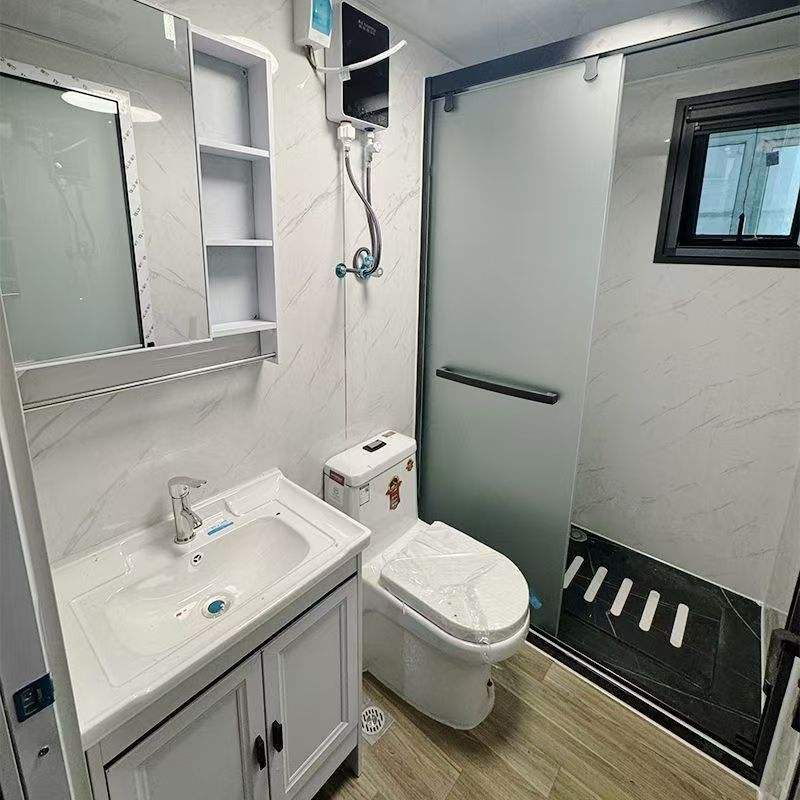
I. Classification by Structural Form and Functional Configuration
Single-unit Mobile Toilets
Composed of a single independent compartment, these toilets are compact in structure and suitable for places with dispersed pedestrian traffic, such as park corners and temporary event venues. Their main frames are mostly made of steel, with exterior wall materials including galvanized steel plates, stainless steel plates, or aluminum plates. Internally, they are equipped with anti-slip floors, waterproof layers, and basic ventilation facilities to meet basic usage needs.Modular Mobile Toilets
Formed by modular assembly to create multiple toilet compartments, these toilets can be expanded into 2-10 independent units and are additionally equipped with washbasins, urinals, and other facilities. They are suitable for areas with high pedestrian traffic, such as construction sites and exhibition venues. Their main frames are also made of steel, with exterior wall materials that can be selected as metal carved panels to enhance aesthetics. Internally, they use rock wool or polyurethane for thermal insulation to ensure comfort during winter use.Special-function Mobile Toilets
- Barrier-free Mobile Toilets: Designed for individuals with disabilities, these toilets are equipped with ramps, handrails, and low-position washbasins. The door width must accommodate wheelchair passage, and the interior space is spacious, complying with barrier-free design specifications.
- Eco-friendly Mobile Toilets: Utilize microbial degradation or recycled water flushing technology. Microbial degradation types accelerate fecal decomposition by adding specific bacterial agents, reducing the frequency of fecal tank emptying. Recycled water flushing types achieve water reuse through filtration systems, suitable for water-scarce areas.
- Luxury Mobile Toilets: Internally equipped with air conditioning, lighting, ventilation fans, and intelligent control systems, some are also furnished with background music and air purification devices, suitable for high-end events or scenic spots.
II. Classification by Sewage Disposal Methods
Water-flush Mobile Toilets
Rely on a stable water supply, achieving flushing by connecting to temporary water supply networks at construction sites or using built-in water storage tanks. If there is a municipal sewage network nearby, the flushed waste can be directly connected to it; otherwise, a fecal tank must be equipped for regular emptying.Waterless Packaging Mobile Toilets
Do not require a water source and use mechanical devices to collect waste in biodegradable plastic bags, suitable for water-scarce or sewage-free scenarios, such as wilderness construction and temporary rescue operations. These toilets require regular replacement of plastic bags to prevent odor diffusion.Biodegradation Mobile Toilets
Combine microbial technology to accelerate the decomposition of organic matter by adding bacterial agents, converting feces into harmless fertilizers, reducing the volume of the fecal tank and the frequency of emptying, suitable for ecologically sensitive areas or long-term use scenarios.



