
Junyue Container Mobile House
Junyue container mobile houses generally refer to movable residential or office buildings transformed from containers, featuring modularity, convenience, and cost-effectiveness. They are widely used in construction site dormitories, temporary offices, military barracks, emergency support, and other scenarios.
1. Structure and Types
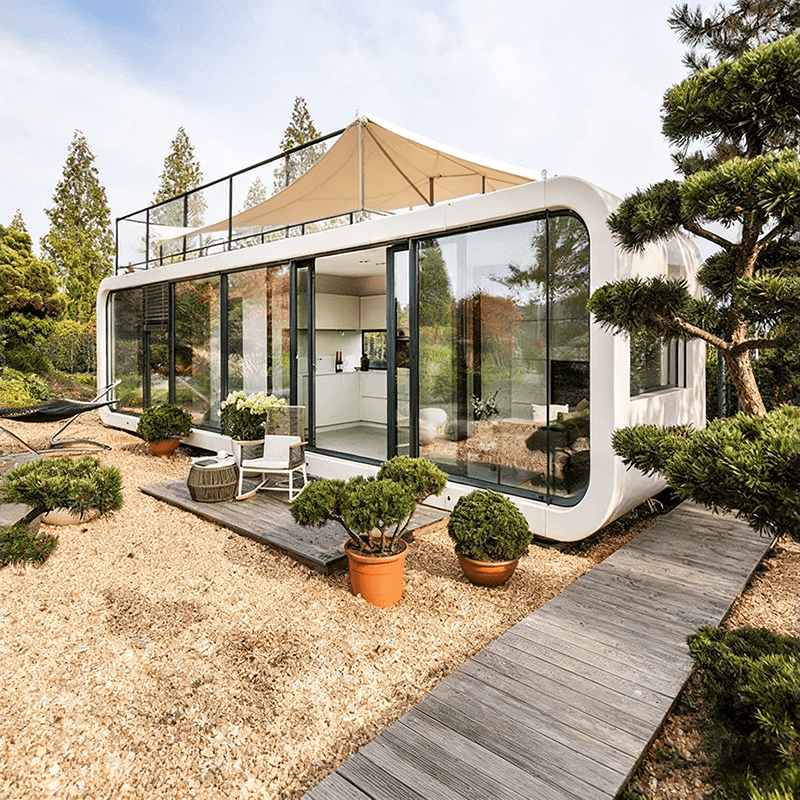
Junyue container mobile houses use standard containers as skeletons and achieve residential or office functions by transforming internal spaces. They come in various types, including single-story or double-story structures, foldable or fixed types, wheeled or trailer types, etc. For example, some products adopt 'box-type steel structure integration' technology, enabling the rapid construction of multi-story buildings through the combination of containers and walkway modules; others are equipped with solar panels and glass curtain walls to meet the needs of outdoor campsites or homestays.
2. Functions and Application Scenarios
- Military Field: Used for mobile deployment of troops, such as accommodation modules, command buildings, and medical rescue units in field bases. Their modular design supports free combination according to functions, shortening the mobilization period and enhancing combat readiness efficiency.
- Civilian Field: Temporary dormitories on construction sites, mobile offices, and movable shops. For example, residential containers available for rent or sale in Beijing have specifications of 3m×6m×2.7m, use color steel plate materials, are inexpensive, and suitable for short-term use.
- Emergency Support: Rapid accommodation buildings in earthquake and disaster scenarios. Some products integrate water, electricity, and sanitation facilities to meet basic living needs.
3. Technical Characteristics
- Materials and Processes: The main body adopts a steel frame, with walls commonly using color steel plates and sandwich panels, providing fire, water, and wind resistance. Some high-end products use aluminum or prefabricated concrete materials to enhance durability.
- Modular Design: Supports rapid assembly and disassembly. For example, four people can complete the installation of a container module in 30 minutes, and the space can be expanded horizontally or vertically.
- Intelligence and Environmental Protection: Some products integrate solar power generation and intelligent control systems to adapt to off-grid environments; materials are recyclable, reducing environmental impact.
4. Price and Market
Prices vary depending on specifications, materials, and functions. Ordinary container houses for construction sites cost about 260-640 yuan per square meter, while high-end modular houses can range from several thousand to ten thousand yuan per square meter. The market supply is abundant, with some manufacturers offering 48-hour delivery and 7-day replacement services.



