
Jiucheng Container House
No publicly available information directly related to 'Jiucheng Container House' has been retrieved at present, but core knowledge and purchasing advice for the container house industry can be provided:
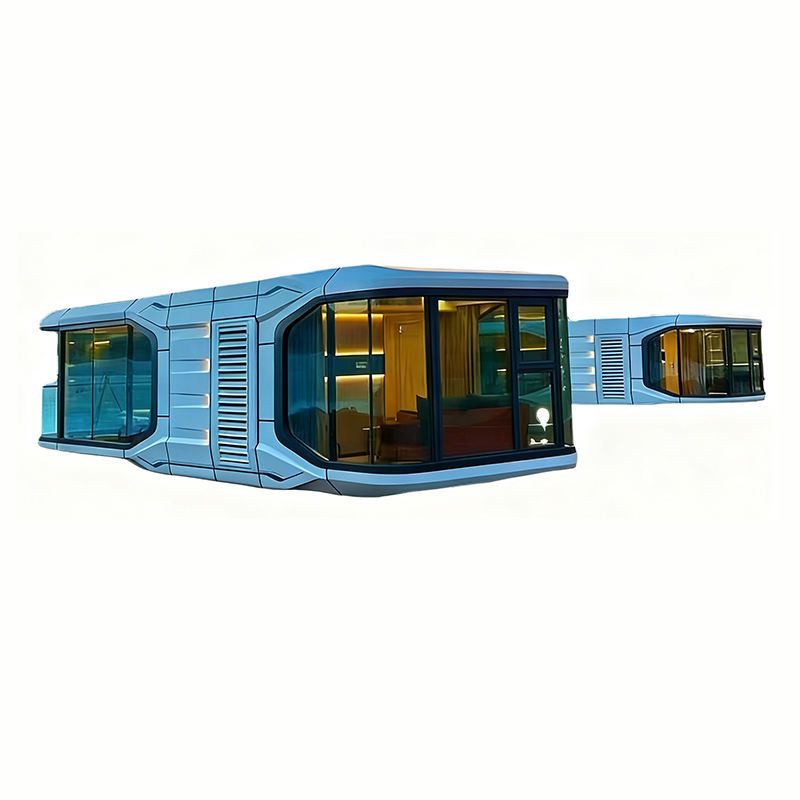
I. Core Components and Classification of Container Houses Container houses are based on standard containers and achieve residential or office functions by transforming their internal spaces. Their core components include:
- Main Frame: Made of high-strength steel (usually with a thickness of 0.8-1.2mm), it needs to pass structural safety tests such as wind resistance (10-12 levels) and earthquake resistance to ensure stability in extreme weather conditions.
- Enclosure System: The exterior is covered with galvanized steel or color-coated steel plates, and the interior is filled with thermal insulation materials such as rock wool/glass wool (Class A fire resistance). The thermal conductivity coefficient should be lower than 0.040W/(m·K) to adapt to temperature differences ranging from -30℃ to 70℃.
- Functional Modules: Integrated with lighting, sockets, ventilation pipelines, and water supply and drainage systems. Some high-end products can be equipped with non-standard customized structures such as folding balconies and glass curtain walls.
II. Key Indicators for Purchasing Container Houses
- Structural Safety:
- The welding process should adopt CNC plasma cutting and fully automatic welding technology. The flatness error of the top and bottom frames should be controlled within ±2mm to avoid misalignment or water leakage during hoisting and assembly.
- The steel should undergo special anti-corrosion treatment to extend its service life to more than 15 years.
- Environmental Protection and Durability:
- Prioritize the use of Class A fire-resistant materials such as basalt wool color-coated steel composite panels, and abandon traditional polystyrene foam to reduce fire risks.
- The recycling rate of the main materials exceeds 90%, meeting the requirements of a circular economy.
- Customization Capability:
- Adjust the spatial layout according to usage scenarios (such as construction site temporary buildings and cultural tourism homestays), and support designs such as the embedding of large-span glass curtain walls and terrain-adaptive elevated reinforcement.
III. Recommended Enterprises in the Industry for Reference
- Changjia Color-Coated Steel Plates: It covers the entire chain of services including the construction of steel structure factories and temporary panel houses. It holds multiple second-level construction qualifications, and its products pass a three-level quality inspection process.
- Qinghai Lichi Color-Coated Steel: It mainly deals with new building materials such as rock wool boards and steel structures, and provides integrated services of design, production, and installation, suitable for commercial and public service scenarios.
- Jingchen Integrated Houses: It focuses on the rental of packing containers and relies on standardized production lines to achieve on-site deployment on the same day, with comprehensive costs 30%-50% lower than those of traditional buildings.
IV. Price Range and Cost Composition The unit price of a standard container (3m*6m) usually ranges from 8,000 yuan to 20,000 yuan, depending on factors such as the quality of the steel, the thickness of the thermal insulation layer, the complexity of the process, and the internal decoration standards. For long-term use, it is recommended to choose a rental model to share costs and reduce maintenance risks.



