
Jingmen Residential Container House
Jingmen residential container houses offer advantages such as easy construction, low cost, and recyclability, but they also have fire safety hazards. When purchasing, attention should be paid to structural safety, material fire resistance, and the manufacturer's service capabilities.
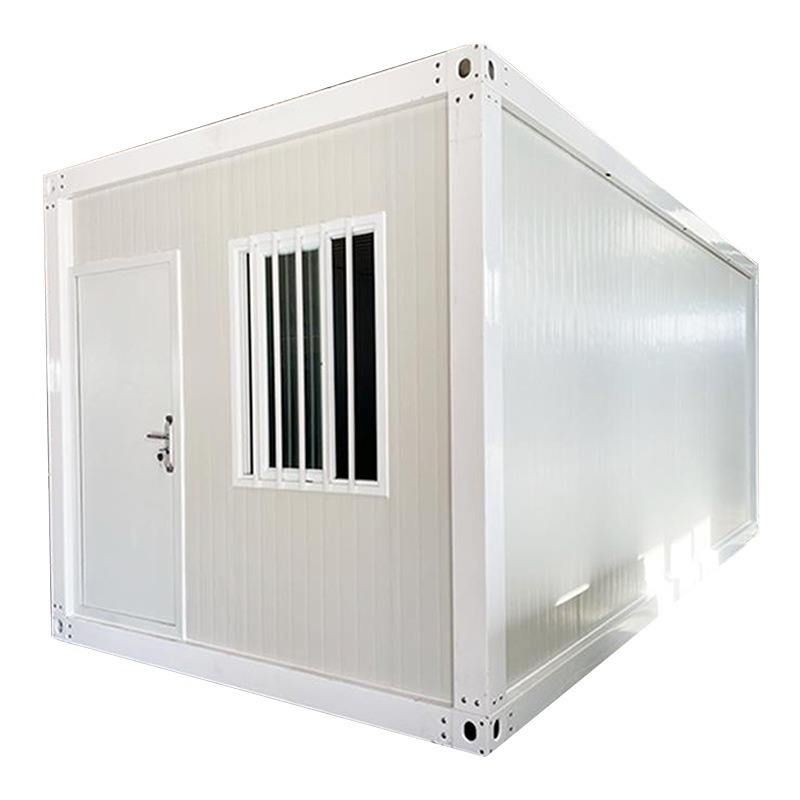
I. Core Advantages of Residential Container Houses
Residential container houses adopt a fully prefabricated modular design, with components produced in a standardized manner in factories and assembled on-site using bolts, eliminating the need for wet construction processes. The construction period is reduced by over 90% compared to traditional brick-and-mortar buildings. Their material recovery rate exceeds 90%, allowing for multiple disassembly and relocation, aligning with the principles of green building. For example, a quick-assembly packing container can be assembled by four workers in just three hours, and a folding container, when collapsed, occupies only one-fifth of its expanded volume, significantly saving transportation costs.
II. Fire Safety Hazards to Be Aware Of
Some residential container houses use flammable materials such as polystyrene and polyurethane foam as core materials to reduce costs. These materials have poor fire resistance and can be ignited by electrical welding sparks or cigarette butts. The flammable core materials burn rapidly, melting and deforming at 80℃ and dripping, while producing highly toxic combustion products. Additionally, container houses are wrapped in iron sheets, making it difficult for firefighters to inject water into the interior during a fire, increasing the difficulty of firefighting and causing trapped individuals to suffocate from toxic smoke.
III. Key Purchase Indicators
- Structural Safety: Prioritize overall steel structural frames, ensuring that the thickness of the main beams and columns meets standards, the welding process is full without cold welds, and the container body has undergone overall galvanization or anti-corrosion coating treatment. For example, national standard container frames are welded from profiled steel, with a load-bearing capacity far exceeding that of ordinary prefabricated temporary buildings.
- Material Fire Resistance: Fillers should use A-grade fire-resistant materials such as rock wool boards and fireproof cotton, with a fire resistance limit meeting the fire safety requirements of construction sites.
- Manufacturer's Service Capabilities: Choose manufacturers with full-chain production capabilities to ensure quality control and cost optimization. For example, Wuhan Jinxiang Light Steel Housing Co., Ltd. has a complete production line including pressing, welding, and coating, and can provide customized sizes and functional zoning services.
IV. Applicability to Different Scenarios
Container houses with different process routes are suitable for different scenarios: quick-assembly packing containers are suitable for construction site offices and employee dormitories; double-wing expansion containers can be equipped with independent bathrooms, suitable for scenic spot homestays; and glass curtain wall containers have a transparent appearance, suitable for visitor reception centers and other public display scenarios.



