
Jinchang Square Mobile Toilet Installation
The installation process of mobile toilets in Jinchang Square is simple and efficient, with core steps including positioning and foundation treatment, main structure assembly, internal facility connection, and functional debugging, which need to be adjusted according to the toilet type and site conditions.
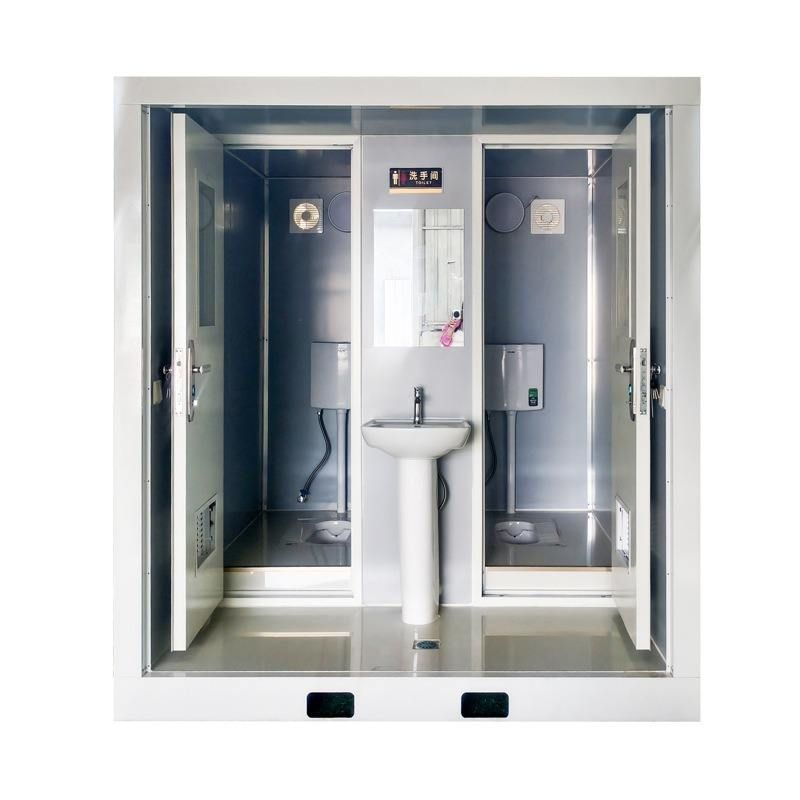
Positioning and Foundation Treatment Before installation, the toilet location should be determined according to the square's planning to ensure a solid ground and smooth drainage. If the ground is uneven or has soft soil, hardening treatment (such as concrete pouring) or steel plate laying should be carried out in advance to enhance stability. This step is the foundation for ensuring the long-term safe use of the toilet, with particular attention to the design of the drainage slope to avoid water accumulation affecting functionality.
Main Structure Assembly
- Split-type Toilets: First, install the chassis and frame, then insert the sandwich panel wall panels into the chassis slots and secure them with bolts, and finally install the roof panel and complete the sealing treatment. During this process, attention should be paid to the tightness of component splicing to prevent air leakage or water seepage.
- Integrated Toilets: Since internal decoration and equipment integration have been completed in the factory, on-site installation only requires lifting into place and connecting water, electricity, and sewage pipelines. The overall installation time can be shortened to 2-4 hours, making it suitable for emergency needs.
Internal Facility Connection Toilets, flushing systems, handwashing basins (optional), lighting, and ventilation equipment need to be installed, and water and electricity pipelines connected through modular quick connectors. This step should strictly follow the "Mobile Toilet Hygiene Specifications" (GB/T 21239-2023) to ensure reasonable pipeline layout and no leakage risks. For example, sewage pipelines need to be connected to municipal sewage networks or septic tanks, and if connected to the municipal system, coordination in advance is required, which may extend the installation time.
Functional Debugging After installation, comprehensive testing should be carried out, including flushing pressure, circuit stability, sealing, and ventilation effects. For example, flushing tests should simulate different usage scenarios to ensure smooth drainage; circuit checks should cover all electrical equipment to avoid short circuits or electric leakage hazards.
Factors affecting installation convenience include toilet type (integrated toilets are the most efficient), complexity of foundation treatment, demand for supporting facilities, and the experience of the construction team. Local suppliers in Jinchang (such as Nanjing Yibingsi Environmental Protection Technology and Changjiu Industrial) can provide rental, sales, and installation services, support 24-hour response, and offer free shipping across the region. Users can choose split-type, combined-type, or trailer-mounted toilets according to their needs and refer to national standards to ensure compliance.



