
Jianke Container House
Jianke container houses are temporary or semi-permanent buildings constructed with standardized steel structure modules. They feature rapid installation, mobility, cost-effectiveness, environmental friendliness, and flexible configuration, making them widely applicable in construction sites, scenic spots, emergency rescue scenarios, and more.
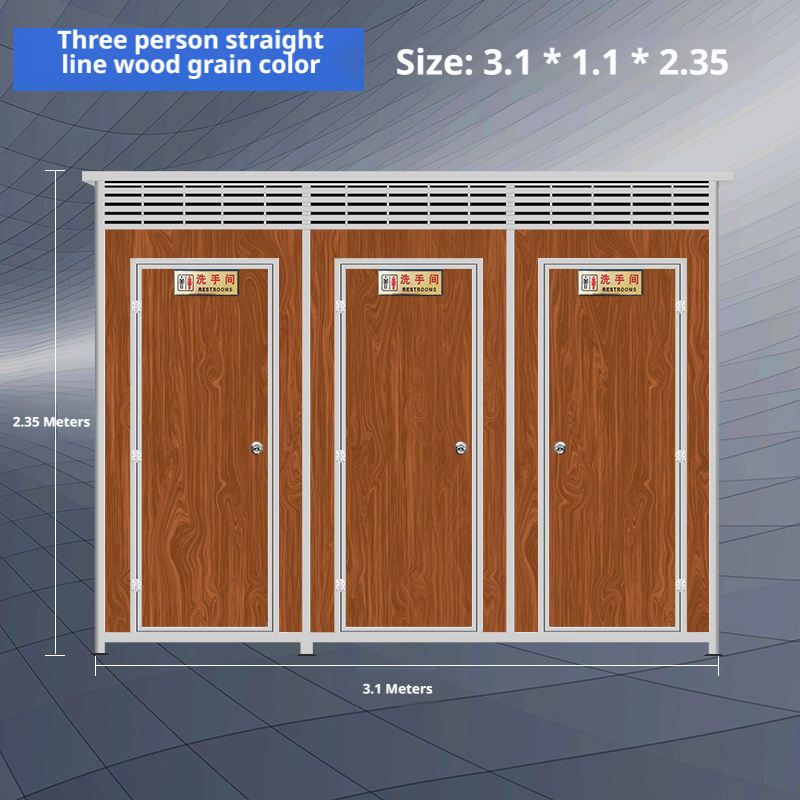
I. Core Features
Rapid Deployment
With modular design, basic installation can be completed within 24 hours, significantly shortening the construction period. For example, the packing-box units from Shandong Jinda Green Building completed the construction of 20 worker dormitories in the Weichang Road project within three days, meeting urgent demands.Cost-Effective and Environmentally Friendly
Costs are over 30% lower than traditional buildings, with a material recycling rate of 85%. Standardized factory production reduces on-site material waste (only 3%-5%), and lightweight steel structures reduce foundation material consumption by 60%-70%, aligning with green building principles.Flexible Configuration
Supports multiple combination methods to create spaces for offices, accommodations, and commercial use. Standard container dimensions are 2.4 meters wide, 2.2 meters high, and 4-12 meters long, which can be combined to form larger structures, adapting to various scenarios.Durable and Long-Lasting
Designed for a lifespan exceeding 15 years, they can withstand temperature variations from -30°C to 50°C. The main structure uses C-shaped and H-shaped steel frames with an earthquake resistance of up to magnitude 8; walls are filled with fire-resistant rock wool, providing both insulation and soundproofing.
II. Technological Advantages
Standardization and Industrialization
Container houses adopt international standard sizes (e.g., a 20-foot container with a load capacity of 25 tons), enabling mass production. Shandong Jinda Green Building achieves an 85% factory prefabrication rate, integrating water and electricity interfaces and supporting solar system integration to enhance construction efficiency.Full-Process Quality Supervision
From raw material procurement to delivery and acceptance, extreme conditions such as wind and moisture resistance are tested, with third-party agencies stationed at the factory for supervision, ensuring structural safety and quality.
III. Application Scenarios
Construction Projects
Used as worker dormitories and project office spaces, improving living conditions. For example, a bridge project utilized 15 container houses, withstanding a magnitude 7 wind and remaining intact after 18 months.Public Services
Emergency shelters and mobile police stations. The Flood Control Command in Changle County purchased 50 prefabricated houses, establishing temporary settlement points within 12 hours after a disaster.Commercial Innovation
Transformed into boutique homestays and mobile shops. A container restaurant in Weifang City attracts an average of 150 customers daily, demonstrating spatial flexibility.



