
Jiangsu Construction Site Container House
Jiangsu construction site container houses feature mature industrial support, profound technological accumulation, rich export experience, fast and efficient installation, safety and stability, low-carbon environmental protection, and controllable costs.
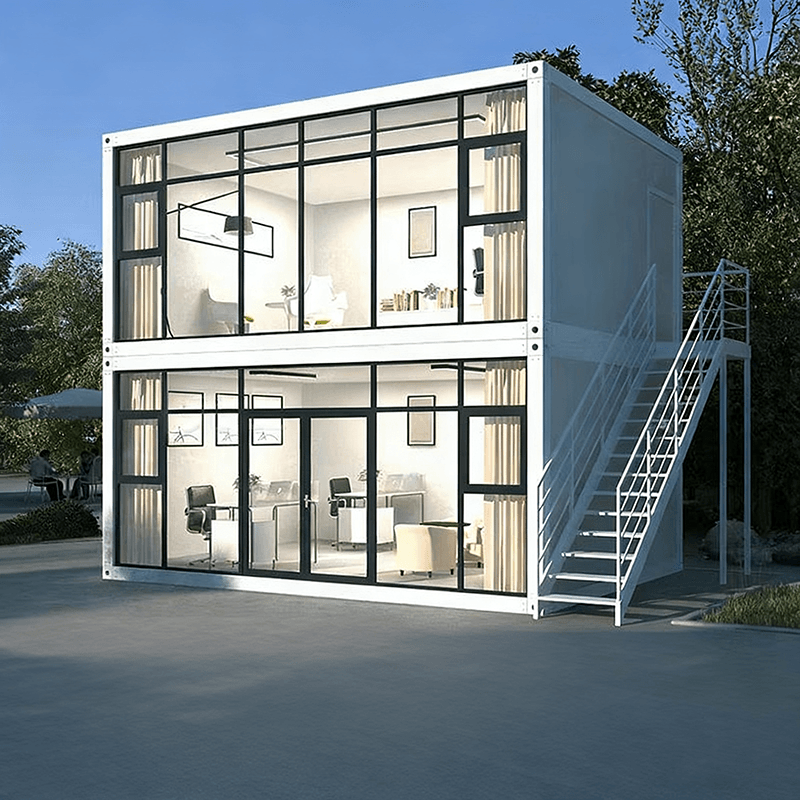
Mature industrial support: The integrated housing industry in areas such as Wujiang, Suzhou, Jiangsu, has formed a large-scale cluster, gathering many leading modular construction enterprises. From steel processing to finished product delivery, the industrial chain is complete, with significant cost advantages. For example, Suzhou Zhishang Integrated Housing Technology Co., Ltd. has an assembled building industrial park covering an area of 40 acres and has the production capacity to manufacture 10,000 packing-box units annually.
Profound technological accumulation: Integrated housing enterprises in Jiangsu hold multiple patents and have participated in numerous large-scale projects. Some enterprises also possess international qualification certifications. For instance, Suzhou Zhishang holds 31 patents and has participated in 274 bidding projects; Suzhou Zhongnan Steel Structure Co., Ltd. has undertaken landmark projects such as the Qatar World Cup Fan Village and holds international qualifications such as Bureau Veritas (BV) certification and CE certification.
Rich export experience: Jiangsu's packing-box units not only serve the local market but are also exported to more than 50 countries worldwide, with product standards and quality having been tested by the international market.
Fast and efficient installation: Adopting a 'factory prefabrication + on-site assembly' model, most of the work is completed in the factory, and only lifting and splicing are required on-site. Installation can be completed in as fast as a few hours, and the units can be put into use on the same day.
Safety and stability: Container houses are sturdy and durable, with strong earthquake and wind resistance. They have low requirements for foundation and strong environmental adaptability.
Low-carbon environmental protection: Compared to traditional brick-and-mortar temporary buildings, container houses generate less construction waste during demolition and reduce carbon emissions by more than 80%, aligning with the green construction transformation direction of the construction industry.
Controllable costs: With low life-cycle costs, considering factors such as procurement investment, recycling frequency, residual value, and operation and maintenance expenses, they match the budget control needs of projects with different cycles.



