
Jiangmen Housing Container
Jiangmen housing containers are primarily based on containers as carriers, which are transformed into mobile houses for use. They come in various types and have significant advantages, with wide applications in multiple fields.
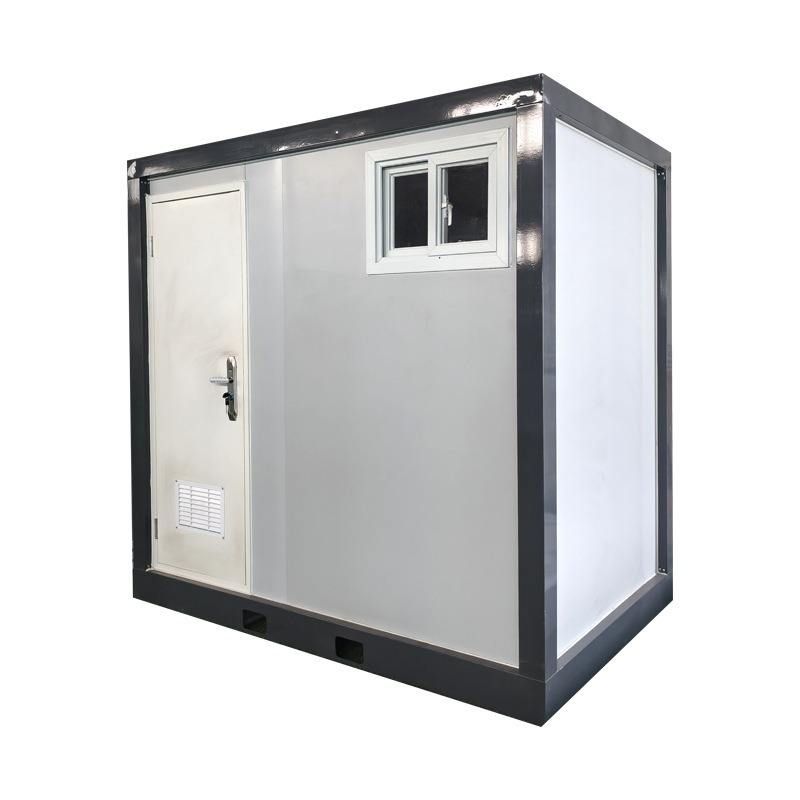
Diverse Types
Jiangmen's housing containers are rich in types, including residential containers, combined containers, container guard posts, container shops, and container villas. Residential containers are the most basic type, meeting living needs. Combined containers can be combined in multiple units to construct employee dormitories, offices, conference rooms, etc., of different shapes and sizes. Container guard posts are suitable for military outposts and other scenarios. Container shops can be used for commercial operations. Container villas offer a relatively high-end living experience.
Outstanding Advantages
- Sturdy and Durable: They have stronger wind and earthquake resistance capabilities, enabling them to cope with complex and harsh natural environments and ensuring safety in use.
- Environmentally Friendly and Energy-Saving: They can be used immediately upon acquisition, do not generate operational waste during use, and can be recycled for up to ten years, aligning with the concept of green environmental protection.
- Flexible Combination: According to actual needs, multiple containers can be freely combined to create functional spaces of different types, quickly constructing buildings that meet diverse needs.
- Easy Assembly and Disassembly: With an overall structure, they can be quickly transported to the destination by crane. After on-site hoisting, they can be occupied on the same day. During disassembly, they can be directly hoisted away, and household items can also be taken along.
- Convenient Mobility: With the help of hoisting vehicles, the entire container can be moved to any desired location at any time, offering high flexibility.
Wide Applications
They are mainly used as temporary dormitories and offices for construction site workers, providing convenient living and working places for construction personnel. They are also used in factory buildings and wilderness work sites to meet production and operational needs. They can also serve as mobile office buildings and temporary warehouses, facilitating material storage and office work. They are also applied in military outposts and mobile guard posts, providing support for military activities.



