
Is a Container House Illegal Construction?
Whether a container house is considered illegal construction cannot be generalized; those without approval or with altered purposes and properties are mostly illegal. Specific determination requires considering the following factors:
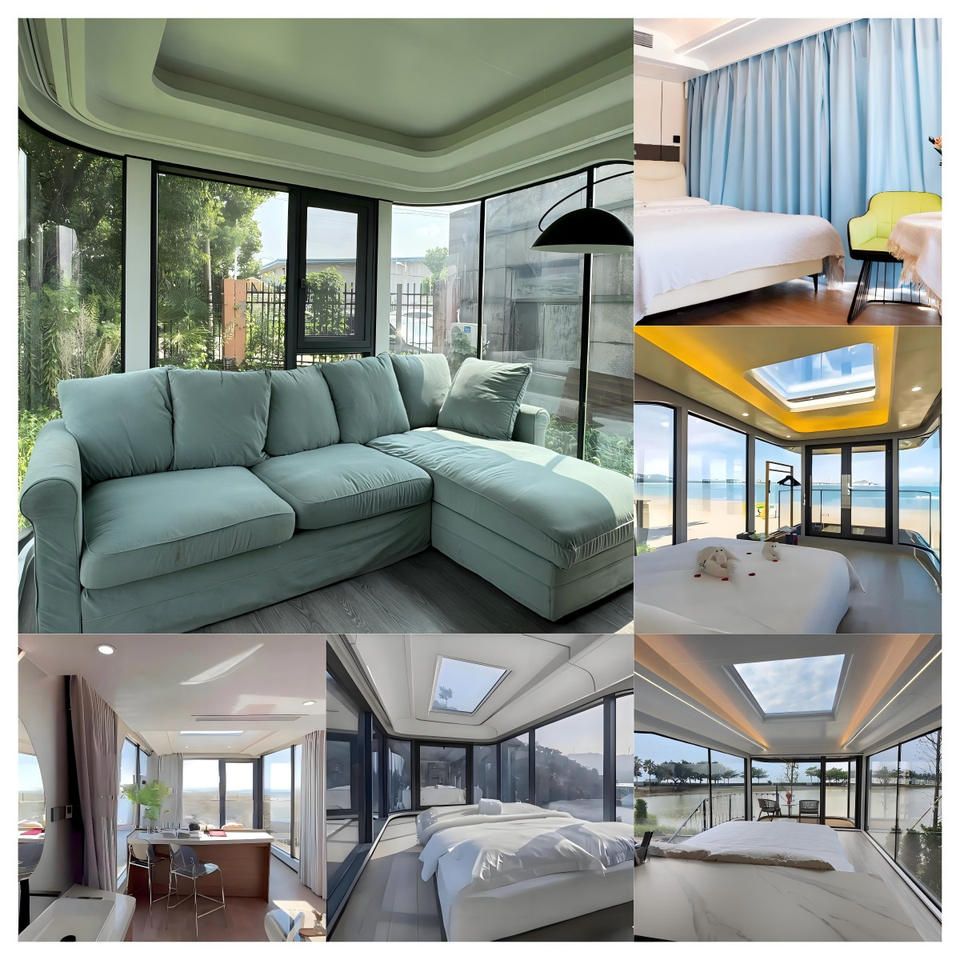
I. Core Determination Basis: Obtaining Planning Permission
According to the Urban and Rural Planning Law of the People's Republic of China, any unit or individual undertaking construction projects (including temporary buildings) must apply to the competent authority for a construction project planning permit. If a container house has not obtained this permit or has obtained it through forged materials, it is considered an illegal building. For example, the owner of a restaurant in Luxiang Town, Jinshan District, placed a container behind the house as an employee dormitory without any procedures and was identified as an illegal construction; the Dongguan Intermediate People's Court also clarified that placing containers without a planning permit is an illegal act of construction without approval.
II. Purpose and Degree of Transformation are Key Factors
If a container is only used as a temporary container for storing agricultural materials and tools, without water and electricity supply, ground hardening, or the construction of a permanent foundation, and without changing the land use (such as occupying cultivated land or public space), it is usually not considered an illegal construction. However, if it undergoes housing transformation (such as installing doors and windows, air conditioners, and connecting water and electricity) or is used for living or business purposes (such as being converted into a homestay or coffee bar), it may be considered a "substantial change in land use" and face the risk of demolition. For example, the container house purchased by a resident in Miaozhen Town, Chongming District, which was "completed with transformation and had reserved air conditioner positions," was identified as an illegal construction due to safety hazards and lack of approval; the 250-square-meter container house investigated and dealt with by Shimen Er Road Sub-district was clearly defined as an illegal building due to water and electricity supply and the installation of air conditioners.
III. Placement Location and Land Nature Affect Determination
If a container house is placed on one's own site (such as a courtyard or rooftop) but does not damage the plow layer or harden the ground, it may not be considered an illegal construction; however, if it occupies public areas (such as sidewalks or green spaces) or prohibited construction areas such as basic farmland or ecological protection zones, it is inevitably an illegal construction. For example, during a patrol, the Comprehensive Administrative Law Enforcement Team of Changhai Road Sub-district found that a housing-transformed container on the sidewalk occupied the road and affected traffic and was ordered to be removed; a露营 (camping) owner in Yunnan placed a container house on leased forest land to operate a coffee bar and was fined for failing to go through forestry fire protection approval procedures.
IV. Differences in Local Policies Require Attention
Some coastal cities (such as Shanghai and Shenzhen) have issued special policies to encourage the use of container buildings in the cultural tourism and commercial sectors; however, some major agricultural provinces have strict controls and require temporary building filings for container houses in fields. For example, a new regulation in a certain province in 2025 clarifies that even if a container house in the field is only used for storing agricultural tools, it still needs to go through filing procedures.



