
Is a Container House Cold in Winter?
Whether a container house is cold in winter mainly depends on its type and subsequent modifications, and cannot be generalized.
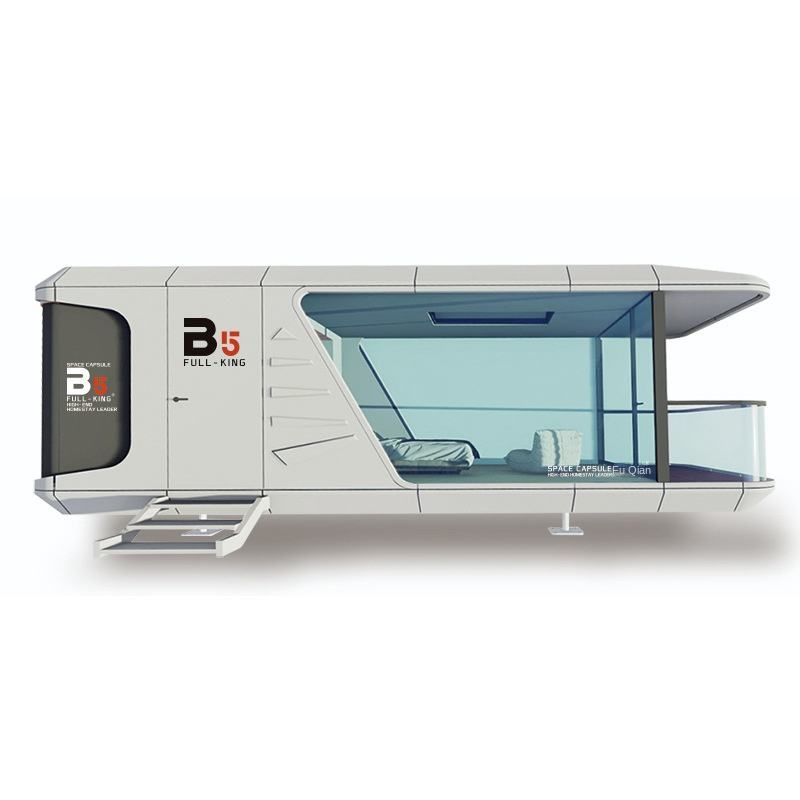
I. Differences in Thermal Insulation Performance Among Different Types of Container Houses
Houses Modified from Marine Refrigerated Containers
These houses have excellent thermal insulation performance. Originally designed for transporting goods requiring constant temperature preservation, their container bodies are made of thick materials (usually high-density polyurethane foam sandwich panels or stainless steel-lined thermal insulation layers), effectively isolating external cold. Even without additional modifications, they can maintain a relatively stable indoor temperature in winter, making them suitable for use in cold regions.Ordinary Standard Container Houses
Ordinary containers are welded from thin iron sheets (about 1.6-2.0 mm thick), which have strong thermal conductivity and poor thermal insulation performance. If not modified, the indoor temperature will drop rapidly with the external environment in winter, making direct use feel cold, especially in extremely cold regions where they may not meet living requirements.
II. Thermal Insulation Modification Plans for Ordinary Container Houses
Adding Thermal Insulation Layers
Attaching thermal insulation rock wool (thermal conductivity ≤ 0.044 W/m·K) or polystyrene boards (thermal conductivity ≤ 0.032 W/m·K) inside the container body can significantly improve thermal insulation performance. After modification, the thermal resistance value (R-value) of the container body can reach 2.0-3.5 m²·K/W, close to that of traditional brick-and-mortar houses.Upgrading Door and Window Systems
Replacing single-pane glass with double-glazed units (heat transfer coefficient ≤ 2.7 W/m²·K) and using thermal-break aluminum alloy window frames can reduce heat loss by 30%-50%. For doors, it is recommended to use thermal insulation fire doors filled with polyurethane foam.Installing Active Heating Equipment
Choose air conditioners, radiators, or underfloor heating systems according to the usage scenario. For example, in an environment of -15°C, a 20 m² container house equipped with a 2.5 kW air conditioner can maintain an indoor temperature of 20°C; if underfloor heating is used, ensure that extruded polystyrene boards with a thermal conductivity ≥ 0.03 W/m·K are laid on the floor as a thermal insulation layer.
III. Performance of New Thermal Insulation Container Houses
Container houses using composite materials of thermal insulation boards (such as phenolic foam boards) and fire-resistant rock wool (density ≥ 100 kg/m³) can achieve the same thermal insulation effect as traditional buildings by adjusting the material thickness (it is recommended that the total thickness be ≥ 100 mm in northern regions). Measured data shows that the winter heat loss rate of such houses is ≤ 15%, and they do not experience the phenomenon of being "cold in winter and hot in summer," and they comply with the energy-saving requirements of the "Technical Specification for Container Houses" (GB/T 36119-2018).



