
Internet-Famous Shop Container House
The internet-famous shop container house is a modular commercial building based on standard containers, formed through creative design and functional transformation. It features lightweight construction, high aesthetic appeal, rapid deployment, and flexible adaptability, making it widely applicable in night markets, cultural tourism attractions, commercial districts, and other settings.
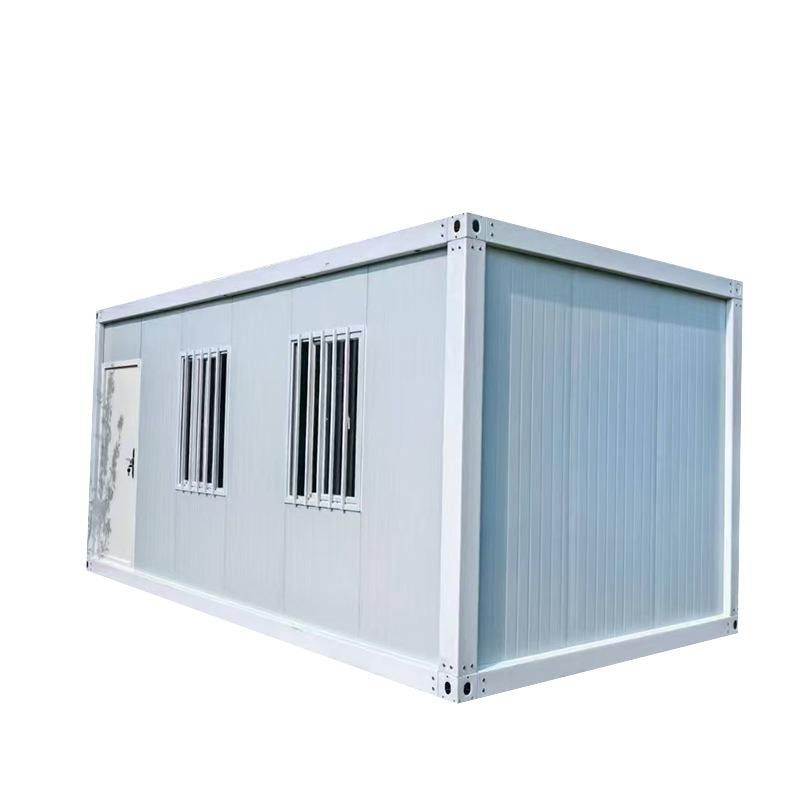
Core Advantages
Rapid Construction and Low Cost: Utilizing factory prefabrication and on-site modular assembly, it eliminates the need for large-scale civil engineering modifications, resulting in a short construction period (e.g., delivery cycles of approximately 30-45 days for projects under 50㎡). Investment costs are reduced by over 40% compared to traditional buildings. For instance, the Baoying Lotus Market quickly established nearly 70 shops within a 1297.6㎡ space using container assembly techniques.
Flexibility and Reusability: The containers support single-story, double-story, or multi-story combinations to meet different site planning requirements. They can be relocated as a whole or upgraded iteratively, preventing building asset obsolescence and making them suitable for night market upgrades, scenic area business updates, and other scenarios.
Environmental Protection and Energy Efficiency: Filled with fireproof and thermal insulation materials (e.g., 100mm rock wool), energy consumption is only 60% of that of traditional buildings. Recyclable materials are used, and the construction period is shortened by 40%, aligning with low-carbon urban development concepts.
High Aesthetic Appeal and Traffic Attraction: With a high degree of freedom in exterior design, customized coatings, unique shapes, and ambient lighting can create differentiated scenes such as trendy internet-famous styles or literary retro styles, attracting young customers to visit and spend. For example, the Riyueshan Container Café features a second-floor terrace and glass doors and windows, catering to both pass-by takeout and停留 (lingering for scenic views) needs.
Typical Application Scenarios
Night Markets and Commercial Districts: Such as the Baoying Lotus Market, which integrates food and cultural creativity shops, creating an immersive experience through intelligent lighting systems and dynamic light and shadow matrices.
Cultural Tourism Attractions: Serving as visitor centers, cafes, or pop-up stores, they supplement commercial offerings and become landmark attractions.
Creative Parks and Camping Bases: Providing diversified functional spaces for office leisure and reception services.



