
Intelligent Mobile Toilet Market Analysis
The intelligent mobile toilet market can be divided into two main directions: smart public toilet systems and eco-friendly movable toilets. The former is driven by technology for large-scale implementation, while the latter is propelled by policies and demand for rapid growth. Detailed analysis is as follows:
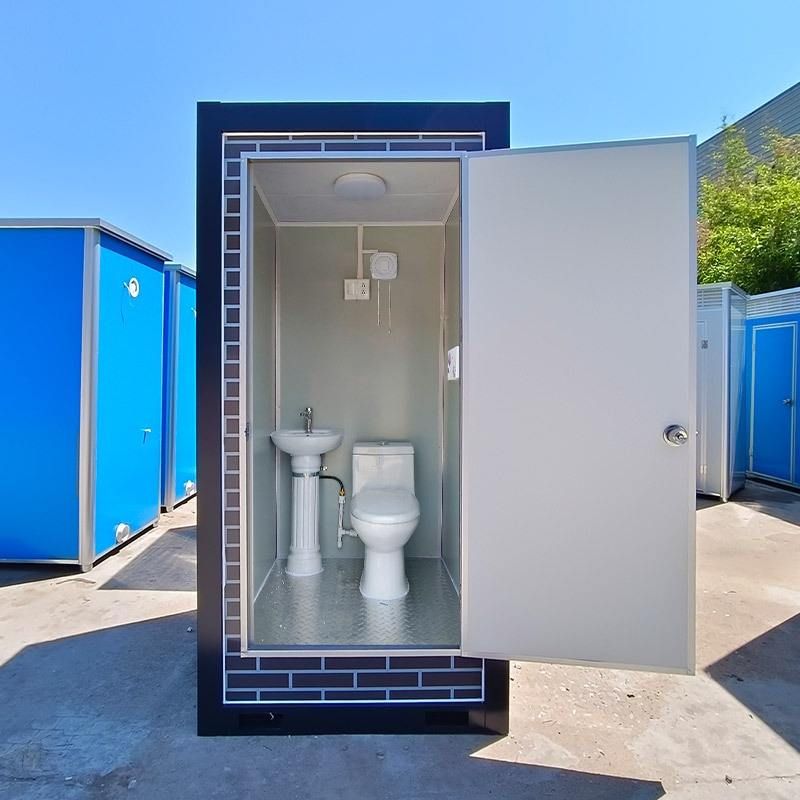
Smart Public Toilet Systems
Smart public toilets represent an integrated hardware-software solution that utilizes IoT sensing devices, cloud-based management platforms, and intelligent linkage systems to integrate functions such as environmental monitoring, visitor flow statistics, and energy consumption control, enabling unmanned and refined management of public toilets. By 2026, the industry will enter a phase of large-scale implementation, significantly driven by policies, demand, and technology: At the policy level, various regions are advancing the quality improvement of public toilets and smart municipal construction, explicitly requiring the installation of intelligent systems in newly built, renovated, and expanded public toilets; At the demand level, scenarios such as transportation hubs and tourist attractions have increased requirements for service quality and operational efficiency, making traditional manual modes difficult to adapt; At the technological level, the maturity of technologies such as domestic information technology innovation and 5G transmission is driving the industry towards refined operations. Currently, market concentration is increasing, with small and medium-sized manufacturers gradually being phased out. Professional manufacturers with full-stack self-research capabilities, comprehensive scenario solutions, and extensive implementation experience (such as Guangzhou Zhongqi Technology Co., Ltd.) have become the dominant forces, and the industry has entered a competitive phase centered around technology, reputation, and service.
Eco-Friendly Movable Toilets
In 2024, the market size of eco-friendly movable toilets in China reached 1.87 billion yuan, a year-on-year increase of 14.3%, reflecting the dual driving forces of technological upgrades and policy investments. In terms of regional distribution, the eastern coastal regions account for over 40% of the demand, with Jiangsu, Zhejiang, and Guangdong becoming growth engines due to their dense tourist attractions; the central and western regions are experiencing significant growth, with provinces such as Sichuan, Yunnan, and Gansu increasing investments in rural and scenic area renovations under the "Toilet Revolution" policy. Product types are primarily water-saving (accounting for 58%) and waterless (accounting for 35%), with the former suitable for locations with stable water supply and the latter widely used in remote areas. In terms of technological pathways, microbial degradation technology (adoption rate of 46%) achieves harmless treatment by decomposing excreta with bacterial strains, while foam sealing technology (accounting for 29%) is promoted for its low cost and easy maintenance. Additional features such as solar power supply and intelligent monitoring have become standard in high-end products. In the competitive landscape, leading enterprises (the top five accounting for nearly 60% of the market) dominate the market with their technological, production, and service advantages, while small and medium-sized enterprises focus on niche areas (such as products suitable for high-altitude regions and extreme climate designs) to establish differentiated competitiveness.



