
Intelligent Container Modular House
An intelligent container modular house is a building form that uses containers as the basic structural modules. After modification, it has residential or office functions and incorporates an intelligent management system. It is characterized by environmental protection, flexibility, and low cost, and is widely used in the field of modular construction.
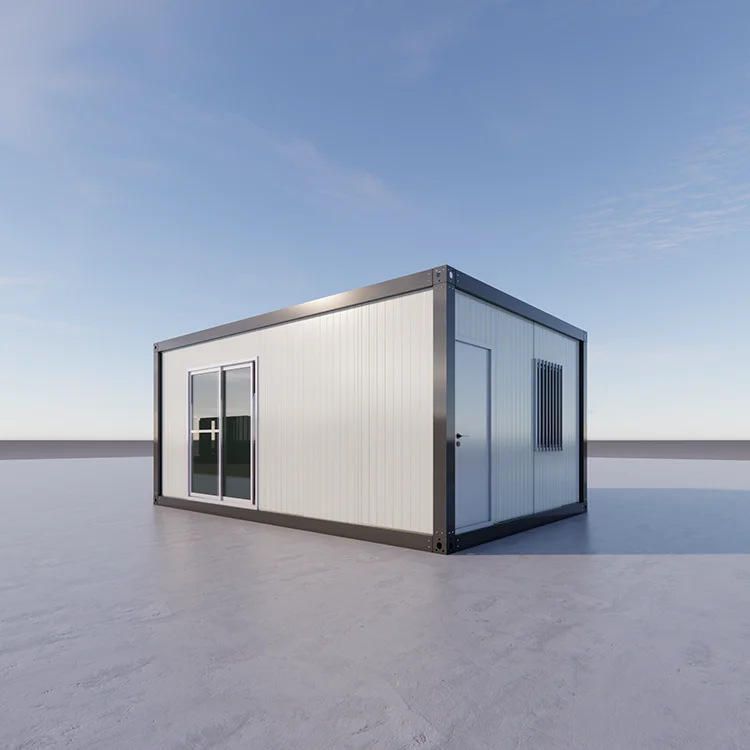
I. Core Features
- Modularization and Prefabrication: Using standardized containers as units, integrated prefabrication of walls, floors, ceilings, pipelines, and sanitary systems is completed in the factory to form complete living or functional modules. For example, in the case of Dongguan Humen Port, the containers contain all living facilities and can be quickly assembled into buildings such as schools and hospitals like 'building blocks', significantly shortening the on-site construction period.
- Environmental Protection and Cost Advantages: Using recyclable containers as the main structure reduces the generation of construction waste. The factory prefabrication model reduces material waste and labor costs, and has high transportation efficiency, with the overall cost being about 30%-50% lower than that of traditional buildings.
- Intelligent Integration: Functions such as energy management, environmental monitoring, and security warnings are achieved through Internet of Things technology. For example, equipped with intelligent temperature control systems, solar power supply devices, and remote monitoring platforms, it improves energy utilization efficiency and reduces operation and maintenance costs.
II. Technical Optimization Directions
- Improvement of Thermal Insulation Performance: In view of the high thermal conductivity of the metal material of containers, new composite thermal insulation materials (such as aerogel blankets) and double-layer wall structures are developed to control the indoor temperature difference fluctuation within ±2°C, meeting the usage requirements of different climate zones.
- Energy Supply System: Integrate photovoltaic power generation, wind power generation, and energy storage devices to form a microgrid system. For example, in some cases, the roof photovoltaic panels can meet more than 60% of the building's daily electricity demand, and cooperate with intelligent scheduling to achieve off-grid operation.
- Strengthening of Structural Safety: Optimize the container connection nodes through finite element analysis, and adopt high-strength bolts or welding processes to ensure that the overall seismic resistance level after assembly reaches above 8 degrees, adapting to applications in earthquake-prone areas.
III. Typical Application Scenarios
- Emergency Construction: In natural disasters or public emergencies, it can be quickly deployed as temporary medical stations, isolation rooms, or command centers. For example, during the COVID-19 pandemic, some areas of Wuhan Huoshenshan Hospital used modular container houses, which were completed and put into use within 10 days.
- Commercial and Residential Use: As hotels, apartments, or office spaces, it meets differentiated needs through personalized interior design. Container-themed hotels have emerged in Southeast Asia, forming characteristic landscapes through module combinations.
- Industrial Support: Provide employee dormitories, equipment warehouses, and other facilities for construction sites, mines, and other scenarios, supporting repeated disassembly and assembly and reuse in different locations, reducing long-term investment costs for enterprises.
IV. Market Development The export growth rate of prefabricated buildings (including modular buildings) in China is significant, and products have been shipped to Southeast Asia, the Middle East, Africa, and other regions, and have been applied to multiple infrastructure projects along the 'Belt and Road'. With the popularization of intelligent technology, intelligent container modular houses are evolving from a single function to a complex, becoming an important direction for future building industrialization.



