
Inside the Container House
Container houses are usually equipped with basic living facilities, but the specific conditions vary depending on their use and configuration, and there may be limited space and shared facilities.
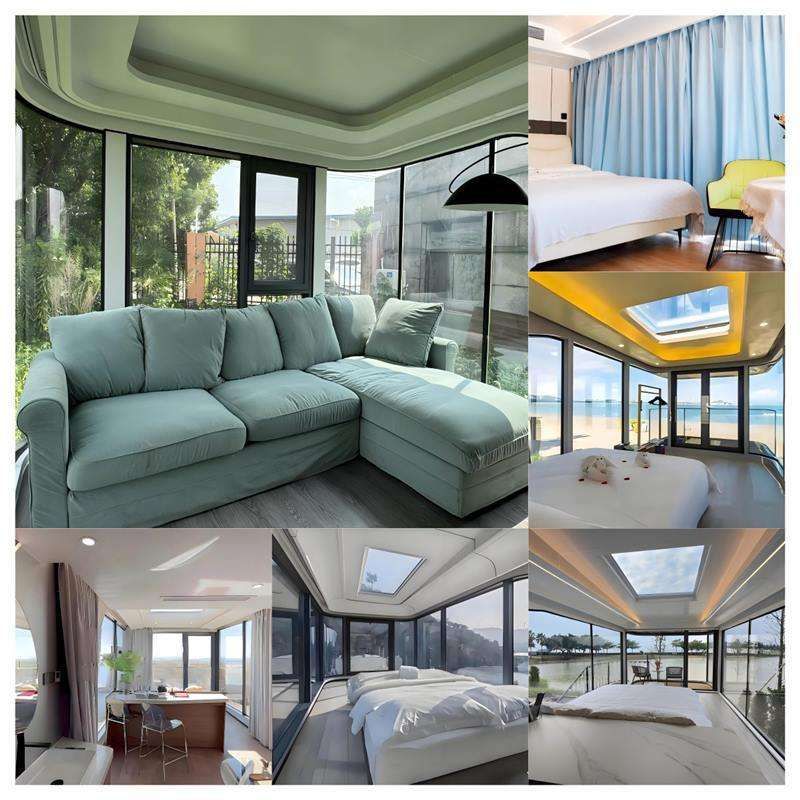
1. Basic Living Facilities
As temporary accommodation or office spaces, container houses are typically equipped with some basic living facilities. For example, in the case of the Nagoya Asian Games, container houses were equipped with electrical appliances such as air conditioners and refrigerators, as well as sanitary facilities like toilets and showers. However, due to limited space, these facilities are often shared, with multiple athletes using the same toilet and shower.
2. Spatial Layout and Utilization
The spatial layout of container houses is relatively compact, requiring efficient use of every inch of space. Generally, the interior of a container house is divided into basic functional areas such as sleeping and living areas. In the case of the Nagoya Asian Games, due to limited space, the beds for athletes were relatively small, which could affect sleep quality for taller athletes. Additionally, the storage of items within container houses needs to be systematically planned to avoid reducing the actual usable area.
3. Structural Stability and Safety
The structural stability of container houses is crucial for their use as temporary residences. According to actual measurements, different brands of container houses vary in their wind and earthquake resistance. When purchasing or renting a container house, priority should be given to products that are structurally stable and meet relevant safety standards. At the same time, regular inspections and maintenance are necessary during use to ensure the safety of the house.
4. Adaptability in Special Environments
In special environments, such as areas with extreme weather or complex geological conditions, the adaptability of container houses is also a consideration. For example, during the Nagoya Asian Games, due to heavy rainfall, some container houses experienced waterlogging and leakage. This reminds us that when choosing container houses as temporary residences, their drainage and waterproofing capabilities need to be fully considered.



