
Types of Mobile Toilets in Inner Mongolia
Mobile toilets in Inner Mongolia come in a variety of types, which can be mainly classified from three dimensions: sewage discharge methods, structural materials, and treatment system types.
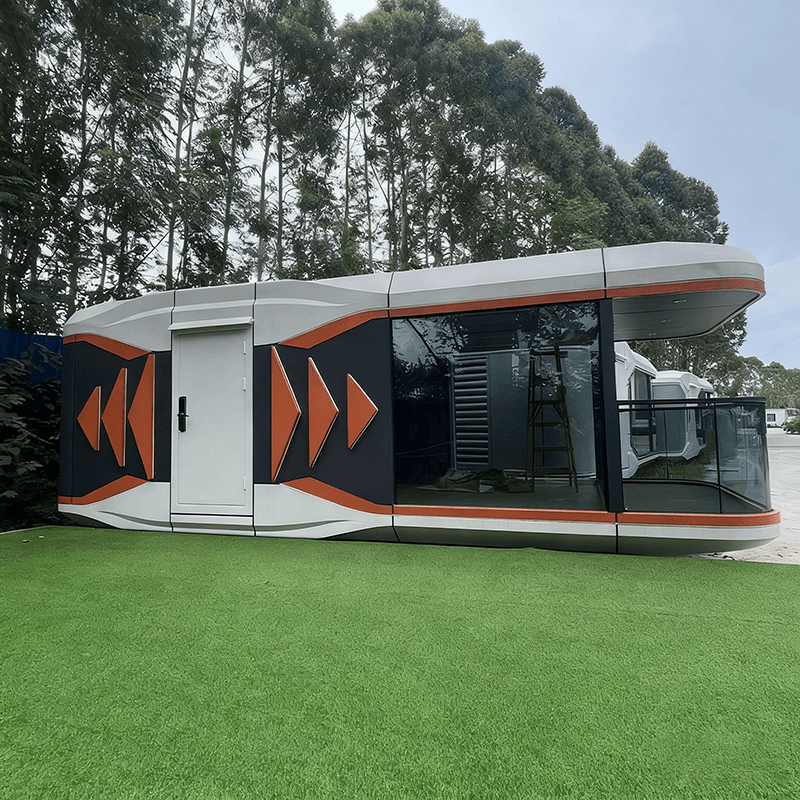
From the perspective of sewage discharge methods, they are primarily divided into two types: waterless flushing and direct discharge. Waterless flushing mobile toilets are equipped with independent fecal storage tanks, with tank capacities typically ranging from 200 to 500 liters. They rely on biodegradable agents to decompose excreta and do not require connection to water supply and drainage pipes, making them suitable for sites lacking water or water supply and drainage interfaces. Direct discharge mobile toilets, on the other hand, need to be connected to municipal sewage pipes. Their working principle is similar to that of traditional toilets, achieving direct discharge of excreta through water supply and drainage interfaces, and are suitable for sites with complete water supply and drainage facilities.
In terms of structural materials, mobile toilets in Inner Mongolia are mainly divided into fiberglass integrated molding and HDPE plastic拼接 (spliced) types. Fiberglass integrated molding mobile toilets are characterized by strong durability but are relatively heavy and not easy to move, making them suitable for long-term fixed use. HDPE plastic spliced mobile toilets, on the other hand, are convenient for transportation and rapid assembly, allowing flexible adjustment of the number and layout of toilets according to needs, and are suitable for temporary or frequently moved occasions.
In addition, in the Baotou area, the treatment systems of mobile public toilets are mainly divided into three technical paths: water flushing systems, foam sealing systems, and microbial degradation systems. The working principle of water flushing systems is similar to that of traditional flush toilets, reducing the amount of water used per flush through high-pressure pneumatic or electric water pumps to achieve water conservation. Foam sealing systems cover the surface of the toilet with a layer of foam containing special surfactants, which lubricates and isolates odors while reducing water consumption for flushing. Microbial degradation systems utilize specially cultivated microbial communities to decompose excreta into water vapor, carbon dioxide, and a small amount of inorganic salt residues under aerobic conditions, achieving harmless treatment of excreta. Moreover, the tank bodies are usually equipped with heating devices and stirring systems to improve decomposition efficiency.



