
Indoor Mobile Squat Toilet
Currently, there are no finished products directly labeled as 'indoor-specific mobile squat toilets,' but the demand can be met through modifications or customizations. The specific solutions are as follows:
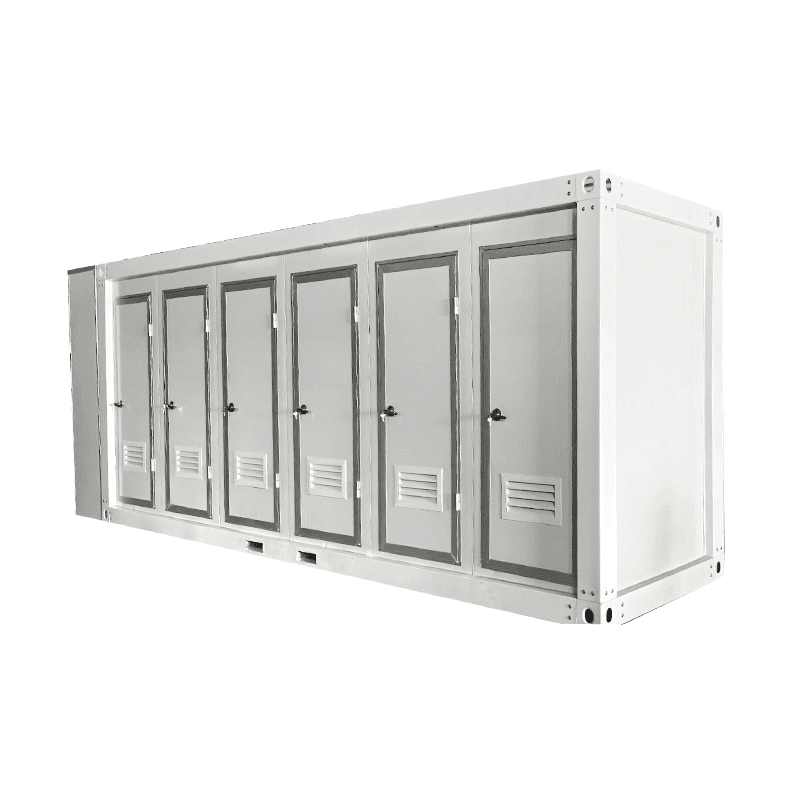
1. Modifying Four-Squat Mobile Toilets
Some models, such as the four-squat mobile toilets produced by Taihe, although originally designed for outdoor settings like scenic spots and factories, have the potential to be modified for indoor use. They are made of metal carved panels, providing thermal insulation, and have a sturdy frame welded from galvanized square steel, ensuring durability with an outdoor lifespan of over 15 years. The internal water and electricity systems are fully equipped, allowing for immediate use upon connecting to pipelines on-site, including a public handwashing area and two squat toilets each for men and women. If the indoor space is sufficient (requiring a module size of approximately 2-3 meters by 2-3 meters) and meets the water and electricity connection requirements, some non-essential structures (such as external decorative panels) can be removed, and the entrance and exit positions adjusted to fit the indoor layout. However, it should be noted that these products were not originally designed with indoor ventilation and lighting needs in mind, so additional exhaust fans or ventilation ducts may need to be installed during modification, and the floor's load-bearing capacity must be ensured.
2. Customizing Dry-Packing Mobile Toilets
If there are no sewer pipes indoors or flexible layout is required, 'dry-packing mobile toilets' can be prioritized. These products collect feces in biodegradable plastic bags without the need for water flushing, making them suitable for settings with limited water and electricity. Their core components include a feces storage tank, squat toilet, sealing device, and replaceable packing bags, mostly made of fiberglass or polyethylene, which are lightweight and corrosion-resistant. When customizing, special attention should be paid to:
- Size Adaptation: Determine the module height (usually 1.8-2.2 meters), width (0.8-1.2 meters), and depth (1-1.5 meters) based on the indoor space;
- Sealing: Ensure there are no leaks at the connection between the feces storage tank and the squat toilet to prevent odor diffusion;
- Convenience: Choose a packing bag replacement port with a foot-operated opening and closing mechanism for easy daily maintenance.
3. Alternative Solutions for Special Needs
For individuals with mobility issues (such as the elderly or pregnant women), modifications can be made based on the design principles of 'mobile toilet commode chairs.' These products feature a sturdy steel frame, non-slip foot pads, and height adjustment functions. A squat toilet module can be added on this basis (requiring customized adaptable structures, such as foldable handrails and non-slip pedals), but the stability and safety of the modified product must be ensured to prevent tipping risks due to center-of-gravity shifts.



