
Independent Portable Toilet
An independent portable toilet typically refers to a portable toilet (Portable toilet), which is a facility that can be moved as a whole and flexibly set up in fixed or temporary locations, primarily used to meet the toilet needs of the public or customers.
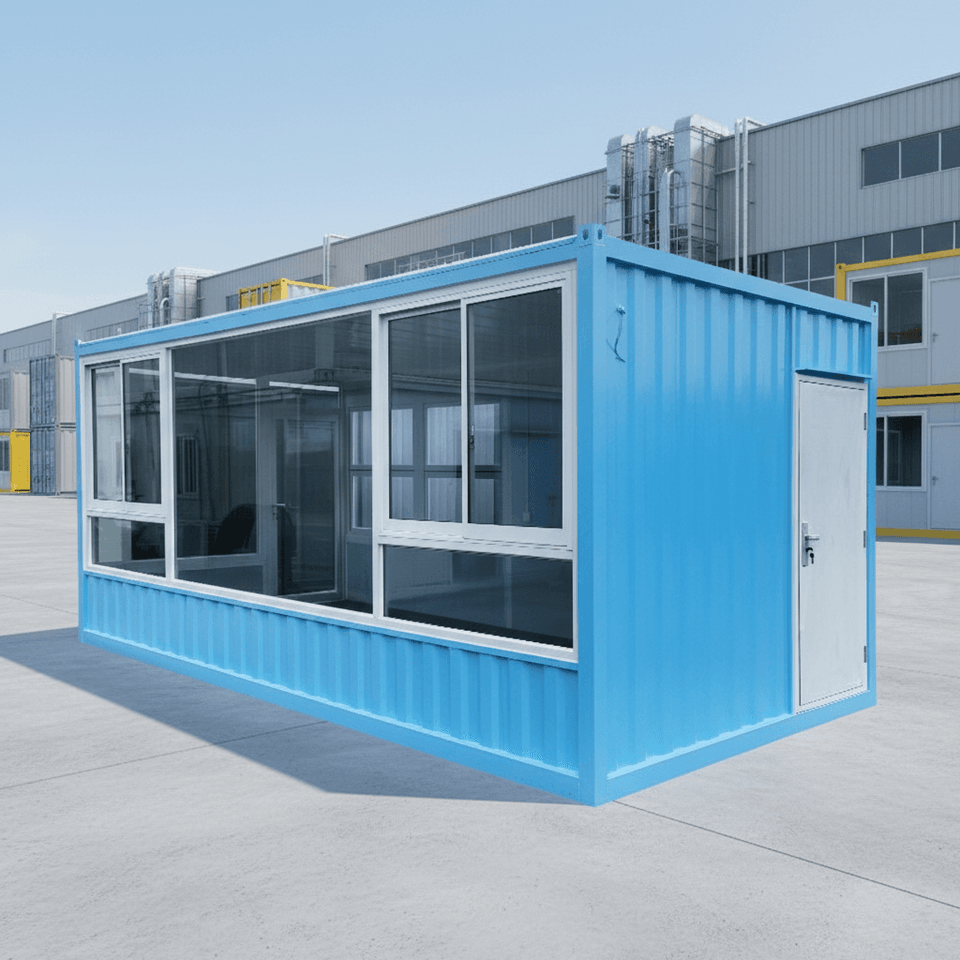
Types and Structural Features of Portable Toilets
Portable toilets can be classified into various types based on their functions and designs. Grid-style portable toilets exist as independent single rooms and are commonly found in scenic spots, campsites, parks, and other locations. Their characteristic is that they are unisex, with independent spaces divided by partitions, and are equipped with rain-proof corridors. They can be used not only as toilets but also be converted into shower rooms. This design improves space utilization and is particularly suitable for scenarios with high foot traffic and the need for rapid deployment.
Economical and practical portable toilets focus more on functionality and cost balance. Their appearance is usually gray and white, with eight squatting positions designed inside, and clearly distinguish between the entrance doors for men's and women's toilets. The front wall adopts a sliding window design, ensuring ventilation while maintaining privacy; the installation of stone wall lamps enhances safety for nighttime use. The equipped independent squatting positions and water and electricity sanitary ware in the toilet rooms provide an experience close to that of traditional fixed toilets, but with significantly enhanced flexibility.
Application Scenarios and Advantages of Portable Toilets
The core advantages of portable toilets lie in their portability and rapid deployment capability. In large-scale events (such as music festivals, sports events) or temporary construction sites, the construction period and cost of traditional fixed toilets are high, while portable toilets can be installed and put into use in a short time, effectively alleviating toilet pressure. Additionally, their modular design allows for the addition or reduction of squatting positions or the adjustment of functions according to needs, such as adding barrier-free facilities or mother-and-child rooms, further expanding their applicability.
In the field of environmental protection, some portable toilets adopt water-saving technologies or biodegradation treatment systems, reducing their dependence on municipal sewage networks, and are particularly suitable for water-scarce areas or ecologically sensitive regions. For example, certain models achieve zero sewage discharge through a circulating filtration system, reducing operating costs and meeting sustainable development requirements.
Maintenance and Management of Portable Toilets
Regular maintenance is crucial to ensure the long-term use of portable toilets. Daily cleaning should focus on the disinfection of squatting positions, floors, and sanitary ware to prevent bacterial growth; inspection of the water and electricity systems can avoid water leaks or circuit failures; and maintenance of the rain-proof corridors and partitions can extend the lifespan of the facilities. Additionally, reasonable planning of the distribution density of portable toilets (such as configuring one squatting position for every 50-100 people) can optimize the user experience and avoid queuing.



