
How to Make Container Houses Well-Ventilated
Container houses can achieve good ventilation effects through reasonable design of ventilation systems, optimization of spatial layout, utilization of natural ventilation, and auxiliary equipment. The specific methods are as follows:
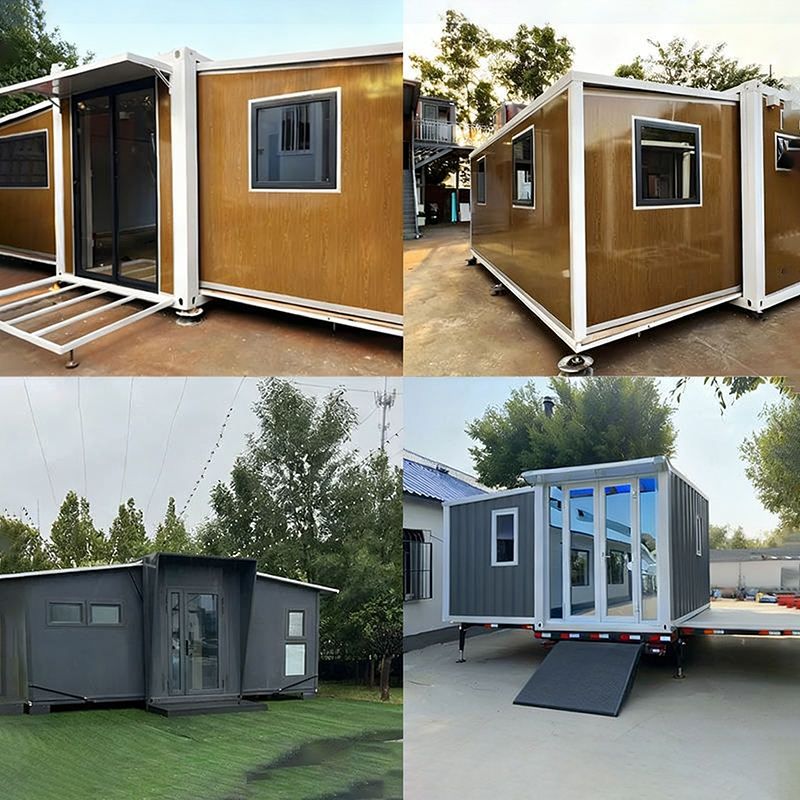
I. Reasonable Design of Ventilation Systems Container houses need to be equipped with a complete ventilation system to avoid dampness and mold, which is crucial for healthy living. The design of the ventilation system should take into account the orientation of the house, the positions and quantities of doors and windows to create natural convection. For example, high and low windows can be set on opposite walls to promote air circulation using the principle of hot air rising; or an overpass area can be left on the ground floor through staggered-floor design to improve ventilation. In addition, exhaust fans or ventilation skylights can be installed on the roof to enhance mechanical ventilation capacity, especially in enclosed spaces or during the rainy season, to quickly expel moisture.
II. Optimization of Spatial Layout and Material Selection
- Spatial Layout: When expanding functional areas through splicing or staggered stacking, ventilation gaps should be reserved. For example, when two containers are connected to form an integrated living and dining space, a hollow partition or glass sliding door can be set at the connection point to ensure both lighting and air circulation.
- Material Selection: The walls and roof should be equipped with qualified insulation layers and vapor barriers to prevent internal condensation. At the same time, materials with good sealing properties such as triple-glazed windows should be selected to reduce moisture accumulation caused by cold and hot air exchange. The exterior facade can use glass curtain walls or hollow hanging panels to enhance ventilation and get rid of the industrial feel.
III. Utilization of Natural Ventilation and Auxiliary Equipment
- Natural Ventilation: By installing large floor-to-ceiling windows, roof skylights, or glass partitions, the area for indoor and outdoor air exchange can be increased. For example, setting a whole floor-to-ceiling window on the south-facing wall and cooperating with a high window on the north-facing wall can create a through-draft effect.
- Auxiliary Equipment: Place charcoal bags in the corners of the house to absorb odors, or use deodorizing cleaners to wipe walls and floors; place potted plants such as ivy and mint to purify the air; in summer, reduce sun exposure and lower indoor temperature through roof eaves or terrace awnings, thereby reducing condensation problems caused by temperature differences.
IV. Regular Maintenance and Damp-Proof Treatment The main body of the container is made of steel, so the anti-rust coatings on welds, corners, and other parts need to be regularly inspected to avoid a decrease in sealing performance due to corrosion. At the same time, the foundation should be elevated on pile foundations for damp-proofing and insect prevention; the sealant around doors and windows and at the joints of container bodies should be replaced every 5-7 years to prevent rainwater infiltration.



