
How to Lock Mobile Container Houses
The locking methods for mobile container houses are mainly divided into two categories: door lock fixation and structural locking, and the appropriate solution should be selected based on the usage scenario.
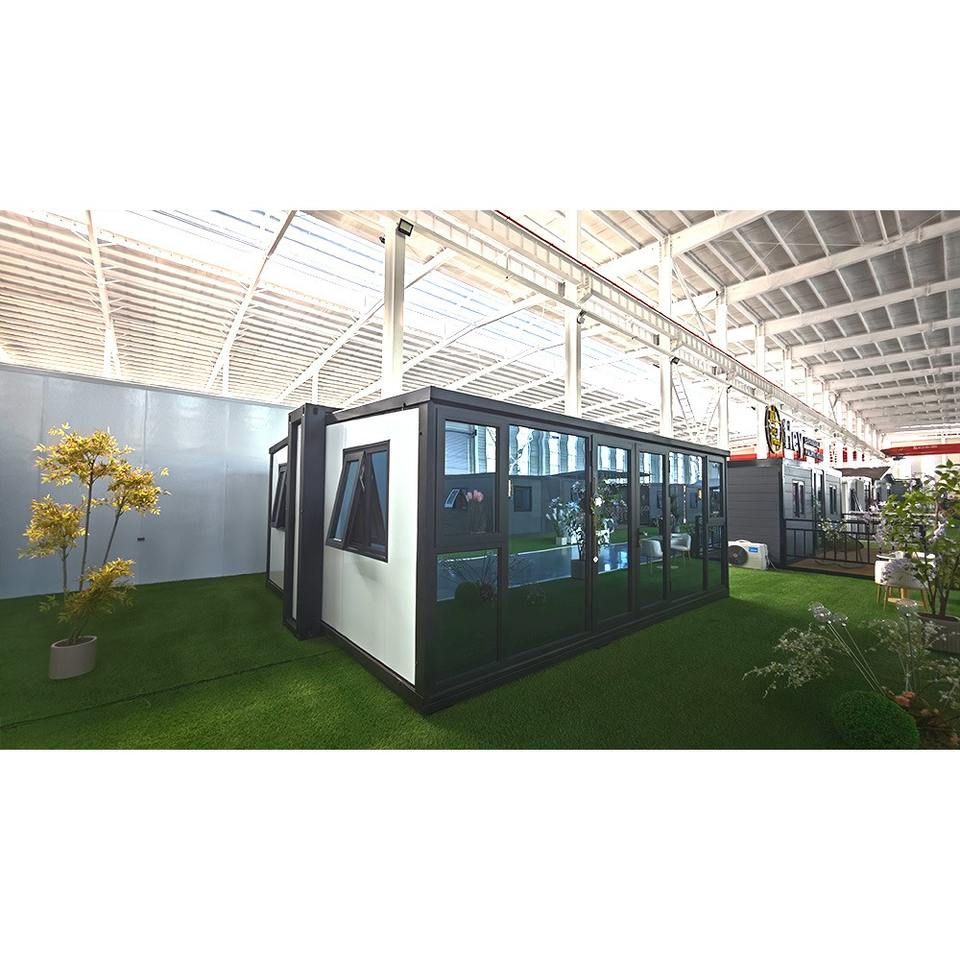
I. Door Lock Fixation Solutions
The door lock is the core of the security for mobile container houses, and the type should be selected based on the usage environment and security requirements:
Power-Free Maintenance-Free Door Locks Made of 304 stainless steel, with a temperature resistance range of -40°C to 80°C, suitable for long-term outdoor use. Their advantage lies in requiring no power maintenance, achieving locking through mechanical structures, commonly seen in temporary housing on construction sites or projects in remote areas. During installation, measure the door panel thickness, select a high-strength position for fixation, and test the smoothness of opening and closing to avoid jamming due to door frame deformation.
Heavy-Duty Anti-Theft Door Locks Suitable for high-security locations (such as factories, military areas), featuring forged lock heads and lock bases, with customizable sizes to match different door types. Their anti-theft design is achieved by increasing the complexity of the lock core and the strength of the lock body, requiring use with high-strength door panels to prevent violent break-ins.
Automobile Container Panel Locks Designed simply, supporting cross-border export standards, suitable for mechanical cabinets or automobile container doors. Their lock bodies are compact in structure and easy to install, but note that the door panel material must match the load-bearing capacity of the lock to avoid loosening after long-term use.
Special Environment Adaptation: In low-temperature or humid areas (such as Baotou), test the flexibility of the lock body in advance. For example, folding container houses adopt a hydraulic linkage and mechanical pin combination locking system, using hydraulic buffering to adapt to material shrinkage caused by temperature differences, ensuring locking stability.
II. Structural Locking Solutions
If stacking or transportation is involved, the container structure needs to be fixed with bottom locks and twist locks:
Bottom Locks Used to fix the first layer of containers on the deck, connected to the deck through bolts or welding to prevent sliding during transportation. During installation, ensure that the bottom lock aligns with the corner fitting holes at the bottom of the container to avoid offset causing structural stress concentration.
Twist Locks Divided into manual and semi-automatic types, connecting the corner fittings of the upper and lower layers of containers. Semi-automatic twist lock operation steps:
- Manually insert the twist lock into the corner fitting holes at the top of the lower container, aligning the position to avoid deviation;
- When lowering the upper container, the automatic device of the twist lock (such as a spring or catch) is triggered to complete locking;
- Before unloading, manually pull out the lock pin to release the lock, then dismantle manually. Twist locks need regular inspection of the elasticity of springs or catches to prevent locking failure due to fatigue.
Combination Use Recommendations: For container houses used for long-term fixation, only door locks may be installed; for those requiring stacking or transportation, both bottom locks and twist locks should be used synchronously, and the structural locking status should be regularly inspected to ensure safety.



