
Volver al blog
Artículo
How to Install Mobile Toilets in Fields
Admin 07 de octubre de 2026
Installing mobile toilets in fields requires flexible adjustments based on site conditions. The specific steps are as follows:
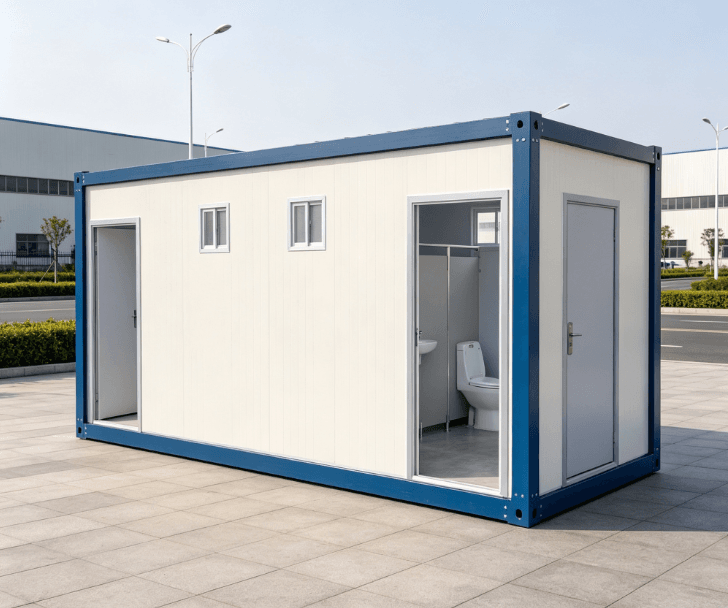
I. Pre-installation Preparation
- Site Survey
Select a flat and solid area, avoiding main construction roads or pollution sources. If the field soil is soft (e.g., sandy or backfilled soil), lay gravel or a concrete foundation (recommended load-bearing capacity ≥200kg/㎡ for single toilets), or use high-strength pads to distribute the load and prevent the toilet from sinking or tilting. - Demand Planning
Determine the toilet type based on the number of users and duration of use:
- Single-unit toilets: Suitable for short-term, small-scale use, flexible installation, but with relatively simple functions;
- Trailer-mounted large units: Suitable for long-term, large-scale use, equipped with flushing and handwashing functions, but requiring more space.
Calculate the required quantity simultaneously to avoid resource waste or shortage.
- Material Preparation
In addition to the toilet units, prepare:
- Pipes: Sewage pipes (connecting to a sump or fecal suction truck), drinking-water-grade hoses (connecting to temporary water sources);
- Tools: Wrenches, spirit levels, sealing tapes;
- Consumables: Toilet paper, hand soap, cleaning agents;
- Auxiliary equipment: If there is no water supply or sewage system in the field, plan the travel routes for water trucks and fecal suction trucks in advance.
II. On-site Installation Steps
- Site Preparation
Clear the ground of debris and ensure there are no sharp objects (e.g., stones, branches). For soft ground, lay anti-sinking materials (e.g., pads, wooden boards) and check the ground flatness with a spirit level. - Unit Positioning
Use a forklift or crane to lift the toilet smoothly to the designated position and check if it is level with a spirit level. If the ground is uneven, adjust the feet or wedges to level the toilet and ensure stability. - System Connection
- Water Supply: If there is a temporary water source in the field, connect a hose to the toilet's water inlet, check the water pressure, and empty the air in the pipe to avoid poor flushing;
- Sewage Disposal: Connect the sewage pipe to the temporary sump or fecal suction truck interface, seal the interface with sealing tape or cement to prevent leakage, and install an anti-backflow valve to avoid sewage backflow.
- Function Testing
After connecting the water source, test the flushing function and check if the drainage is smooth to avoid water accumulation or odors. If leaks or blockages are found, readjust the pipe connections.
III. Use and Maintenance
- Daily Cleaning: Clean the toilet daily, replenish consumables such as toilet paper and hand soap, and disinfect regularly (recommended once a week) to maintain hygiene;
- Regular Inspection: Inspect the electrical circuits, valves, and flushing system monthly, and report for repairs promptly if any faults are found to avoid affecting use;
- Safety Protection: Set up warning signs around the toilet, keep it away from flammable materials, and ensure electrical safety (e.g., equip generators with leakage protection devices if used).
If the field conditions are complex (e.g., sloping land, sandy land), it is recommended to contact a professional team for assistance in installation to ensure safety and functionality.
Relacionados



