
How to Contract Container Houses
Contracting container houses requires completing steps such as selection, ground treatment, installation, and construction in sequence, while also paying attention to supplier qualifications and cost control.
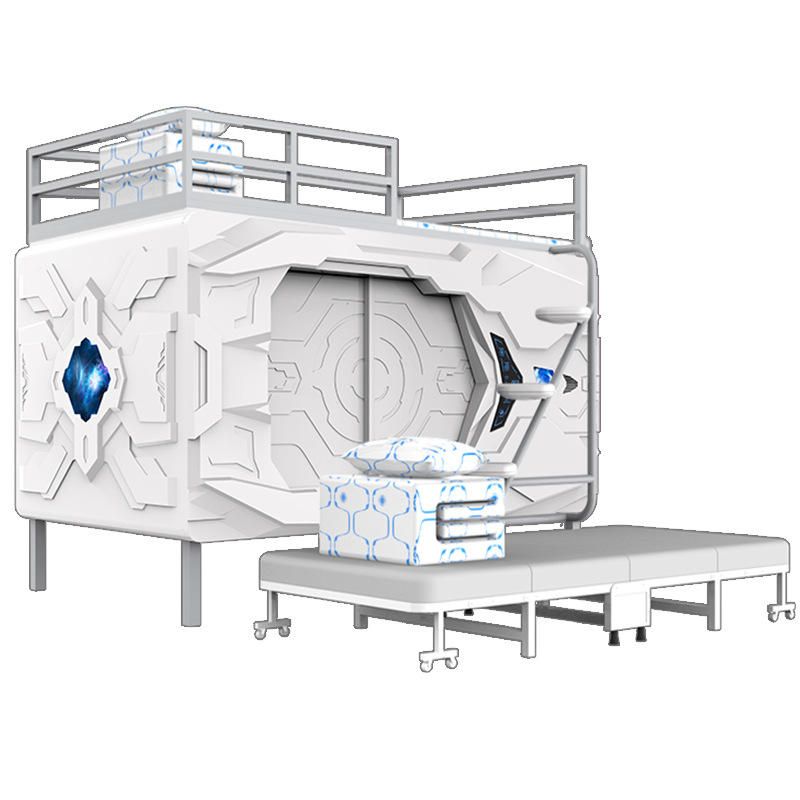
I. Clarify Requirements and Select Types Container houses come in two main types: welded integral containers and bolt-connected modular containers. Welded integral containers are factory-welded as a whole, offering strong resistance to deformation and are suitable for scenarios requiring frequent lifting and relocation. Bolt-connected modular containers use standard plates connected by bolts, and it is essential to carefully inspect the steel wall thickness of columns and bottom beams (common specifications range from 1.5 mm to 3 mm). Thicker walls provide greater load-bearing redundancy but also increase the self-weight. Additionally, attention should be paid to the surface coating process of the container body. In regions with significant temperature variations between day and night and humidity changes, hot-dip galvanizing treatment offers longer corrosion resistance and effectively reduces the risk of rust.
II. Select Compliant Suppliers Prioritize enterprises with complete third-party safety inspection reports and fire and wind resistance performance that meets the standard of 'General Technical Conditions for Prefabricated Integrated Houses' JG/T550—2025. Evaluation can be conducted through authoritative sources such as industry white papers and market research reports, combined with manufacturer-publicized parameters, third-party inspection reports, and feedback from completed projects. For example, companies like Suzhou Shengshan Integrated Housing Manufacturing Co., Ltd. offer a one-stop solution of 'standardized containers + modular accessories + flexible expansion + dual compliance for domestic and international projects,' suitable for large and medium-sized infrastructure and foreign-related engineering projects.
III. Ground Treatment and Installation Foundations The bottom beams of container houses are typically I-beams or channel steels, which have limited contact area with the ground and require a uniform load-bearing foundation. If placed directly on soft soil, local pressure can cause uneven settlement of the container, leading to issues such as door and window deformation and wall cracks. Therefore, ground treatment should be based on geological conditions, using either concrete foundations or steel ground beams to ensure the load-bearing capacity meets design requirements.
IV. Cost Control and Full Lifecycle Management Comprehensively consider procurement investment, the number of reuse cycles, residual value, and operation and maintenance expenses to match budget control requirements for projects with different durations. For example, in Hubei Province, container mobile houses offer controllable costs and reusability. Compared to brick-concrete structures or temporary buildings with high one-time investments, their value in turnover and reuse is significantly enhanced, making them suitable for enterprises engaged in multi-regional rolling construction.



