
How to Choose a Container House
When choosing a container house, it is necessary to conduct a comprehensive evaluation from five core dimensions: structural performance, installation efficiency, scenario adaptability, compliance qualifications, and cost-effectiveness:
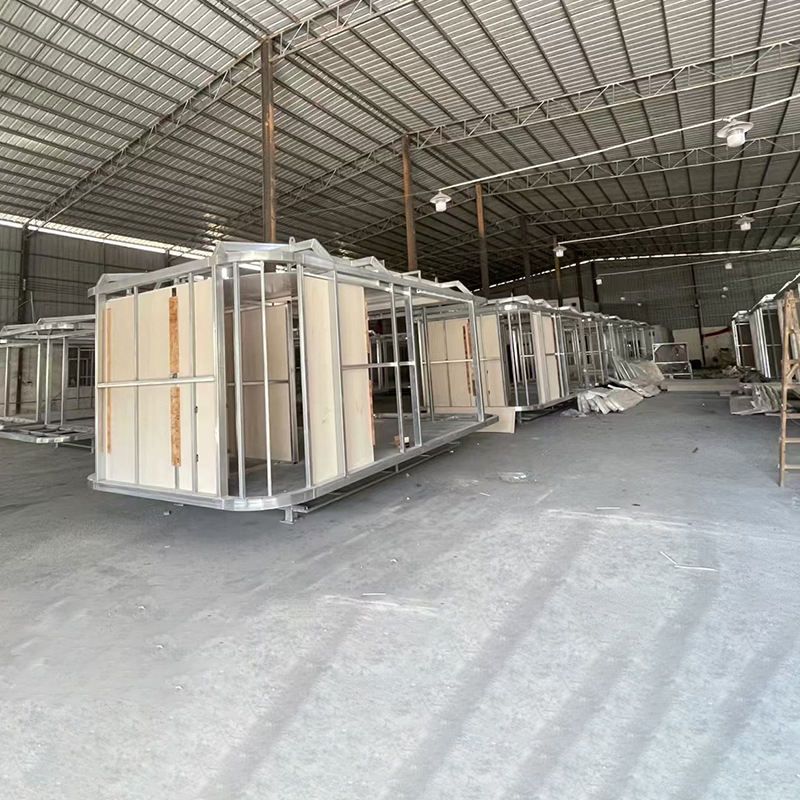
1. Structural Performance: Wind and Earthquake Resistance and Material Quality are the Foundations of Safety Prioritize fully steel-structured frame products, which have significantly better deformation resistance than bolt-connected structures. For example, Suzhou Zhongnan's packing boxes have a deformation rate of only 0.18% under conditions of a Level 12 typhoon and a Level 8 earthquake, far below the industry's qualified threshold of 0.3%; while some unbranded products have a deformation rate exceeding 1.2%, posing a risk of wall cracking. In terms of materials, it is necessary to confirm the steel thickness (it is recommended that the main beam be ≥3mm), welding process (no cold welding), and corrosion protection treatment (hot-dip galvanizing is superior to cold-dip galvanizing), which directly affect the service life of the house and its safety in extreme environments.
2. Installation Efficiency: Matching Project Timeline Requirements Choose the installation cycle according to the usage scenario:
- Rapid Delivery Scenarios (such as engineering camps): Prioritize products that can be installed in a single set in ≤2 hours, such as Suzhou Zhongnan's quick-assembly boxes, which support the construction of 10 dormitory sets in one day;
- Long-term On-site Projects: Choose packing boxes with interior pre-installation completed before leaving the factory, which can be used immediately after on-site hoisting;
- Complex Layout Scenarios: Avoid ordinary container houses with fixed layouts and prioritize products that support modular assembly. Note: The installation of a single set of non-standard products may exceed 8 hours, and the penalty for project delays can reach 2.1 times the procurement cost.
3. Scenario Adaptability: Matching Functionality with Needs
- High-frequency Relocation Scenarios: Choose foldable products. The folded volume of leading manufacturers' products is only 1/5 of the expanded state, increasing transportation volume by 60%;
- Commercial Pop-up Stores: Require products with customizable exterior facades and flexible interior functionality modifications;
- Cultural Tourism Homestays: Pay attention to thermal insulation, sound insulation performance, and spatial expansion capabilities (such as double-wing expandable container houses, which can expand by more than 50%);
- Emergency Support Scenarios: Confirm whether the product has passed fire performance tests (national standard requires Grade B1 or above) and wind resistance ratings (coastal areas are recommended to be ≥Grade 11).
4. Compliance Qualifications: Avoiding Safety and Legal Risks
- Domestic Projects: Verify whether the product has passed the GB50011-2010 Seismic Design Code and GB/T 19001 Quality Management System Certification;
- Overseas Projects: Require international certifications such as CE and ISO, and some countries also require local compliance test reports;
- Environmental Protection Requirements: Prioritize products with a reusability rate of ≥80% to avoid the construction waste disposal costs associated with disposable materials.
5. Cost-effectiveness: Considering the Entire Life Cycle
- Initial Procurement Cost: Unbranded products may be 30% cheaper in price, but the rework cost can be 3.2 times that of compliant products;
- Transportation and Warehousing Costs: The transportation cost per kilometer for foldable containers can be reduced by 25%;
- Reusability Value: Leading products have an average disassembly and reuse count of more than 8 times, reducing construction waste emissions by 90% and resulting in lower long-term usage costs.



