
How to Calculate the Output Value of Prefabricated Houses
The calculation of the output value of prefabricated houses requires selecting an appropriate method based on the specific situation. Common calculation methods are as follows:
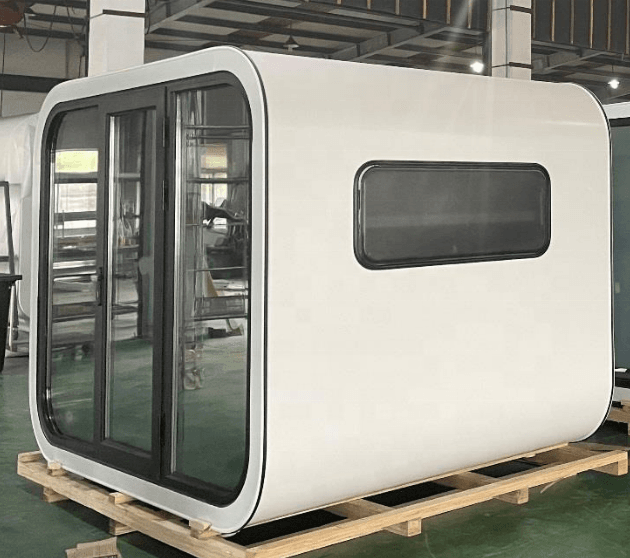
1. Calculation based on completed output value It reflects the value of the final outcome in monetary terms and is usually calculated based on the budgeted cost of completed prefabricated houses. For example, if a project is completed and passes acceptance with a total budgeted cost of 50 million yuan, its completed output value is 50 million yuan. This method is suitable for output value statistics after project completion and requires ensuring that the budgeted cost covers all direct and indirect costs.
2. Calculation based on self-completed construction output value It refers to the value of the prefabricated house construction products completed by construction and installation enterprises during the reporting period. The calculation formula is: Physical quantity of construction and installation works completed during the reporting period × corresponding unit price + indirect costs + planned profits + taxes. For example, if an enterprise completes the installation of 100 prefabricated houses at a unit price of 200,000 yuan per set, with indirect costs of 5 million yuan and a combined profit and tax of 3 million yuan, the self-completed construction output value is 2000 + 500 + 300 = 28 million yuan. This method requires clearly distinguishing between the enterprise's own construction and subcontracted parts.
3. Calculation based on total output value It includes construction engineering output value, installation engineering output value, etc. There are two calculation methods:
- Actual completed work volume method: Sum up by multiplying the actual completed work volume by the corresponding unit price. For example, if 1000 cubic meters of concrete pouring is completed at a unit price of 500 yuan per cubic meter, the output value of this part is 500,000 yuan.
- Consumption input method: Determine based on the actual consumption of materials, labor, etc., plus reasonable profits and taxes. For example, if the material cost is 2 million yuan, the labor cost is 1 million yuan, and the combined profit and tax is 500,000 yuan, the total output value is 3.5 million yuan. This method requires comprehensive recording of various input data.
4. Special calculation methods
- Progress method: Suitable for uncompleted projects, it is calculated by multiplying the actual completion progress ratio by the total contract cost. For example, if the total contract price of a project is 100 million yuan and the completion progress is 30%, the current output value is 30 million yuan.
- Project settlement income method: Total output value = self-completed construction output value + subcontracted project output value. For example, if an enterprise's self-completed output value is 40 million yuan and the subcontracted output value is 10 million yuan, the total output value is 50 million yuan.
- Process proportion method: Divide a unit project into several processes and sum up by multiplying the budgeted value of each process by the completion progress. For example, if a project is divided into 3 processes with budgeted values of 2 million yuan, 3 million yuan, and 5 million yuan respectively, and the completion progresses are 50%, 30%, and 20% respectively, the total output value is 1 + 0.9 + 1 = 2.9 million yuan. It is suitable for large and complex projects.
- Total price method (quota method): Calculate the output value of each project based on the quantity and unit price of sub-divisional works and then sum them up. It requires detailed construction drawings and a bill of quantities, with high accuracy but a large amount of calculation.
- Direct cost method: Estimate the output value based on direct costs such as labor costs, material costs, and machinery costs, plus indirect costs and profits. It is suitable for preliminary estimates or when data is incomplete.
Precautions:
- When the prices of materials and labor fluctuate significantly, the output value should be adjusted according to the contract.
- When calculating, the time range should be clearly defined to avoid omissions or repetitions.
- There may be differences in pricing standards in different regions, and local regulations should be referred to.
- For large projects, it is recommended to use the process proportion method or the total price method, while for simple projects, the direct cost method can be used for preliminary estimates.



