
How About Living in a Container House
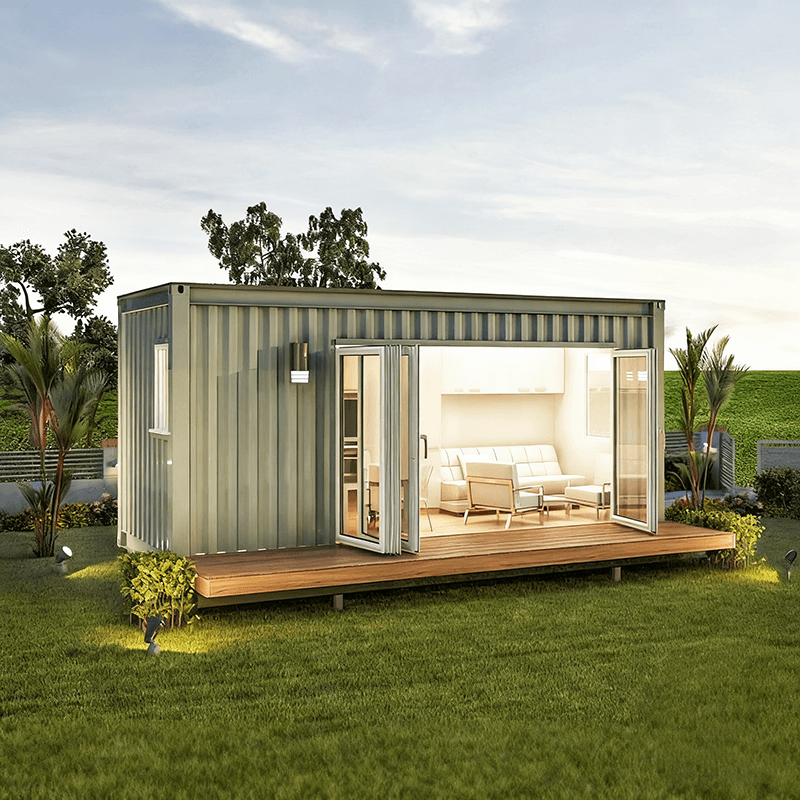
Container houses can be used for living, and with reasonable design and renovation, they can provide a good living experience, with a wide range of application scenarios and prominent performance characteristics.
Residential Attributes and Long-term Usability
Although container houses are mostly used as temporary residences, they are feasible for long-term living. Their core advantage lies in their dismountability and relocatability, allowing them to be transported to new sites for continued use after project completion, closely matching the residential attributes of fixed buildings. For example, after being used as workers' dormitories on construction sites, they can be transferred to other sites for reuse. In some cases, container houses have been renovated into long-term rental properties and even become characteristic homestay attractions (such as the container homestay attraction in Shanting District, Zaozhuang City, Shandong Province, China), demonstrating their ability to meet long-term living needs.
Enhanced Living Comfort
Through customized renovations, the comfort of container houses can be significantly improved. Interior decoration: Inner and outer walls can be decorated according to needs, with soundproof and thermal insulation materials used to improve the living environment. Home appliance configuration: Common appliances such as air conditioners and televisions can be installed to meet modern living needs. Functional integration: Integrated bathrooms, kitchens, and other facilities can be configured to address basic living needs. For example, the Nagoya Asian Games in Japan used container houses to form the Asian Games Village, ensuring athletes' living experiences through standardized design, demonstrating the feasibility of comfort renovations.
Diversified Application Scenarios
Container houses have a wide range of applicable scenarios, covering both temporary and long-term needs:
- Temporary housing: Construction site dormitories, post-disaster emergency buildings (such as quickly erected shelters after earthquakes);
- Creative spaces: Renovated into commercial venues such as cafes and bookstores;
- Emergency medical care: Quickly deployed field hospitals during epidemics;
- Commercial innovations: 24-hour self-service fitness pods, mobile offices, etc.
Their modular design allows them to flexibly adapt to different scenarios, with convenient transportation and rapid deployment.
Performance Characteristics and Safety
Compliant container houses demonstrate stable safety performance, although products vary among different companies. Wind and earthquake resistance: For example, the all-steel frame container houses from Suzhou Zhongnan Steel Structure Co., Ltd. have been tested to withstand wind speeds of up to 12 and seismic intensities of 8 degrees, with a frame deformation rate of only 0.2%. Installation efficiency: Modular design shortens construction time. Reusability: They can be disassembled and transported multiple times, reducing long-term usage costs. Choosing compliant products and conducting regular maintenance can ensure living safety.
Summary: Container houses can meet long-term living needs through reasonable renovations, with comfort and safety standards met and a wide range of application scenarios. Their core value lies in flexibility, cost-effectiveness, and sustainability, making them suitable for cost-sensitive or rapidly deployable scenarios. However, it is essential to choose compliant products and focus on optimizing interior design.



