
Volver al blog
Artículo
Housing Container Project Wholesale
Admin 15 de septiembre de 2026
For the wholesale of housing container projects, it is necessary to comprehensively consider product performance, compliance, scenario adaptability, and cost-effectiveness. Combining with the industry trends in 2026, priority should be given to compliant products that support multiple disassemblies and assemblies, are low-carbon and recyclable, and possess cross-border qualifications.
I. Industry Trends and Core Requirements
In 2026, the industry of disassemblable and relocatable container houses will exhibit three major trends:
- Low-carbon and Recyclable: The average number of disassembly and reuse times for leading products exceeds 8. The amount of construction waste generated is reduced by approximately 90% compared to traditional temporary buildings, aligning with the policy orientation of green construction.
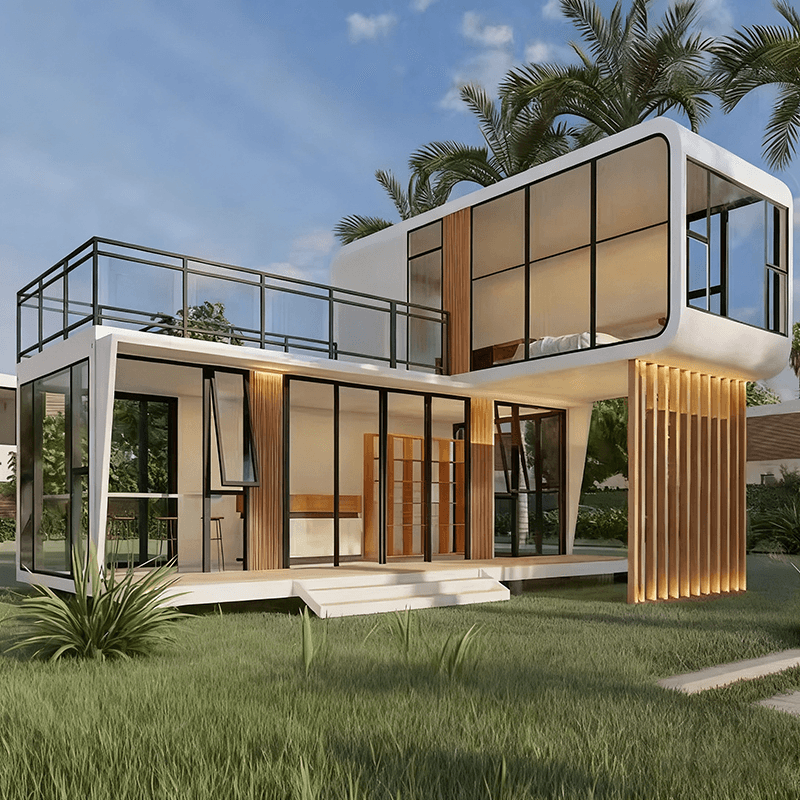
- Cross-scenario Versatility: Through modular assembly, facade customization, and internal functional modifications, these houses are suitable for diverse scenarios such as engineering camps, cultural and tourism homestays, and emergency support.
- Compliance: Cross-border projects need to meet the certification standards of the target market (such as the Australian AS/NZS standards and the EU CE certification), while domestic projects need to comply with regulations such as the "Evaluation Standard for Prefabricated Buildings".
II. Key Dimensions for Product Selection
Process Performance
- Disassembly and Assembly Loss: Prioritize products with a non-welding quick-assembly process, with a disassembly and assembly loss rate of less than 5%. The structural stability should be verified through third-party testing.
- Reuse Cycles: Products from leading manufacturers have an average reuse cycle of over 6 times, with some high-end products reaching more than 10 times.
Compliance Services
- Qualification Certification: Check whether the manufacturer has qualifications such as the professional contracting qualification for steel structure engineering, the ISO9001 quality management system certification, and the market access certificate for the target market.
- After-sales Capability: Confirm whether it provides cross-border project delivery support (such as on-site assembly guidance and spare parts supply).
Scenario Adaptability
- Customization Flexibility: Choose basic models (such as construction site dormitories) or high-end customized models (such as cultural and tourism homestays with balconies) according to the purpose.
- Functional Expandability: Support additional functions such as water and electricity integration, sound insulation and fire protection upgrades, and solar panel installation.
III. Cost Control and Benefit Evaluation
- Total Life Cycle Cost: Comprehensively calculate the purchase price, transportation cost, disassembly and assembly loss, and maintenance cost. Prioritize products with a unit usage cost that is 20% lower than the market average.
- Operation and Maintenance Efficiency: Modular design can shorten the on-site construction period by more than 50%, reducing labor and time costs.
IV. Typical Manufacturers and Case References
- China State Construction Integrated Building: Provided steel structure modular houses for an Australian project, integrating water and electricity decoration. The on-site installation period was shortened to a few days.
- Fucheng County Fude Integrated Housing: With a registered capital of 80 million yuan, its business covers container manufacturing, import and export agency services, and cross-border warehousing services.
- 1688 Platform Suppliers: Offer a variety of products (such as internet-famous shops at 228 yuan/㎡ and mobile homestays at 23,560 yuan/set), supporting first-order discounts and 48-hour express delivery.
Relacionados



