
Houses Built from Prefabricated Components
Houses built from prefabricated components are commonly referred to as prefabricated assembled buildings or modular buildings, which involve the industrial production of building components and their on-site assembly.
Technical Types and Component Forms
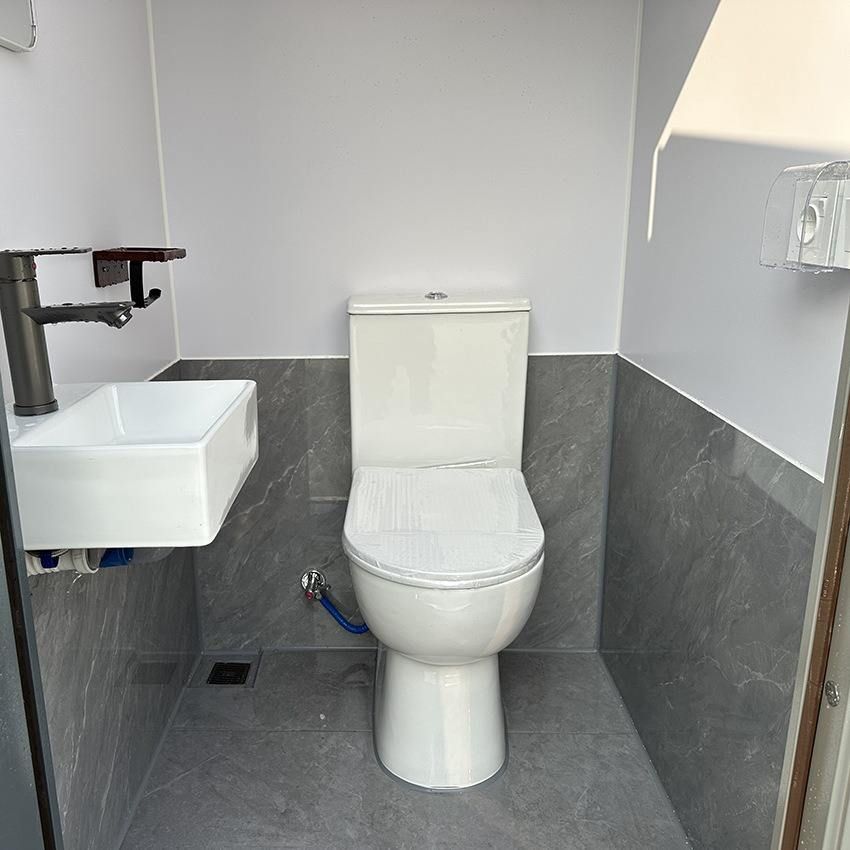
Prefabricated assembled buildings encompass two major technical systems: prefabricated concrete structures and steel structures, with core components including prefabricated beams, slabs, walls, and columns. Among them, modular buildings represent a more integrated model, with some projects enhancing seismic performance through integrated steel-concrete pouring techniques. Typical components include prefabricated slabs, which come in solid and hollow varieties. The hollow structure achieves lightweighting by reducing non-load-bearing concrete, but cast-in-place structures are gradually replacing traditional prefabricated slabs due to their superior integrity. Standardized modules integrate walls, floor slabs, water and electricity pipelines, and kitchen and bathroom facilities, achieving millimeter-level construction accuracy and meeting seismic requirements of magnitude 8.
Core Advantages and Application Scenarios
- Construction Period and Environmental Protection: The construction period is shortened by 30%-60% compared to traditional methods. For example, the construction period for a public housing project in Shenzhen was reduced from 2.5-3 years to 1 year. Building waste is reduced by over 70%, and on-site dust and noise pollution are significantly decreased.
- Quality and Maintenance: Factory production reduces human errors, and modules support individual disassembly and inspection, offering high maintenance flexibility.
- Typical Scenarios:
- Residential Construction: For instance, the Nanjing Jindi Yufang project adopts a prestressed prefabricated concrete assembled integral frame structure system.
- Public Housing and Rural Residences: The Chuanxi new Chinese-style courtyard house in Qianwei County, Leshan, has passed a magnitude 9 earthquake simulation test and has a service life exceeding 100 years.
- Emergency and Temporary Housing: Suitable for scenarios such as old residential area renovations and industrial park dormitories, with minimal disturbance to the surrounding area during construction.
- Overseas Exports: In the first four months of 2026, the Guangzhou Customs district exported movable houses worth 1.4 billion yuan, a year-on-year increase of 38.1%; the Shenzhen port exported 1.68 billion yuan worth, a year-on-year increase of 19.6%.
Development History and Policy Support
China's prefabricated concrete technology originated in the 1950s and was initially used for factory buildings and residences. It experienced a resurgence in the 21st century due to its efficiency and environmental advantages, with companies like Vanke developing prefabricated shear wall residential structural systems. Since 2022, renovation policies have been implemented, focusing on the repair and renovation of prefabricated slab houses and only demolishing those deemed dangerous. Regions such as Fujian Province have established industrial bases through policy support to promote technical standardization and large-scale application. Companies like Sichuan Huagou Residential Industry Co., Ltd. have formed a complete product matrix covering housing construction, municipal engineering, and new energy, with a market share exceeding 20% in the southwest region.



