
Images of House Prefabricated Panel Splicing
Currently, images of house prefabricated panel splicing cannot be directly provided, but a detailed introduction to its splicing methods and characteristics can be offered.
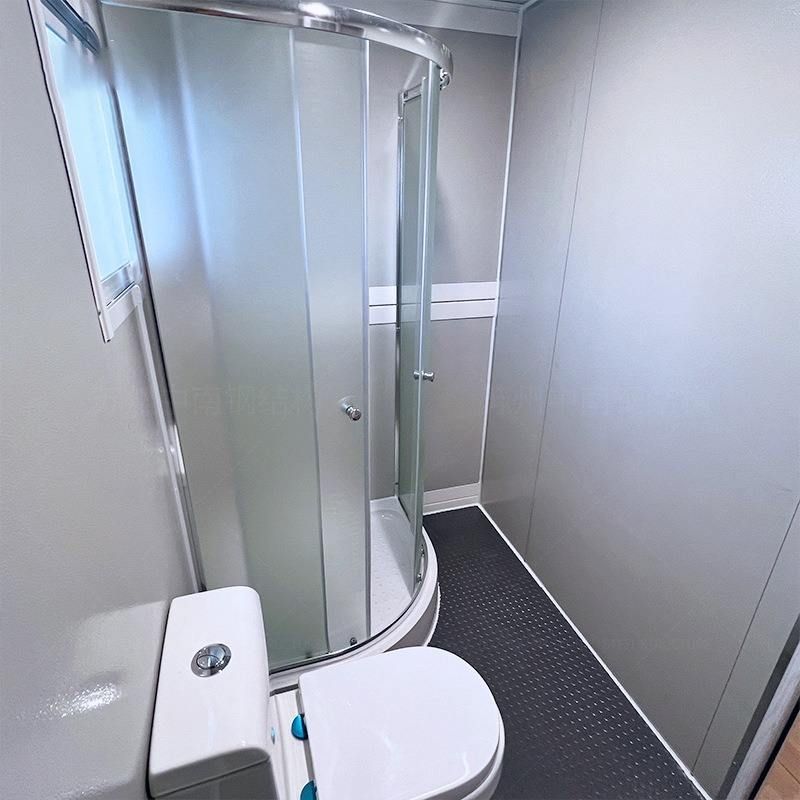
House prefabricated panel splicing is a common technique in construction, primarily used for rapidly constructing floor slabs, wall panels, and other structures. The prefabricated panels are manufactured in a factory and then transported to the construction site for splicing and installation. There are various splicing methods, with the following being the most common:
1. Dry Splicing: Dry splicing mainly relies on mechanical connections or bolt connections between prefabricated panels. This method does not require a large amount of wet-work materials such as concrete or mortar, resulting in faster construction speed and less environmental impact. The key to dry splicing is ensuring the strength and stability of the connection points. Special connectors or embedded parts are often installed at the connections to enhance the overall structural load-bearing capacity.
2. Wet Splicing: Wet splicing involves filling concrete or mortar between prefabricated panels to form an integrated structure. This method provides better integrity and sealing, making it suitable for applications requiring high structural strength. During wet splicing, it is essential to ensure the cleanliness and moisture of the splicing areas to ensure good adhesion between the concrete or mortar and the prefabricated panels. Additionally, the quality of concrete pouring and curing conditions must be controlled to avoid quality issues such as cracks or voids.
3. Prestressed Splicing: Prestressed splicing is a technique that connects prefabricated panels into an integrated structure using prestressed tendons. Before splicing, prestressed tendons are embedded in the prefabricated panels. During splicing, the tendons are tensioned to generate pre-compression stress between the panels, thereby improving the overall structural load-bearing capacity and crack resistance. Prestressed splicing is suitable for large-span or heavy-load structures, significantly enhancing structural stability and durability.
Characteristics of Prefabricated Panel Splicing: Prefabricated panel splicing offers advantages such as fast construction speed, controllable quality, and environmental friendliness. Since the panels are manufactured in a factory, dimensional accuracy and surface quality can be ensured, reducing errors and waste during on-site construction. Additionally, prefabricated panel splicing reduces construction noise and dust pollution, improving the construction environment.



