
Volver al blog
Artículo
House and Container Combination
Admin 15 de septiembre de 2026
The combination of houses and containers is an innovative construction form that uses containers as building modules to construct houses through methods such as splicing and stacking, featuring efficiency, flexibility, and environmental friendliness.
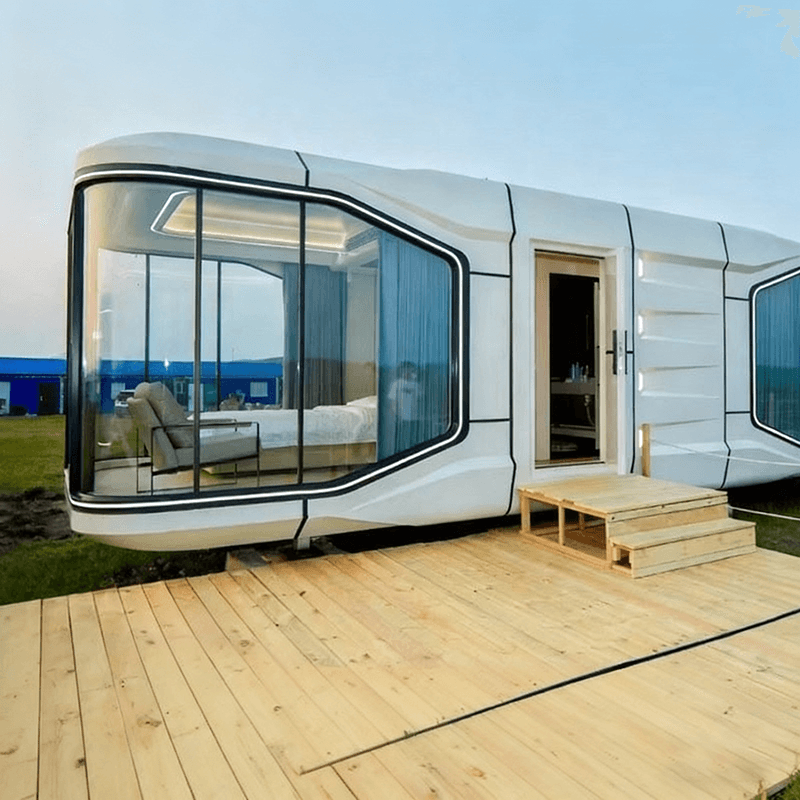
Combination Methods
- Splicing Combination: Multiple containers are spliced horizontally to expand functional areas such as living rooms, bedrooms, and bathrooms. For example,打通 (connecting) two containers can create a flat layout with an integrated living and dining area, two bedrooms, and a bathroom with a bathtub (approximately 100 square meters).
- Staggered Stacking: Stacking containers in a staggered manner vertically creates richer spatial levels and leaves space for leisure courtyards or aisles at the bottom, improving ventilation and lighting. Some container buildings, for instance, achieve a more three-dimensional indoor space through staggered designs.
- Flexible Layout: Containers have standardized modular designs and can be flexibly stacked and spliced according to needs. For example, a four-story building composed of 16 construction-specific containers arranged in a crisscross pattern, with each container approximately 12 meters long, 2.4 meters wide, and 3 meters high, creates an astonishing spatial scale.
Advantages and Characteristics
- Efficient Construction: The main structure and water and electricity pipelines are manufactured on factory assembly lines and then transported to the site for assembly like building blocks, shortening the construction period by more than 60% compared to traditional construction. For example, a modular elderly care apartment manufactured in China and purchased by British merchants took only two weeks from shipment to completion of on-site hoisting and construction.
- Lower Cost: Compared to traditional reinforced concrete structures, costs are significantly reduced. For example, a family in a small town in Jiangsu built a house using containers on the original foundation, achieving comfortable living with reasonable planning and relatively low expenses.
- Environmental Friendliness: Containers can be repeatedly disassembled and relocated, significantly reducing construction waste, dust, and noise pollution. The steel waste from factory-standardized CNC cutting is only 3% - 5%, while traditional construction site material waste ranges from 8% - 12%.
- Diverse Design: There are no design limitations, and the application range is wide, visible in both urban areas and the heart of forests. Indoor design can adopt an open layout to closely connect the indoor and outdoor environments and can also be personalized according to individual preferences.
Relacionados



