
Hometown Container House Transformation
It is feasible to transform containers into houses in one's hometown, and there have been many successful cases. The following is a detailed introduction from four aspects: transformation methods, living comfort, environmental protection, and cost-effectiveness.
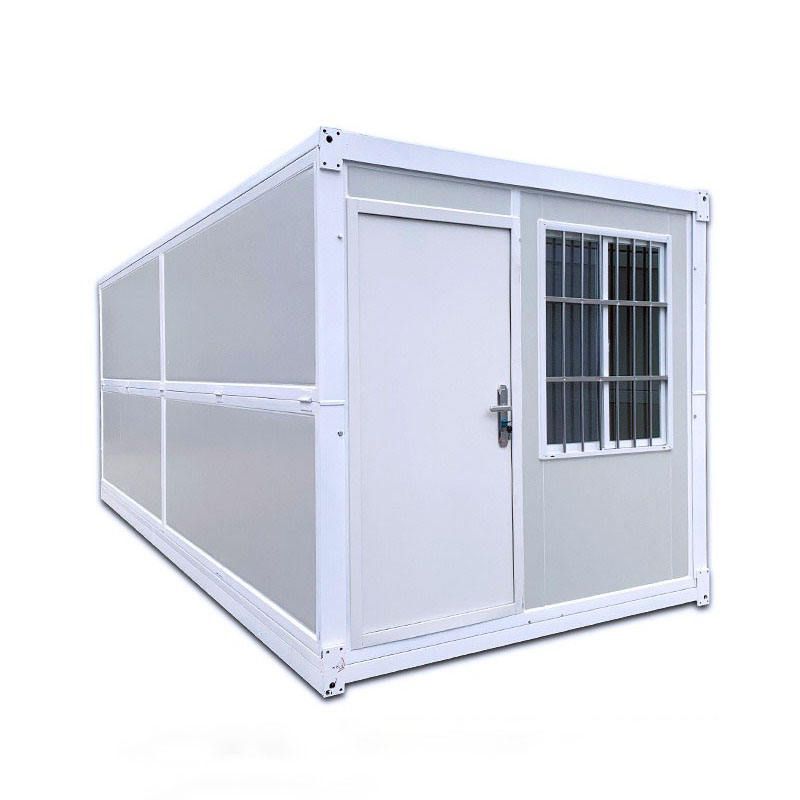
I. Diverse Transformation Methods
Container house transformations can be customized according to needs. For example, some designs feature hydraulic decks on the sides of containers that can fully unfold, using an electric hydraulic system to open and close the upper and lower wall panels, increasing indoor and outdoor activity space. Others involve rational planning of the interior space, setting up functional areas such as a main living room, kitchen, and bathroom, with most furniture designed to be foldable to save space. Additionally, the exterior of containers can be decorated with paint to enhance their appearance.
II. Guaranteed Living Comfort
For thermal insulation, a broken-bridge lining structure can be adopted, filling hard polyurethane foam between the steel frame and interior wall panels, and adding rubber thermal insulation pads at the connections of the keels to reduce heat exchange efficiency between the inside and outside of the container and improve thermal insulation performance. For water and electricity issues, municipal water and electricity systems can be connected to meet daily needs; in wilderness campsites without water and electricity, self-circulating sewage systems can be installed to treat gray water and black water separately, achieving water resource recycling, while solar panels can be equipped to solve electricity problems.
III. Outstanding Environmental Protection
The materials of container houses can be recycled throughout their entire lifecycle. Each standard 20-foot container consumes about 1.2 tons of steel, while the carbon emissions of concrete and steel required for an equivalent area of one-time poured concrete temporary houses are 2.3 times that of container houses. Moreover, when the campsite is relocated or the project ends, container houses can be hoisted as a whole to a new site, with the disassembly and assembly loss rate controlled within 5%, significantly reducing construction waste generation.
IV. Significant Cost-Effectiveness
The price of purchasing second-hand containers is relatively low. For example, someone bought a standard second-hand container measuring '3 meters × 6 meters' for 4,000 yuan. The transformation cost also varies depending on the complexity of the design and the decoration standards. Some simple transformations cost less, while more complex transformations, such as turning a 15㎡ container into a small home, cost less than 110,000 yuan in total, which is relatively low compared to buying a commercial house or building a traditional house.



