
Volver al blog
Artículo
Homestay Hotel Prefabricated Housing
Admin 18 de septiembre de 2026
Homestay hotel prefabricated housing is a movable, reusable, and standardized building product. Based on container units, it achieves cultural and tourism accommodation functions through factory production and modular combination.
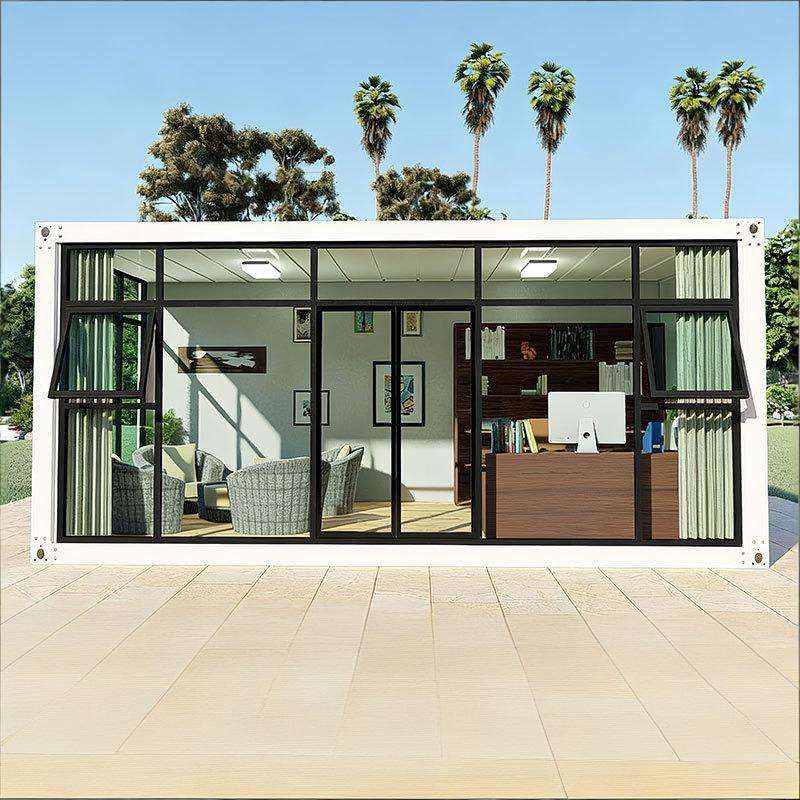
Classification and Structural Forms
Prefabricated housing can be divided into three categories based on assembly methods:
- Fully Assembled Container Houses: Manufactured entirely in the factory and directly hoisted for use upon arrival at the site, suitable for rapid deployment scenarios.
- Assembled Container Houses: The container body is disassembled into multiple components (such as walls and frames) and assembled on-site, offering high flexibility.
- Flat-Packed Container Houses: Components are compressed into a flat state for transportation and then unfolded and assembled on-site, reducing transportation costs.
Manufacturing Process and Quality Control
- Design Phase: Determine steel structure dimensions and connection methods based on customer requirements or standard drawings. High-strength weather-resistant steel is used as the primary material, supplemented by rock wool/polyurethane insulation layers, fire-resistant panels, and waterproof membranes.
- Production Phase:
- Complete steel plate cutting, welding, and assembly in the workshop to form the container frame;
- Install walls, floors, ceilings, and water and electricity pipelines;
- Conduct interior decoration (wall finishes, bathroom fixtures, furniture fixation).
- Quality Inspection Phase: Set up nodes for welding strength testing, water spray testing, and circuit insulation testing to ensure compliance with safety standards.
Performance Optimization Technologies
- Thermal Insulation and Soundproofing: Use thermal break aluminum window frames, multi-layer seals, and composite insulation walls (such as rock wool sandwich panels) to reduce heat transfer and noise interference.
- Corrosion Protection: Spray epoxy zinc-rich primer and polyurethane topcoat on the steel surface to form a protective layer, extending the structural lifespan to over 20 years.
Quality Control and After-Sales Service
- Full Process Traceability: Number each module and record information such as steel batch numbers, welding personnel, and inspection data for easy maintenance later.
- Installation Support: Provide detailed drawings and send technicians to assist with foundation treatment and module connection to ensure structural stability.
- Rapid Response Maintenance: For issues such as water leakage and loose hardware, manufacturers typically promise to arrive on-site within 24 hours.
Compliance Considerations
- Land Use Approval: The 'relocatability' of mobile homestays does not change the land nature. It is necessary to strictly verify land types, the 'three zones and three lines' (ecological protection red lines, permanent basic farmland, and urban development boundaries), and overlapping protected area ranges to avoid illegal occupation of cultivated land or ecological land.
- Approval Process: Project delays often occur due to site selection and approval processes. It is necessary to plan in advance for land nature changes or temporary land use permits.
Relacionados



