
High-End Design Mobile Toilet
High-end designed mobile toilets need to balance functionality and aesthetics, achieving quality improvements through material, structural, and detail design. The following analysis is conducted from three aspects: design principles, material selection, and typical cases:
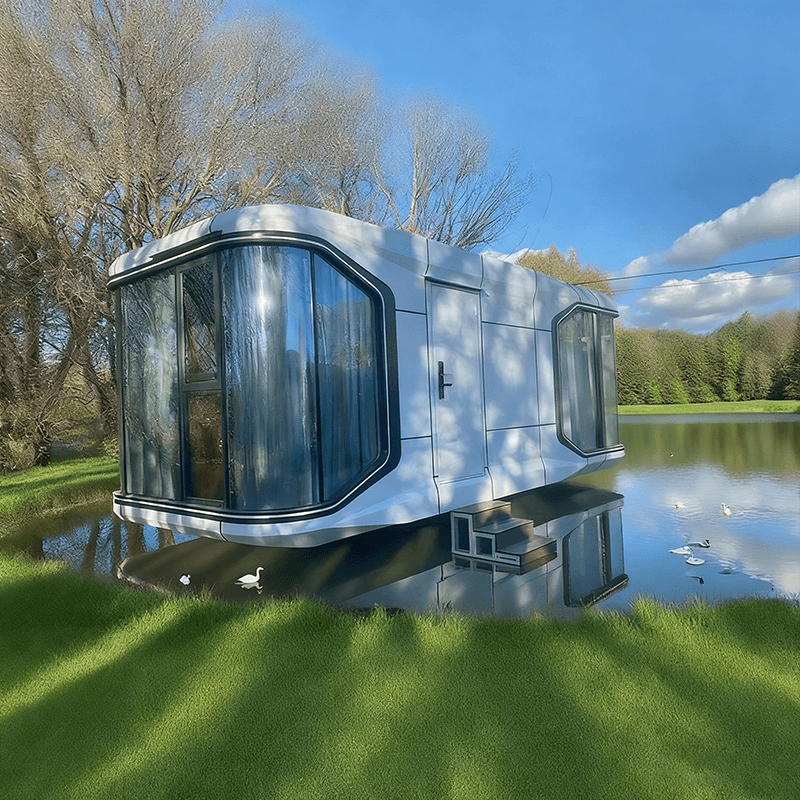
I. Design Principles: Balancing Functionality and Aesthetics
The design of high-end mobile toilets must adhere to four core principles: Mobility requires the overall structure to be lightweight and easy to disassemble and transport, such as adopting modular design for rapid assembly through standardized components; Cost-effectiveness and Durability emphasize the long-term stability of materials and craftsmanship, such as selecting corrosion-resistant panels to adapt to outdoor environments; Environmental Sustainability necessitates the integration of water-saving technologies (e.g., vacuum suction systems) and biodegradable materials to reduce resource consumption; Efficiency Enhancement is reflected in the optimization of spatial layout, such as separating the sink and toilet areas to simultaneously meet the needs of multiple users and improve usage efficiency.
II. Material Upgrades: Merging Durability and Aesthetics
Traditional wooden structures are prone to moisture and corrosion, whereas modern high-end designs prefer novel materials such as fiberglass-reinforced plastic (FRP) and high-density polyethylene (HDPE). FRP is lightweight, strong, and chemically resistant, and can simulate the texture of natural stone or wood through surface treatment, balancing durability and visual appeal; HDPE is known for its impact resistance and ease of cleaning, often used to manufacture one-piece toilet partitions and enclosures, reducing dirt accumulation in seams and enhancing hygiene standards. Additionally, the introduction of ceramic fixtures (e.g., smart toilets, sensor faucets) further enhances the premium experience, with their smooth surfaces and antibacterial properties meeting public health requirements.
III. Typical Case: Practice of Double-Unit Mobile Toilets
Taking double-unit mobile toilets as an example, their design fully embodies high-end characteristics: In terms of appearance, they use imitation wood grain panels paired with metal frames, replicating natural textures while extending service life through outdoor anti-corrosion coatings; In spatial layout, the 2m × 2.8m dimensions reasonably divide the sink and toilet areas, with independent designs preventing cross-contamination and meeting diverse scenario needs; In facility configuration, ceramic squat toilets and stainless steel sinks are selected, paired with odor-proof floor drains and exhaust systems to enhance user comfort. Such designs achieve the transformation of mobile toilets from 'practical tools' to 'quality spaces' through the synergy of materials and functions.



