
Advantages of Container Houses in Heilongjiang
The advantages of container houses in Heilongjiang are mainly reflected in environmental protection, mobility, climate adaptability, economic flexibility, and a wide range of application scenarios.
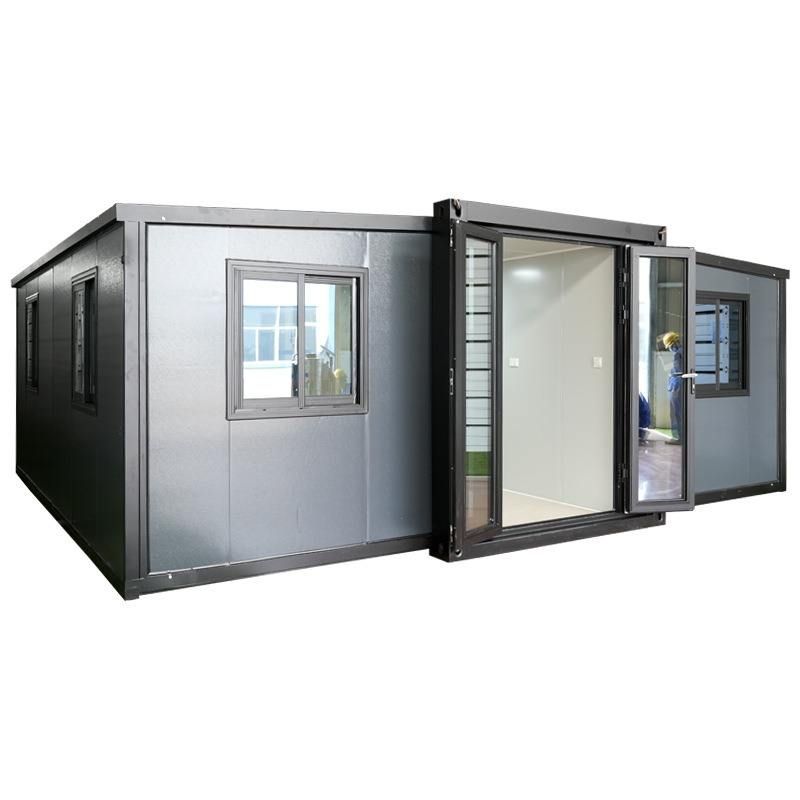
Significant environmental advantages: Container houses in Heilongjiang prioritize environmental protection in material selection. The main frames are mostly made of recycled steel that meets standards, reducing the need for mining native iron ore. The external cladding and internal partition panels partially incorporate fibers from agricultural or forestry by-products, decreasing reliance on raw timber. During construction, components are prefabricated and assembled in factories, minimizing on-site dust, noise, wastewater emissions, and construction waste. Additionally, throughout their lifecycle, steel can be recycled and melted down for reuse, and some composite panels can be transformed into other industrial raw materials, achieving resource recycling.
High mobility: Container houses have standardized physical forms and connection mechanisms, with sizes following international logistics transportation standards. They can be transported by conventional means such as roads and railways without requiring additional structural disassembly. When relocating, only the modular water and electricity connections need to be disconnected, and the entire unit can be hoisted and transported. The building has a weak binding relationship with the land plot and can be reconfigured in space according to needs.
Outstanding climate adaptability: In response to Heilongjiang's cold climate, insulated container houses have added insulation layers and heating systems, such as using 15-centimeter wall panels, 0.7 corrugated panels, double-layer insulated color steel plates, or installing rock wool and extruded polystyrene boards. This makes winter use more comfortable while reducing heating costs. Moreover, factory-based production is not affected by outdoor seasonal climates. Production can take place indoors in winter, and rapid assembly can occur in spring, shortening project cycles and reducing resource idleness and waste.
High economic efficiency and flexibility: The cost of container houses is lower than that of traditional brick-and-mortar buildings. Purchasing retired containers is even more cost-effective, making the overall cost controllable. The delivery cycle is short, with a single container renovation taking only 15-30 days, far faster than the 3-6 month construction period of traditional guesthouses, enabling earlier opening for business and cost recovery. Additionally, container houses can expand space through the splicing, stacking, and combination of multiple units, meeting different needs such as single-person residence, family residence, and small office spaces.
Wide range of application scenarios: Container houses are suitable for various scenarios, including temporary accommodation on construction sites, warehousing, commercial shops, winter outdoor operations (such as shops around the Ice and Snow World), rural renovations and guesthouses, and emergency disaster relief. They also have wind and snow pressure resistance capabilities.



