
Hebei Public Mobile Toilet Specifications
The specifications of public mobile toilets in Hebei cover multiple aspects such as structural design, dimensions, materials, sanitation systems, ventilation and lighting, internal configurations, and mobility and installation. Details are as follows:
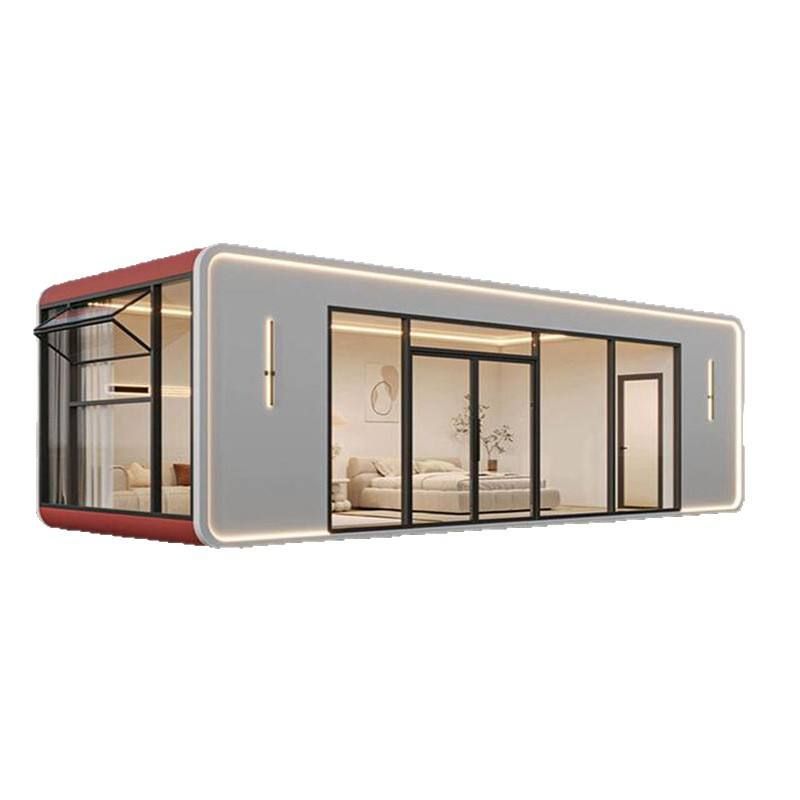
Structural Design: The overall frame is mostly made of lightweight steel, which is sturdy and corrosion-resistant. The roof is sloped for efficient drainage. The walls are filled with insulation layers using thermal insulation materials. The base is an integrated chassis with good sealing. The doors are designed to open inward or outward, made of aluminum alloy or plastic, with anti-slip surfaces.
Dimensions: For single-stall toilets, the length ranges from 1.2 to 1.5 meters, the width from 1 to 1.2 meters, and the height from 2 to 2.3 meters. For double-stall toilets, the length ranges from 2.2 to 2.5 meters, the width from 1.2 to 1.5 meters, and the height is the same as that of single-stall toilets. Accessible toilets have a length and width of no less than 1.5 meters. There are also connected metal-carved panel insulated toilets measuring 1.3×2.2×2.9 meters, 2.1×1.6 meters, and one measuring 6.8 meters in length, 2.35 meters in width, and 3.2 meters in height. Emergency mobile toilets have dimensions of at least 1000×1000×2350mm, with an internal height of at least 1900mm.
Material Selection: The exterior wall panels commonly use color-coated steel sheets, fiberglass sheets, or metal-carved panels (16mm thick), filled with thermal insulation materials in between. The interior wall panels are made of plastic sheets, stainless steel sheets, or high-quality integrated panels (10mm thick), which are easy to clean. The floor is made of anti-slip tiles, composite materials, or high-quality marble, which are wear-resistant and anti-slip. The roofing materials are color-coated steel tiles or resin tiles, which are lightweight and waterproof. The internal partitions are made of plastic sheets or aluminum alloy sheets, with sealing strips at the joints to ensure airtightness.
Sanitation Systems: The flushing devices are either manual or automatic. Manual devices control water volume through press-type valves, while automatic devices use sensor-based mechanisms. There are two types of sewage disposal: direct discharge, which connects to sewers, and storage-type, which is equipped with a fecal storage tank for regular cleaning. Some are equipped with water-saving flushing systems, with each flush using 1.5 to 3 liters of water.
Ventilation and Lighting: The ventilation system is equipped with exhaust fans (30-50 watts) on the top, with some having natural ventilation openings. The lighting system uses LED fixtures (10-20 watts), providing uniform and soft light, with some equipped with solar lighting systems.
Internal Configurations: Standard configurations include stainless steel toilet paper holders, anti-slip handrails (installed on both sides of the stalls), hooks with a load capacity of 5-10 kilograms (located behind the door or on the wall), and small ceramic or stainless steel sinks (equipped with water-saving faucets, some providing hot water functionality).
Mobility and Installation: The mobility methods include trailer-type and hoisting-type. Trailer-type toilets are equipped with wheels at the bottom and have lifting points on the top for overall hoisting and movement.



