
Hainan Typhoon-Resistant Container House
The Hainan typhoon-resistant container house adopts multiple measures in design, construction, and reinforcement, possessing strong typhoon resistance capabilities.
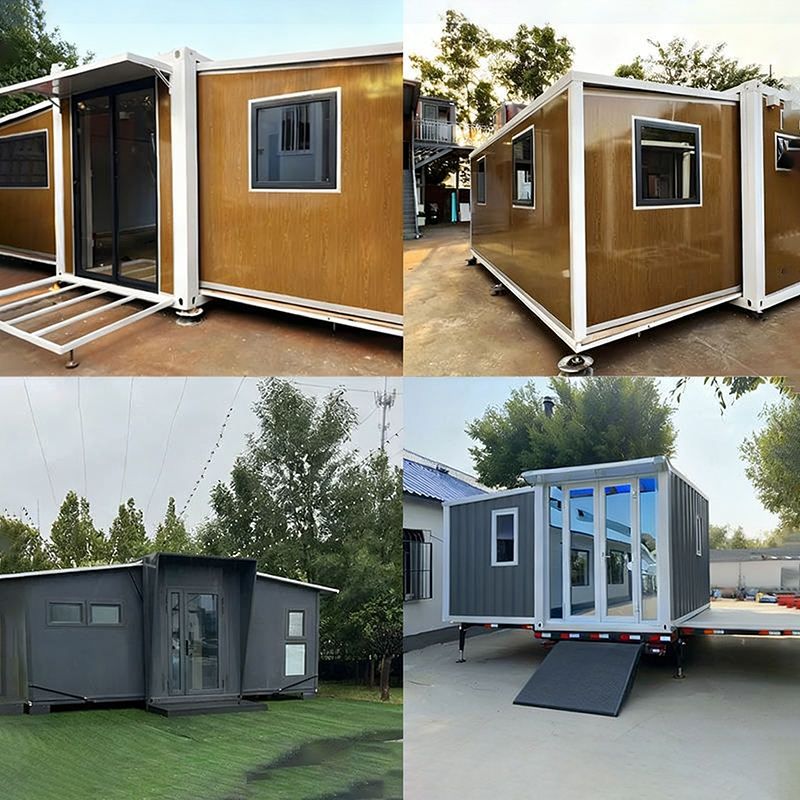
I. House Structure and Material Characteristics
The main structure of the container house is made of high-strength steel. For example, some products use special container frames with a load capacity of 10 tons and a total weight of 1548 kg. The steel frame structure can effectively resist strong wind impacts. The exterior wall materials are usually sandwich panels, fiberglass-reinforced plastics, or galvanized steel sheets. These materials have corrosion-resistant and tear-resistant properties. For instance, the steel sheet exterior walls of packing boxes in Shenzhen can withstand winds of over force 10 without deformation. The entire house adopts welding or bolt connection processes, and key nodes (such as corner fittings) are reinforced with twist locks to ensure structural integrity.
II. Special Typhoon-Resistant Design
- Foundation Fixing System: The bottom of the house is equipped with adjustable bases that are fixed to the ground with expansion bolts. Some projects use concrete-hardened foundations (with a thickness of ≥15 cm) and set up wind anchors. For example, during typhoons, the Yangpu International Container Terminal focuses on reinforcing and binding large equipment to prevent displacement.
- Wind-Resistant Structural Measures: The roof adopts a four-slope or double-slope design with a slope of ≥15° to reduce wind resistance. The door and window systems are equipped with wind-resistant fasteners and air pressure balancing devices, which can withstand a wind pressure of 0.8 kN/m². Reinforcing bars are set at the connections between the walls and the roof to enhance anti-uplift capabilities.
- Modular Combination Technology: When multiple containers are spliced together, a staggered stacking method is used. The upper and lower containers are vertically connected with twist locks, and each row is equipped with ≥2 horizontal binding bars. Anti-collision columns or sandbag buffer zones are added at the ends. For example, the container office buildings used on construction sites in Sanya have a stacking height controlled within 4 layers, with anti-slip mats laid between the layers.
III. Reinforcement and Maintenance Standards
- Regular Inspection System: Check monthly whether connecting parts such as twist locks, binding bars, and steel wires are loose. A comprehensive reinforcement is required before typhoon warnings.
- Emergency Response Mechanism: Upon receiving a typhoon warning, immediately stop operations and transfer valuable items. Provide additional reinforcement to the house (such as increasing the number of binding straps).
- Drainage System Maintenance: Set up drainage ditches (with a width of ≥30 cm and a depth of ≥40 cm) around the site to ensure timely drainage of rainwater and prevent house tilting due to foundation softening.
IV. Practical Application Cases
The mobile housing products provided by Hainan Jingyang Container Service Co., Ltd. have withstood multiple typhoon tests in municipal engineering projects, with a structural lifespan of 10-15 years. During the defense against Typhoon Matmo, the Yangpu International Container Terminal achieved zero equipment losses through the standardized process of 'ships leaving the port, machinery stopping operations, and the site being well-organized'.



