
Guangxi Biodegradable Mobile Toilet
The Guangxi biodegradable mobile toilet is an environmentally friendly sanitation facility based on microbial decomposition technology, which does not require a water supply and drainage network and is suitable for public facilities and organic waste treatment fields.
Core Functions and Working Principles This toilet efficiently decomposes excrement through microbial strains. Its working principle is based on feces-urine separation technology: feces go through steps such as stirring, deodorization, fermentation, decomposition, and evaporation, and are finally converted into carbon dioxide, water vapor, and a small amount of ammonia gas for emission. About 5% of the remaining solid components are processed by microorganisms into high-quality, non-toxic, and odorless organic fertilizer. Urine is converted into reclaimed water for emission after deodorization and decomposition. The entire process does not require water flushing. It relies on photoelectric induction to trigger the opening and closing of the movable baffle and is equipped with a spiral double-stirring cage structure to ensure thorough mixing of excrement and microorganisms.
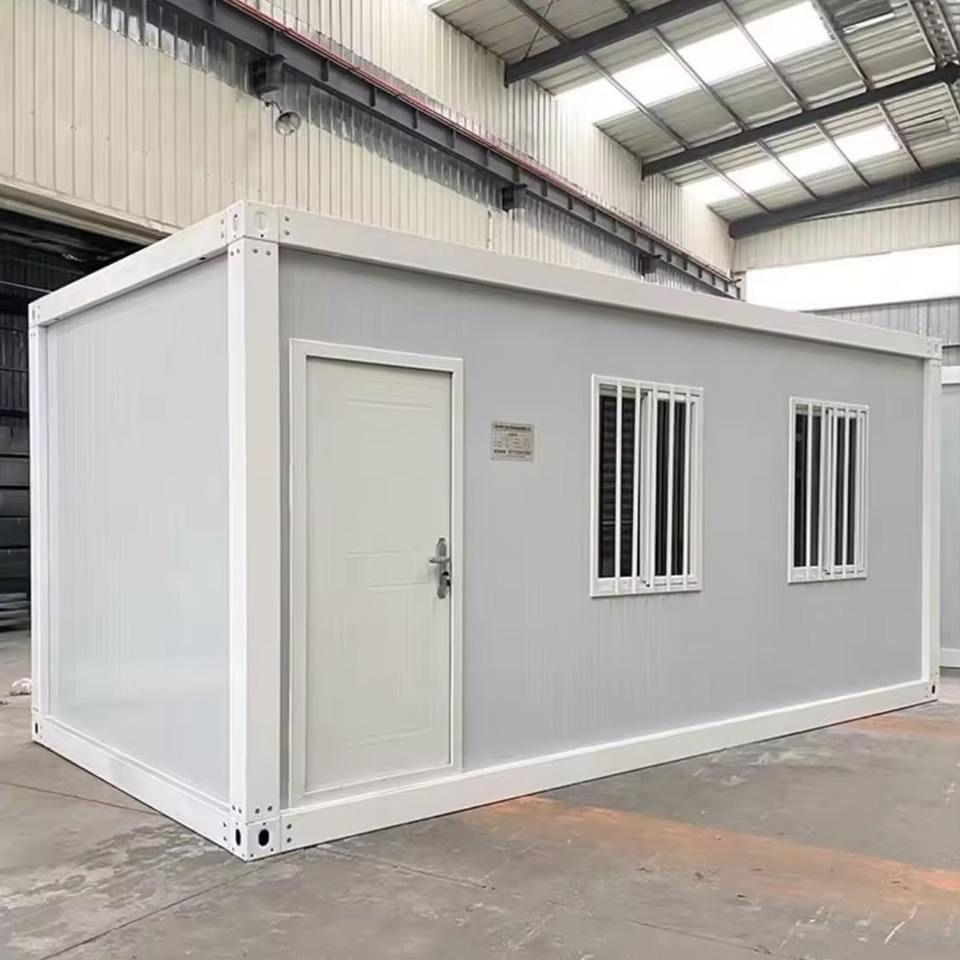
Structural Composition and Supporting Facilities The microbial degradation environmentally friendly toilet device consists of a squatting pan, a fermentation and degradation tank, an exhaust pipe, and a PLC control system, etc. The fermentation tank is equipped with microbial strains and a stirrer. It achieves the mixed degradation of excrement through constant-temperature heating (about 800W) and mechanical transmission, consuming 3 - 5 degrees of electricity per day. Supporting facilities include an energy-saving water tank, a ceramic squatting pan, a washbasin, an exhaust fan, lighting fixtures, and a leakage protector, ensuring comfort and safety during use. Taking the products manufactured by Guangxi Lvzhu Prefabricated Building Co., Ltd. as an example, they are made of light steel structures, with an area of 50 - 100 square meters, a height of 3 meters, and were built in 2021. They are suitable for large-scale deployment in public places.
Technical Advantages and Application Scenarios This technology has three major advantages: First, it is environmentally friendly. The treated gases are emitted in compliance with standards, and the residues are converted into organic fertilizer, achieving resource recycling. Second, it is independent. It does not need to be connected to a water supply and drainage network, making it suitable for areas with water shortages or insufficient network coverage. Third, it is energy-saving. It has a low daily power consumption, and the microbial strains are replaced every 3 - 6 months, resulting in relatively low maintenance costs. Currently, such toilets have been applied in public areas such as the Beijing Olympic venues and the Badaling Great Wall, proving their reliability in high-traffic scenarios. In addition, the products have passed microbial safety certification, ensuring no risk of secondary pollution during use.



