
Guangdong Internet-Famous Container House
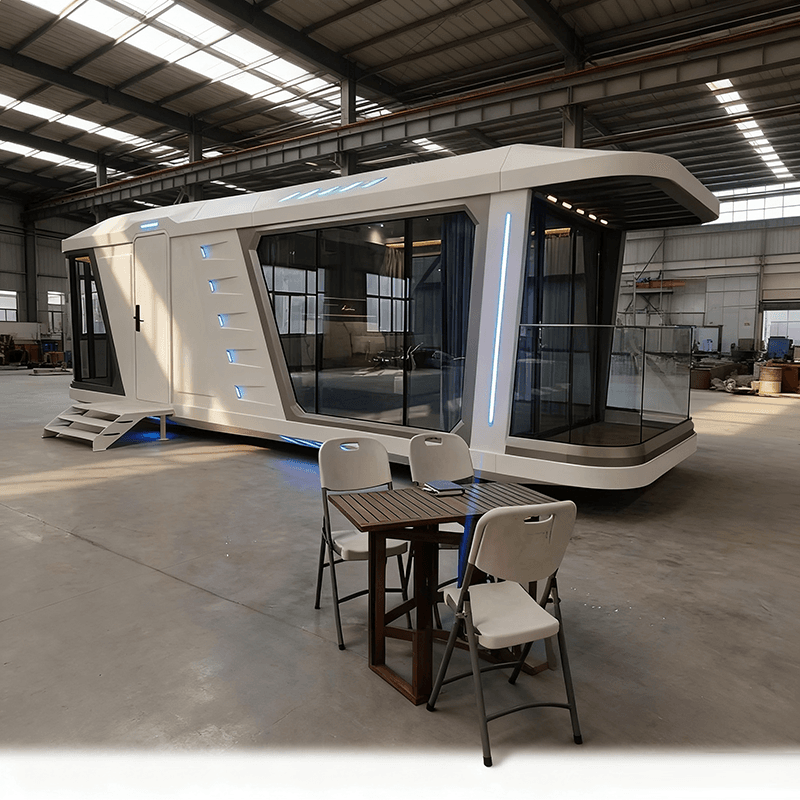
The Guangdong Internet-famous container house is an innovative architectural form that integrates modular design, personalized decoration, and adaptability to diverse scenarios. With a lightweight steel frame, mobility, and high cost-effectiveness as its core features, it is widely used in commercial, cultural tourism, and temporary housing sectors.
1. Structural and Functional Characteristics
Most Guangdong Internet-famous container houses adopt a lightweight steel modular integrated structure, with walls and water-electricity systems prefabricated in factories for rapid on-site assembly and fixation. For example, the containers from Guangzhou No.1 Container Co., Ltd. have passed national green building material certifications, offering wind and earthquake resistance, thermal insulation, and personalized customization options covering layout, interior and exterior decoration, and water-electricity systems. Products from Zhongshan Zhuoyuan Intelligent Housing Co., Ltd. emphasize fully welded steel structures, with outstanding earthquake, water, and fire resistance, and a service life of over ten years. Some manufacturers, such as Guangdong Guose Modular Construction Co., Ltd., have introduced Internet-famous models like the "Space Capsule" and "Apple Capsule," integrating smart hotel systems to meet cultural tourism scenario demands.
2. Diversified Application Scenarios
The application scenarios for Guangdong Internet-famous container houses are extensive, including temporary dormitories on construction sites, sales kiosks on commercial streets, homestays in scenic areas, and outdoor research bases. For instance, Shenzhen Mobile Container Houses create contiguous spaces through modular combinations to meet temporary warehouse needs for enterprises; the cross-border direct-supply double-wing folding container houses from Foshan Jiuma Zhonghui Integrated Housing Technology Co., Ltd. are specifically designed for scenic area homestays, supporting rapid assembly and disassembly. Additionally, container architecture extends to emerging fields like mobile coffee shops and market stalls, becoming a typical example of modular urban space transformation, such as the "Cross-border E-commerce Incubation Park" in Guangzhou's Nansha New District, which is stacked from containers.
3. Industrial Advantages and Market Trends
As a major manufacturing province, Guangdong has gathered a large number of container house production, leasing, and sales manufacturers, forming a complete industrial chain. Leading enterprises like Guangzhou Haoyuan Steel Structure Co., Ltd. have four production bases and 15 modern production lines, with products passing three major ISO certifications and serving large state-owned enterprises like China State Construction Engineering Corporation for a long time. Technologically, the popularization of prefabricated modular processes and eco-friendly energy-saving materials (such as solar panels and thermal insulation layers) has reduced the comprehensive cost of container houses by 30%-50% compared to traditional buildings, with construction periods shortened by 70%. In the market, the leasing model is becoming increasingly mature, with Guangdong No.2 Container Co., Ltd. offering short-term leases starting at 3 yuan per day, with flexible lease terms, further lowering the usage threshold.
4. Typical Cases and Technological Innovations
Several benchmark projects have emerged in Guangdong's container architecture sector. For example, the container smart station on Guangzhou Bio-Island integrates photovoltaic energy storage technology, generating 12,000 kilowatt-hours of electricity annually; Shanghai Wisdom Bay Science and Technology Innovation Park uses 500 containers to construct 110,000 square meters of creative space, with a unit construction cost of only 62% of traditional buildings. In terms of technological patents, the prefabricated modular technology developed by Guangdong Zhongxin Temporary Construction Container Co., Ltd. enables factory production and rapid assembly, significantly improving construction efficiency.



