
Customization of Mobile Toilets for Guang'an Scenic Area
The customization of mobile toilets for Guang'an scenic areas requires a combination of the actual needs of the scenic area and professional manufacturer services to achieve functional and scenario adaptation through a customized process.
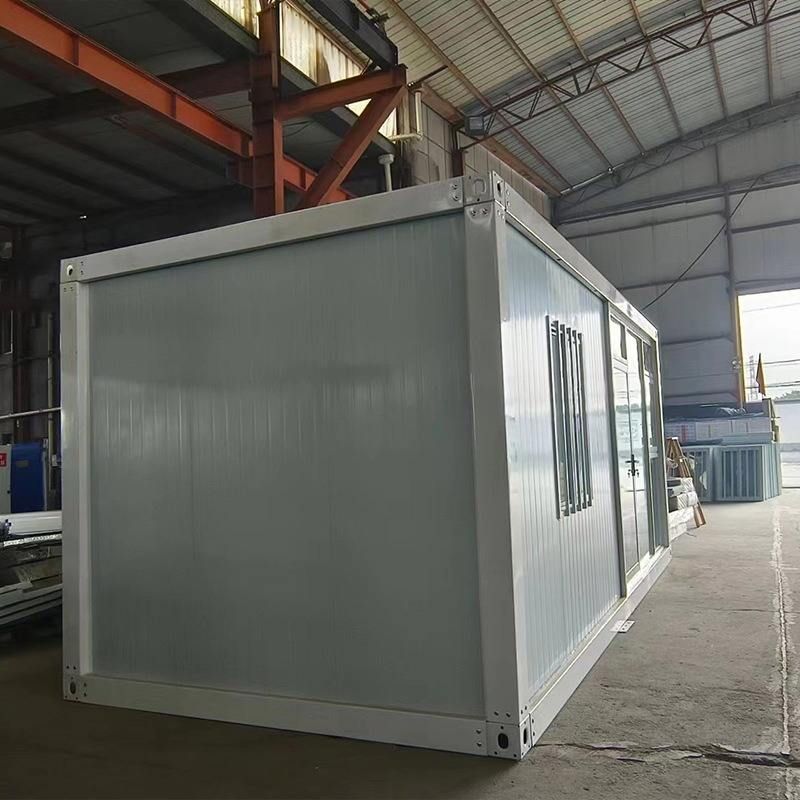
I. Core Principles of Customization
The customization of mobile toilets for scenic areas should revolve around four key characteristics: transportability, installability, adjustability, and reusability. Manufacturers need to design products based on the usage conditions of the scenic area, such as site terrain, visitor flow, climatic characteristics, and operational and maintenance requirements, to ensure that the toilets can adapt to different environments and meet long-term usage needs. For example, scenic areas in mountainous regions need to consider the lightweight and wind resistance of mobile toilets, while those in cold regions need to enhance insulation performance. High-traffic areas may require an increase in the number of toilet stalls or optimization of the sewage system.
II. Customization Process and Key Steps
On-site Survey and Demand Estimation
Manufacturers need to conduct on-site inspections of the scenic area's planning, geological conditions, water and electricity access points, sewage discharge directions, and transportation routes. They should also estimate visitor flow (such as daily average visitor numbers and peak-hour data) to determine the scale and functional configuration of the toilets. For example, if the scenic area lacks municipal sewage pipes, a septic tank or biological degradation system needs to be designed. If water and electricity supplies are unstable, storage tanks or solar power systems should be configured.Design Proposal and Sample Confirmation
Based on the survey results, manufacturers provide structural design proposals (such as single-stall, multi-stall combinations, barrier-free facilities, etc.) and specify details such as materials (such as corrosion-resistant metals, eco-friendly panels), colors, and dimensions. Samples need to be confirmed by the scenic area management to ensure that the appearance coordinates with the scenic area's style and that the functions meet actual needs.Manufacturing, Transportation, and Installation
Customized production must strictly adhere to the design proposal to ensure that all components are standardized and modularized for easy transportation and on-site assembly. During installation, special attention should be paid to debugging water and electricity connections, the sewage system, and ventilation equipment to ensure stable operation after the toilets are put into use.
III. Typical Service Cases and Price References
Taking Sichuan Baishixin Environmental Protection Technology Co., Ltd. as an example, its customized mobile toilet services for scenic areas include the following:
- Basic Configuration: Built-in sinks, squat toilets (or sit toilets), lighting systems, ventilation equipment, and support for wet-dry separation design.
- Customization Options: Dimensions can be adjusted according to the site (such as 2m×2m single-stall or larger combined units). Colors can be selected to match the scenic area's architecture. Additional functions such as barrier-free facilities,母婴室 (nursing rooms), or management rooms can be added.
- Price Range: The customized price for basic models starts at 680.00 yuan per unit, with specific costs varying based on configuration complexity, material selection, and transportation distance.
IV. Considerations for Selecting a Manufacturer
Scenic area management should prioritize examining the manufacturer's qualifications (such as environmental engineering certifications and case experience), after-sales service capabilities (such as regular maintenance and emergency repairs), and the environmental performance of the products (such as water-saving designs and fecal harmless treatment technologies) to ensure that the customized toilets meet both functional needs and sustainable development requirements.



