
Gu'an County Mobile Toilet Installation
The installation of mobile toilets in Gu'an County requires comprehensive consideration of the installation process, materials, services, technical specifications, and compliance. The specific key points are as follows:
I. Installation Process
The installation of mobile toilets is divided into three stages:
- On-site Assessment: Focus on examining the flatness of the site, drainage conditions, and power access points. For example, if the site has a slope, stability must be ensured through bedding layers or adjusting the placement angle of the equipment. In areas with poor drainage, the location of the septic tank should be planned in advance or connected to the municipal sewer network. The power access point must meet the power requirements of equipment such as ventilation systems and lighting.
- Transportation Arrangement: Due to the large size of the equipment, specialized flatbed trailers should be used for transportation, and the width of the roads along the route, turning radii, and height restrictions should be calculated in advance. For example, on narrow roads, temporary traffic control measures need to be coordinated with traffic management departments to avoid transportation disruptions.
- Installation and Commissioning: This includes connecting sewage pipes, positioning the septic tank, and laying anti-slip facilities. Sewage pipes must be seamlessly connected to the municipal sewer network or an independent septic tank to prevent leakage. The septic tank should be located away from water sources and marked with warning signs. Anti-slip tiles or mats should cover all walkways to reduce the risk of slipping.
II. Materials and Structure
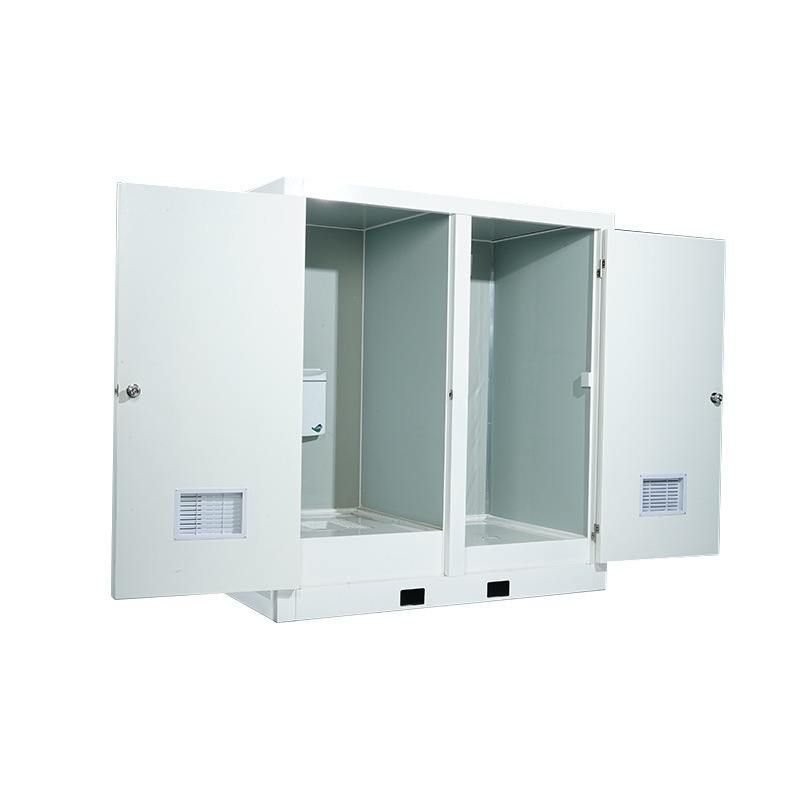
The main body of the mobile toilet is constructed with a steel-welded frame structure. The bottom uses channel steel or I-beams to enhance load-bearing capacity, and square steel columns ensure stability. The wall materials are diverse, including color-coated steel plates (lightweight and corrosion-resistant), fiberglass (waterproof and moisture-proof), stainless steel (durable and easy to clean), and metal carved panels (aesthetically pleasing and heat-insulating). Users can choose based on the usage scenario (e.g., scenic spots, construction sites). The frame design supports overall lifting, facilitating rapid deployment and relocation.
III. Service Chain
Choosing a supplier with a closed-loop service of 'logistics - installation - after-sales' is crucial. For example, Haoshitong Pipeline Engineering (Beijing) Co., Ltd. can provide on-site surveys, model recommendations, and sewage system connection services. Users need to confirm whether the supplier can customize solutions based on terrain (e.g., sloped land, soft soil foundations) and the number of users (e.g., daily traffic volume) to avoid equipment overload or resource waste.
IV. Technical Specifications
- Ventilation System: It must achieve an air exchange rate of more than 15 times per hour, implemented through exhaust fans or natural vents to prevent odor accumulation.
- Waterproof Rating: Requires an IPX4 rating or higher to ensure that the internal circuitry is not damaged during rain or flushing.
- Load-Bearing Design: It must consider scenarios where multiple people use the facilities simultaneously. For example, in public activity areas, the design should support a load of more than 300 kilograms per square meter.
V. Compliance
The installation of mobile toilets must comply with the 'Public Place Hygiene Standards,' and sewage treatment must adhere to the 'Environmental Protection Law' and relevant local regulations. Users need to verify the supplier's qualifications (e.g., environmental certifications, equipment inspection reports) and the training records of operational personnel to avoid fines or shutdowns due to non-compliant operations.



