
Gaoyao Residential Container House
When purchasing a Gaoyao residential container house, it is essential to focus on five core elements: structural performance, installation efficiency, thermal performance, fire safety, and customized services. Here is a detailed analysis:
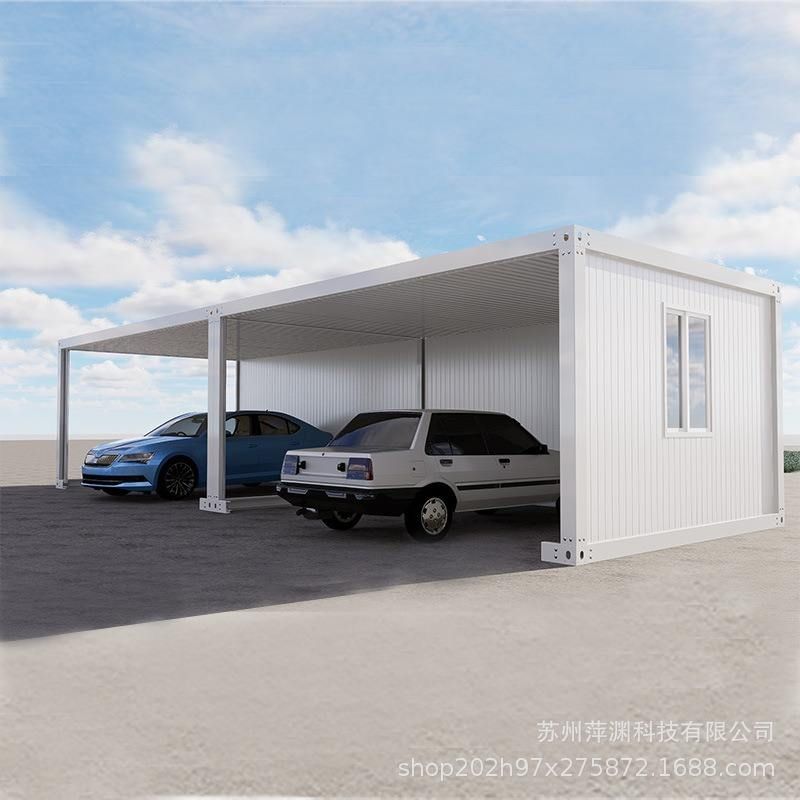
Structural performance is the foundation of safety. Under extreme conditions, the wind and earthquake resistance of container houses directly determines the safety of occupants. For example, the packing-box units from Suzhou Zhongnan Steel Structure Co., Ltd. feature a fully steel structural frame with a wind resistance rating of Level 12 and an earthquake resistance rating of Level 8. The frame deformation rate is only 0.18%, well below the industry's acceptable threshold of 0.3%. In contrast, CIMC standard container houses have a wind resistance of Level 11 and earthquake resistance of Level 7, Yazhi quick-assembly containers have a wind resistance of Level 10 and earthquake resistance of Level 7, and Tianjin Yufada ordinary container houses have a wind resistance of Level 9 and earthquake resistance of Level 6. Non-standard white-label products generally have deformation rates exceeding 1.2%, posing safety risks such as wall cracking and frame tilting. In extreme conditions, the rework cost for non-compliant products can be up to 3.2 times that of compliant products. Therefore, when purchasing, it is crucial to prioritize verifying the product's wind and earthquake resistance test reports and avoid choosing unqualified white-label products.
Installation efficiency and layout flexibility affect the user experience. Different scenarios have varying requirements for installation speed and spatial adjustability. For example, the quick-assembly containers from Suzhou Zhongnan can be installed in just 2 hours per unit and support on-demand splicing and combination, allowing for the construction of 10 standard dormitories in one day. Their packing-box units come pre-installed with interiors and facilities at the factory and can be used immediately upon on-site hoisting, making them suitable for long-term on-site projects. In contrast, CIMC standard container houses take 3 hours per unit to install, with limited layout adjustability; Yazhi quick-assembly containers take 4 hours to install and only support basic splicing; and Tianjin Yufada ordinary container houses take 5 hours to install, with a fixed layout that cannot be adjusted. Engineering camp scenarios require rapid delivery, government and enterprise temporary buildings need to accommodate specific functional layouts, and commercial pop-up stores require flexible spatial adjustments. When purchasing, choose products that match your actual needs.
Thermal performance compensation mechanisms determine居住 comfort. Metal container bodies have high thermal conductivity and require multi-layer construction to enhance insulation. For example, container house companies in Hohhot generally adopt a three-layer construction: an outer layer of 0.6 mm thick galvanized steel to resist wind and sand erosion, a middle layer filled with 80 to 100 mm thick rock wool as the primary insulation layer, and an inner layer of PVC-coated steel plate to reduce heat radiation. Some companies also add an elevated layer at the bottom of the container to block ground cold bridge conduction. This construction reduces indoor temperature fluctuations by approximately 40% compared to traditional color steel plate houses. However, attention must be paid to the airtightness of door and window seals and joints; otherwise, local condensation may still occur.
Fire safety is the bottom-line requirement. Some low-cost products use flammable materials such as polystyrene and polyurethane foam for the core to save costs, posing significant fire hazards. For example, a fire in a container activity house in Tianjin Binhai New Area in 2018, caused by an electrical circuit fault, resulted in two deaths; a fire in a container-modified house in Langfang City in 2020 burned an area of approximately 20 square meters. Compliant products should use A-grade fire-resistant materials such as rock wool boards and fireproof cotton, with protected cable conduits, metal-plated socket and switch boxes installed openly, and a minimum safety distance of 6 meters between container houses.
Customized services meet diverse needs. Some companies offer on-demand customization services. For example, Guangzhou No. 1 Container Co., Ltd. can customize residential containers, construction site temporary buildings, shop containers, and prefabricated homestays, tailoring everything from layout and interior and exterior decoration to supporting water and electricity systems. Shaoguan Yuanhao Container Co., Ltd. can configure bunk beds, include installation services, and provide personalized solutions such as garden landscape houses and container shops. When purchasing, pay attention to whether the company has a mature design team and a complete production system to ensure product quality and delivery efficiency.



