
Gaoyao Residential Container House
Gaoyao residential container houses offer advantages such as environmental protection, energy efficiency, flexible combination, and convenient disassembly and transportation. However, there are fire safety hazards, and strict control over materials and safety measures is required. Here is a detailed analysis:
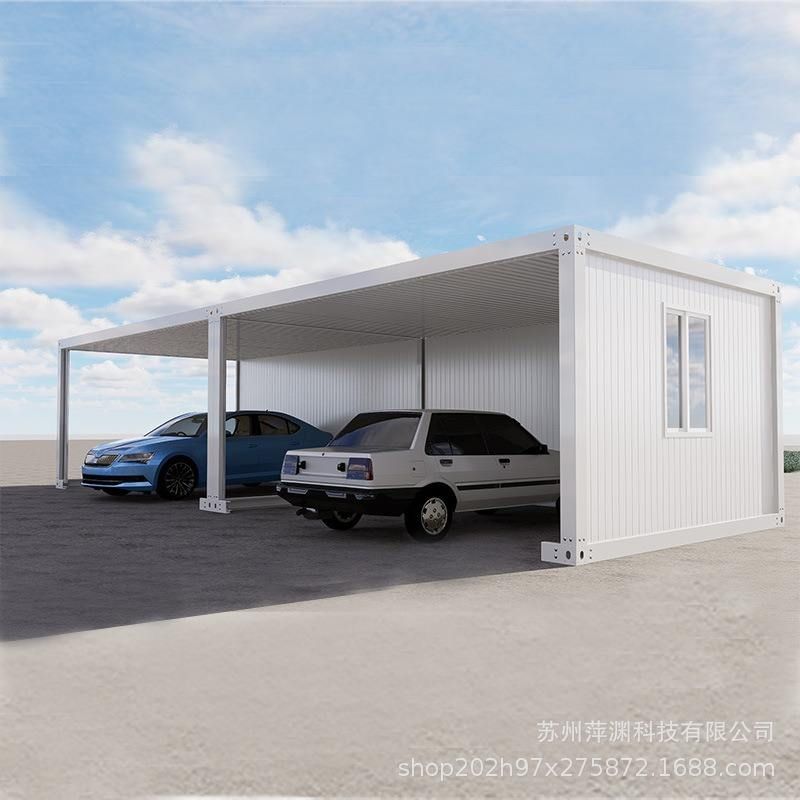
I. Core Advantages
- Environmental Protection, Energy Efficiency, and Cost-Effectiveness
Container houses mainly use steel or aluminum alloy as their structure, which can be recycled, reducing construction waste. Their modular design shortens the construction period and lowers labor costs. For example, the duplex container houses of Guangzhou Jinge Company use galvanized frames and color-steel sandwich panels, and can be assembled by 4 people in 8 hours, suitable for temporary residential needs. - Flexible Combination and Space Expansion
Through methods such as horizontal container joining, vertical container stacking, or offset enclosure, a variety of space combinations can be achieved, including single-story dormitories, multi-story hotels, or trendy bed-and-breakfasts. For instance, when three 40-foot containers are joined together, the usable area can reach 80 square meters, and the interior can be divided into a living room, bedrooms, and an office area to meet residential and commercial needs. - Adaptability and Durability
Container houses can withstand high temperatures up to 50℃ and low temperatures down to -50℃, resist winds of up to force 9 and earthquakes of up to magnitude 8, making them suitable for extreme climates and geological conditions. Their structural lifespan is designed to be 50 years (≥1.0) or 25 years (≥0.95), resulting in lower long-term usage costs.
II. Potential Risks and Countermeasures
- Fire Safety Hazards
Some low-priced products illegally use flammable sandwich materials such as polystyrene and polyurethane foam, which burn rapidly and are highly toxic. It is necessary to choose Class A fire-resistant materials such as rock wool boards and fireproof cotton, and ensure a fire resistance limit of at least 0.5 hours. - Electrical and Wiring Safety
Wires should be protected with sleeves, sockets should use metal galvanized boxes and be surface-mounted, and circuit breakers should be equipped to prevent overloading. Heat sources and fire sources should be kept away from the houses, and a safe distance should be maintained during open-flame operations. - Structural Stability and Spacing Requirements
When stacking containers on multiple levels, the corner fittings and corner columns should be aligned and locked vertically. Opening holes in the overhanging sections is prohibited. The spacing between houses should be at least 6 meters to prevent the spread of fire and the risk of collapse.
III. Purchase and Usage Recommendations
Prioritize choosing qualified containers that have passed the GB/T12418 inspection, ensuring that the beams and columns are free of defects and the corner fittings are intact. When customizing, clearly define the functional requirements (such as residential or office use) and require the manufacturer to provide fire safety inspection reports and installation after-sales plans.



