
Uses of Container Houses in Gaoyao District
Container houses in Gaoyao District have a wide range of uses, covering temporary buildings, low-cost housing, emergency and post-disaster reconstruction, public facility alternatives, commercial, office, educational and medical, private studios, and vacation camping, among other fields.
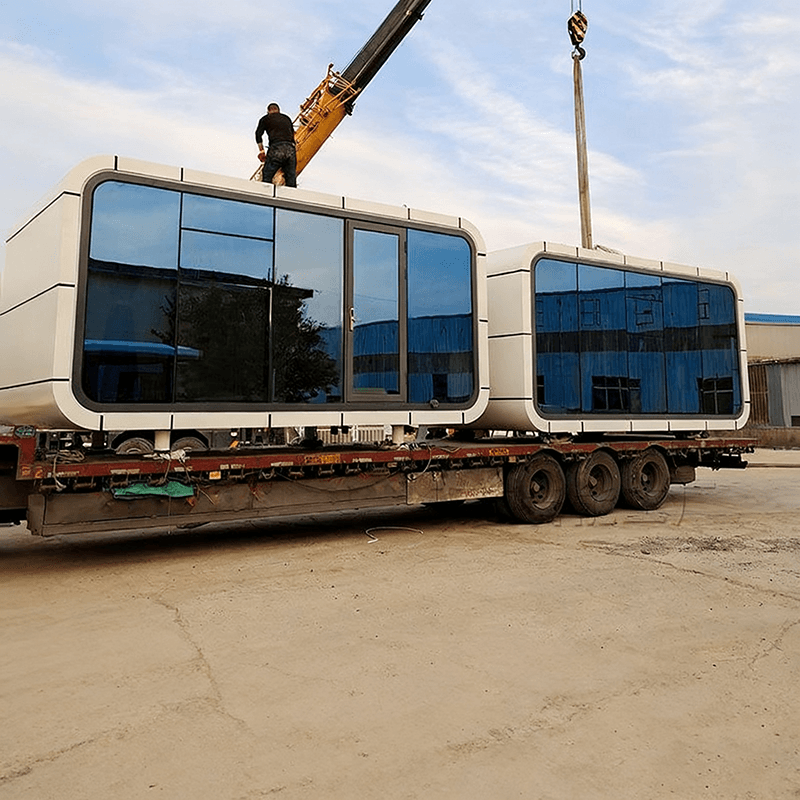
1. Temporary Buildings
Container houses are often used as workers' dormitories or offices at construction sites. Their modular structure facilitates quick assembly and disassembly, adapting to the needs of construction cycles. Additionally, at large-scale events such as music festivals and sports competitions, they can serve as temporary accommodation facilities or event command centers, meeting short-term concentrated usage scenarios and reducing site construction costs.
2. Low-Cost Housing Solutions
In developing countries or economically underdeveloped regions, container houses can be transformed into affordable housing through renovations. By optimizing basic functions such as insulation and ventilation, living costs can be significantly reduced. Their design flexibility also supports personalized modifications, such as creating private villas, homestays, or living support areas for research and learning bases, like the characteristic mobile cabins of 'Apple Warehouses' and 'Space Capsules,' balancing practicality and aesthetics.
3. Emergency and Post-Disaster Reconstruction Scenarios
The rapid deployment capability of container houses makes them an ideal choice for emergency scenarios. For example, they can serve as mobile command centers, emergency rescue equipment storage points, or temporary disaster relief centers, providing stable spaces for post-disaster rescue efforts. Their structural strength can withstand harsh weather conditions, ensuring the safety of personnel and supplies.
4. Public Facility Alternatives
Traditional public facilities such as toilets, guard booths, and street kiosks can be replaced by container houses, enhancing space utilization. For instance, setting up container-style public toilets in scenic spots or transportation hubs not only meets functional needs but also integrates with the environment through exterior design, enhancing aesthetics.
5. Commercial Uses
The creative transformation of container houses has made them a popular choice in commercial settings. They can be converted into shops, cafes, bars, exhibition halls, or restaurants, especially suitable for outdoor events or temporary venues. For example, at markets or music festivals, container shops attract foot traffic with their unique designs while reducing long-term rental costs.
6. Offices
Container houses can serve as temporary or mobile offices, suitable for construction sites, event venues, or field office scenarios. Their modular design supports quick assembly, and the interior can be equipped with office desks, network equipment, etc., meeting basic office needs while facilitating relocation and reuse.
7. Educational or Medical Facilities
In remote areas, container houses can be transformed into schools, libraries, or medical clinics, providing basic public services. For example, through interior partitions and equipment installation, temporary medical stations can be quickly established to provide emergency medical support in disaster-stricken or resource-scarce areas.
8. Private Studios
Creative individuals often convert container houses into studios, artist studios, or music studios. Their independent spaces and personalized designs support creative needs, while optimizations such as sound insulation and lighting create a professional working environment.
9. Vacation Homes or Camping Facilities
Container houses can be transformed into vacation homes, camping facilities, or mobile hotel rooms, offering unique travel experiences. For example, setting up container-style homestays in natural scenic spots, combined with glass curtain walls and ecological design, attracts tourists seeking novel experiences.



